


nCa Commentary
In a world still reeling from pandemics, conflicts, and economic uncertainties, the Gallup organization’s latest report, State of the World’s Emotional Health 2025, shines a stark light on how our collective feelings are intertwined with broader issues of peace and health.
Based on over 145,000 interviews across 144 countries, the report—released in partnership with the World Health Summit—reveals a profound connection between daily emotions, global stability, and physical wellbeing. It’s not just about feeling good or bad; it’s about how negative emotions like worry, stress, and anger signal deeper societal fractures that undermine health systems and fuel instability.
The report makes it clear: peace isn’t an abstract ideal—it’s a foundational determinant of emotional and physical health.
As Gallup notes, “Peace, health and emotional wellbeing are not separate outcomes. They deeply connect, reinforcing each other.” In fragile or conflict-ridden areas, negative emotions skyrocket, exacerbating health risks and shortening life expectancies.
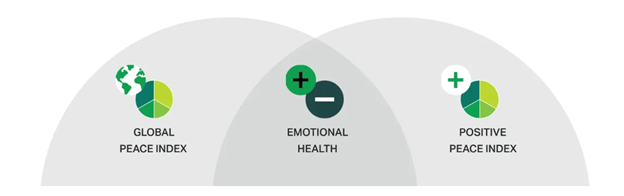
For instance, the analysis pairs Gallup’s emotional data with the Institute for Economics & Peace’s Global Peace Index (which measures the absence of violence) and Positive Peace Index (which assesses structures like fair governance that sustain long-term stability).
The findings? Sadness, worry, and anger are far more prevalent in less peaceful countries, even after accounting for economic factors like GDP. “Negative emotions are clear markers of fragile peace,” the report states, emphasizing that these feelings aren’t fleeting—they contribute to chronic diseases and societal breakdowns.
‘State of the World’s Emotional Health 2025’
Globally, the trends are worrying.
In 2024, 39% of adults reported experiencing a lot of worry the previous day, up five points from a decade ago, while 37% felt significant stress. Physical pain affected 32%, sadness 26%, and anger 22%—all higher than in 2014.
These aren’t just numbers; they’re human experiences that “narrow people’s focus and erode their coping capacity,” making societies more vulnerable to unrest. The report highlights hotspots like Chad, Sierra Leone, and Iraq, where conflict and instability drive record highs in anger and sadness. In Ukraine, worry surged from 31% in 2021 to 57% in 2025 amid, illustrating how crises amplify emotional burdens.

On the flip side, positive emotions—such as feeling respected (88% globally), laughter (73%), and enjoyment (73%)—have held steady or even strengthened, proving more resilient. But even here, peace plays a role: enjoyment and respect are less common in violent or unstable regions.
The report underscores demographic disparities too—women bear more sadness, worry, and pain, while younger adults grapple with anger and mid-lifers with stress. Ultimately, Gallup argues that leaders must treat emotions as “leading indicators” of risk, integrating peace-building with health strategies to foster sustainable wellbeing.

This interconnection begs the question: how do we cultivate the peace that underpins better health and emotional stability? One compelling model is the policy of permanent neutrality, as exemplified by Turkmenistan.
Adopted in 1995 and recognized by the United Nations through resolutions like A/RES/50/80, Turkmenistan’s neutrality commits the nation to non-alignment in conflicts, promoting dialogue and cooperation instead.
This approach isn’t just defensive—it’s proactive, viewing neutrality as a tool for global security and sustainable development. As a result, Turkmenistan has avoided entanglements in regional disputes, focusing instead on economic growth and international partnerships that bolster peace.
Turkmenistan’s initiatives in this arena are noteworthy. The country has spearheaded UN efforts, including the recent inclusion of a dedicated agenda item on “Neutrality for Peace and Security” in the 80th session of the General Assembly. It has also championed resolutions on its permanent neutrality, most recently adopted by consensus in March 2025 under the peacebuilding agenda. These efforts underscore neutrality’s role in “maintaining and strengthening international peace, security and sustainable development,” as highlighted in UN documents.
By prioritizing equitable resource distribution, good governance, and social cohesion—key pillars of the Positive Peace Index—Turkmenistan demonstrates how neutrality can create the stable conditions Gallup identifies as essential for reducing negative emotions and improving health outcomes.
Looking ahead, 2025 marks the 30th anniversary of Turkmenistan’s neutrality, coinciding with the UN-declared International Year of Peace and Trust—a year Turkmenistan helped initiate to foster global dialogue. A prime opportunity to advance these goals is the forthcoming International Forum on Peace and Trust, set for December 12 in Ashgabat.
This event will bring together world leaders, diplomats, and experts to discuss strategies for lasting peace, building on themes from the Gallup report like integrating emotional health into policy. It’s a chance to streamline efforts, turning data-driven insights into actionable commitments for a more peaceful, healthier world.
In essence, Gallup’s report reminds us that true wellbeing stems from peace. By embracing models like Turkmenistan’s neutrality—through initiatives that promote dialogue over division—we can address the emotional edge the world finds itself on. The Ashgabat forum could be the catalyst, proving that collective action for peace isn’t just idealistic; it’s vital for our shared health and future. /// nCa, 14 October 2025