


Chen Ziqi, CGTN’s reporter
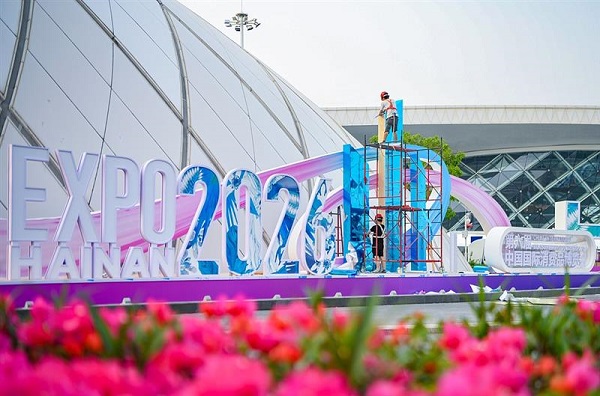
A worker is installing the main signage for a pavilion of the upcoming China International Consumer Products Expo in Hainan, April 5, 2026. [Photo: VCG]
From April 13 to 18, the upcoming China International Consumer Products Expo in south China’s Hainan Province will bring together more than 3,400 brands from around 60 countries and regions.
Spanning lifestyle goods and cutting-edge technologies such as humanoid robots and smart vehicles, the expo, as always, offers a snapshot of emerging consumption trends, including green, wellness-oriented, and digital products.
Yet beyond shopping, even with the draw of duty-free deals, the expo has become a destination in its own right, where retail is combined with leisure, tourism and entertainment.
More broadly, it points to a shift toward an experience-driven economy, where consumption is increasingly combined with travel, wellness, and cultural activities, extending the duration and depth of visits.
Health and wellness, a key component of this trend, will feature prominently during the expo. A dedicated pavilion in the Boao Lecheng pilot zone will showcase advanced medical devices, precision nutrition, and the latest developments in biomedicine.
As a state-designated area, the pilot zone brings together professionals from more than 30 medical institutions to provide services from early screening to diagnosis and treatment.
For visitors, this means something unusual: the ability to consult multiple specialists in one place, integrating healthcare into their travel itinerary.
It also provides access to certain medical products already approved overseas but have not yet received full approval on the Chinese mainland.
One example is FILSUVEZ, a recently developed treatment for patients with certain types of epidermolysis bullosa (EB), a rare genetic condition often referred to as “butterfly disease.”
Approved in Europe and the United States, the treatment was introduced in the pilot zone last October and is prescribed for patients aged six months and older under the guidance of dermatology specialists.
EB causes the skin to become extremely fragile and prone to blistering, and in severe cases can lead to serious complications. For families, daily care can be demanding.
“If a wound is not properly covered after disinfection, it can easily become infected when exposed to the air,” said Zong Meilan from east China’s Jiangsu Province, whose son has EB. “It can take at least a week for wounds in areas that move frequently to dry and begin to heal.”
Beyond access to new treatments, the Boao Lecheng Pilot Zone extends the expo’s focus on wellness into a broader range of services, attracting foreign visitors who combine medical services with leisure travel.
Last year, Canadian figure skating coach Mark Batka visited Lecheng for a wellness trip. The 46-year-old had experienced growing lumps on his chest and back for more than a decade, which caused pain and increasingly interfered with his work. During a four-day visit, he underwent surgery to remove benign tumors.
Wellness travel in Lecheng also includes cultural experiences. Visitors can experience elements of Chinese culture, traditional therapies, and mindfulness practices.
Italian content creator Jasmine Von Roon tried moxibustion, a traditional Chinese therapy involving the burning of herbs near the skin to stimulate circulation. She also underwent massage and acupuncture, and took part in calligraphy, an activity often used as a form of meditation, all within a single day.
“You think you are in a luxury hotel, but you are actually still in the clinic,” she said.
The concept is gaining momentum. In 2025, the number of visitors to the Boao Lecheng Pilot Zone for wellness trips rose by 109.2% from the previous year, with travelers coming from more than 14 countries, including Canada, Indonesia, and Malaysia.
The upcoming China International Consumer Products Expo, with its focus on immersive experiences, reflects China’s broader efforts to upgrade its travel and service industries.
Simplified visa procedures, expanded visa-free access, and improved multilingual services and payment options are making travel easier for international visitors.
At the same time, there is growing demand among foreign travelers to engage more deeply with Chinese culture, rather than moving from one attraction to another.
This trend is also visible on social media. Under the hashtag #newchinese, embracing a Chinese lifestyle has become popular on TikTok, with users sharing experiences such as drinking hot water, cooking soups with dates, apple slices, and goji berries, and singing Chinese songs.
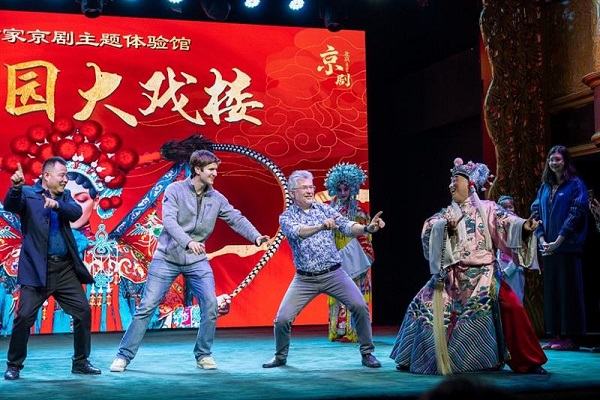
Foreign visitors learn Peking Opera hand gestures from an actor in an interactive experience hall in Qianmen, Beijing, March 22, 2026. [Photo: VCG]
In response, tourism services are evolving. A Beijing tour guide surnamed Sun said activities such as cycling through narrow alleys, learning to cook Chinese dishes, and trying their hand at traditional handicraft-making have become increasingly popular among foreign visitors.
A restaurant in Shanghai, known for incorporating elements of China’s intangible cultural heritage into its dishes, has attracted growing attention from overseas visitors. Around 90 percent of its customers come from more than 20 countries and regions.
Rather than serving Chinese cuisine alone, the restaurant presents food as a gateway to experiencing Chinese culture. Diners can engage with traditional arts such as paper-cutting, watch live Peking Opera performances, and explore regional dances, while learning the stories behind each dish through multimedia displays.
“Every time I take a bite, it feels like I’m travelling across China,” said Anya, a visitor from Armenia. “You can experience the culture through the food. Every dish tells its own story.”
From large-scale exhibitions to cultural encounters and wellness experiences, the China International Consumer Products Expo reflects a broader shift in how consumption is being redefined, alongside ongoing upgrades in the travel and service industries.
Beyond showcasing products, it brings together services that allow visitors to shop, travel, learn, and receive care within a single journey.
As China continues to expand access, improve services, and blend culture with consumption, a visit to the country is set to become a uniquely immersive experience, where the journey may end, but cultural impressions continue to unfold long afterward.
Seen this way, an expo is no longer just a marketplace. It is increasingly a window into how China’s consumer economy is evolving toward experiences that connect products with culture, health, and everyday life. ///nCa, 10 апреля 2026 г.