


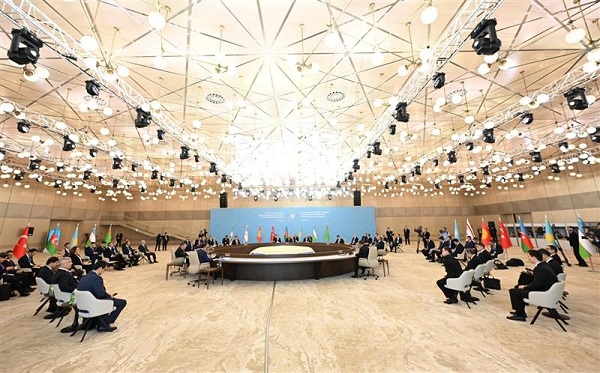
On 2 April 2026, Baku hosted the second meeting of heads of government and vice presidents of the member states of the Organization of Turkic States (OTS).
The meeting brought together high-level representatives, including:
- Azerbaijan: Prime Minister Ali Asadov
- Türkiye: Vice President Cevdet Yılmaz
- Kazakhstan: Prime Minister Oljas Bektenov
- Kyrgyzstan: Chairman of the Cabinet of Ministers Adylbek Kasymaliev
- Uzbekistan: Prime Minister Abdulla Aripov
- Turkish Republic of Northern Cyprus: Prime Minister Ünal Üstel
- Turkmenistan: Deputy Chairman of the Cabinet of Ministers Nokerguly Atagulyev
- OTS Secretariat: Secretary General Kubanychbek Omuraliev

According to the Ministry of Foreign Affairs of Turkmenistan, participants discussed pressing issues regarding the expansion of multilateral cooperation. Key topics included strengthening economic ties, developing transport and logistics corridors, trade, investment, the digital economy, energy, and sustainable development.
Special emphasis was placed on deepening economic integration among Turkic states and implementing joint infrastructure projects. The delegations also focused on expanding cooperation in industry, agriculture, and innovation.
Participants underscored the importance of mutual support, fostering business contacts, and creating a favorable environment to boost intra-regional trade.
The meeting concluded with the adoption of a Joint Statement.
Partnership as a Vital Condition for Stability within the OTS Framework
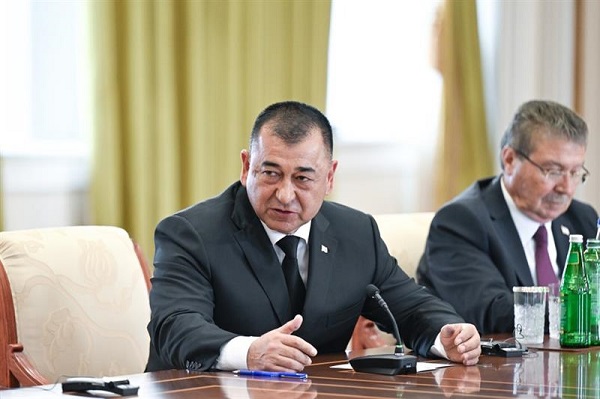
In his address, DPM Nokerguly Atagulyev emphasized the importance of further strengthening multilateral cooperation among Turkic states, rooted in shared historical and cultural ties, traditions, and mutual trust.
Turkmenistan highlighted the significance of coordinating national efforts to ensure international security and sustainable development.
“Turkmenistan highly values the partnership between Turkic states and views it as a vital condition for regional stability and development. Currently, our nations cooperate closely and effectively on key issues of the global agenda. Specifically, coordinating efforts in areas such as strengthening international peace, ensuring security, environmental protection, and achieving the Sustainable Development Goals (SDGs) remains one of the most critical tasks of our time,” he stated.
Atagulyev also noted the positive experience of cooperation between OTS member states within international organizations, particularly at the United Nations. “Turkmenistan actively proposes international initiatives and participates in their practical implementation, ascribing great importance to the development of multilateral diplomacy,” the DPM added.
Trade, Transport, and Investment: Ashgabat’s Strategic Position
Atagulyev outlined Ashgabat’s stance on trade and economic cooperation, placing particular emphasis on the country’s strategic geographical location.
He stressed that Turkmenistan attaches great importance to the development of the East-West and North-South corridors as part of the modern restoration of the Great Silk Road.
A key objective remains the further expansion of economic partnerships. Priorities include increasing investment cooperation, advancing industrial integration, and launching more joint projects.
“The development of transport and logistics infrastructure plays a pivotal role in this process. The advantageous geographical position of the Turkic states offers vast strategic opportunities, allowing them to serve as vital transit hubs in international logistics,” Atagulyev stressed.
He added that several key routes are of paramount importance to the country, including the Trans-Caspian International Transport Route (TITR), the Lapis Lazuli Corridor, and the Caspian Sea – Black Sea and Central Asia – Middle East directions. Developing these routes opens new horizons for trade growth and broader cooperation.
Energy Cooperation
Turkmenistan is actively cooperating with several Turkic states in the gas and power sectors and stands ready to expand this engagement, Nokerguly Atagulyev announced.
According to the DPM, Turkmenistan attaches great importance to implementing joint energy projects, developing infrastructure, and enhancing the interconnectivity of energy markets.
“At the same time, it is crucial to balance the interests of producers, transit countries, and consumers—this principle forms the bedrock of Turkmenistan’s energy policy,” the speaker emphasized.///nCa, 3 April 2026 (photo credit – Trend)