


Tariq Saeedi
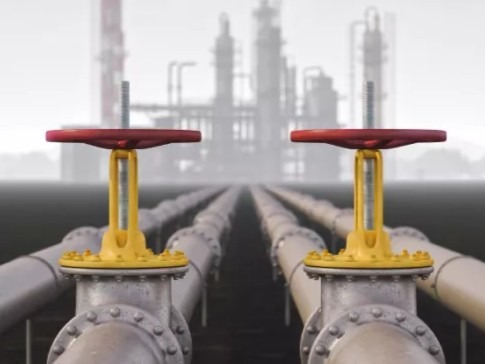
In the energy sector, midstream infrastructure—encompassing pipelines, storage facilities, and processing plants—plays a crucial role in bridging upstream extraction and downstream refining or distribution. These assets are essential for transporting hydrocarbons efficiently but often represent underutilized capital tied up in long-term, low-yield operations.
“Unlocking value” from midstream infrastructure refers to innovative financial strategies that allow state-owned energy companies to generate immediate capital from these assets without relinquishing operational control or ownership. This typically involves lease-and-leaseback arrangements, where a company sells a minority stake in a subsidiary holding pipeline rights to investors, who then lease the infrastructure back for a fixed period.
In return, the original owner receives upfront payments while continuing to manage daily operations. Investors earn returns through stable tariff fees based on throughput volumes, often guaranteed by minimum commitments.
This model has gained traction among Gulf oil producers seeking to fund ambitious expansion plans, diversify economies, and attract global capital amid volatile oil prices and the global energy transition.
By monetizing midstream assets, nations can redirect funds toward high-growth areas like upstream development, renewables, or non-oil sectors. Below, we explore this concept through examples from Saudi Arabia, the United Arab Emirates (UAE), and Kuwait, before assessing its potential benefits for Central Asian countries.
The Core Mechanism: Lease-and-Leaseback Deals
At its heart, unlocking midstream value is a form of asset monetization that transforms illiquid infrastructure into liquid capital. A national oil company (NOC) creates a subsidiary to hold usage rights over pipelines or processing facilities. Investors acquire a minority stake (often 49%) in this entity, providing an upfront infusion of billions in equity and debt. The NOC retains majority ownership (51%) and full operational authority, ensuring no impact on production decisions.
Over a 20-25 year term, the NOC pays tariffs to the subsidiary for using the assets, creating predictable cash flows for investors akin to infrastructure bonds. This structure minimizes risk for buyers—backed by the NOC’s credit and long-term energy demand—while allowing the seller to “recycle” capital into core activities.
Such deals appeal to infrastructure funds, pension plans, and sovereign wealth entities seeking stable, inflation-hedged returns in a low-interest environment. For NOCs, they provide non-dilutive financing, avoiding the need to issue debt or sell core producing assets.
Saudi Arabia: Pioneering Large-Scale Monetization
Saudi Aramco has been a leader in this approach, using midstream deals to support its massive investment program aimed at boosting oil capacity to 13 million barrels per day and expanding natural gas production.
In 2021, Aramco sold a 49% stake in its oil pipelines subsidiary for $12.4 billion to an international consortium led by EIG Global Energy Partners. This was followed in 2022 by a $15.5 billion gas pipelines deal with a group including BlackRock.
Most recently, in 2025, Aramco closed an $11 billion lease-and-leaseback for Jafurah gas processing facilities with a consortium led by Global Infrastructure Partners (GIP), part of BlackRock. Aramco retained 51% control, with no restrictions on output, and used the proceeds to fund Jafurah’s development—the world’s largest unconventional gas field.
These transactions have unlocked over $38 billion for Aramco, demonstrating how midstream monetization can fuel upstream growth without burdening the balance sheet. The appeal lies in Saudi Arabia’s vast reserves and stable demand, assuring investors of long-term tariffs.
United Arab Emirates: Building Investor Confidence Through Phased Deals
ADNOC, the UAE’s state oil firm, has similarly leveraged midstream assets to finance its goal of becoming a top global gas exporter. In 2019, it sold a 40% stake in ADNOC Oil Pipelines for $4 billion to BlackRock and KKR, marking one of the first such deals in the region.
The following year, ADNOC raised $10.1 billion by divesting 49% of ADNOC Gas Pipelines to a consortium including GIP, Brookfield, and GIC. ADNOC maintained 51% ownership and operational oversight in both cases.
In 2025, KKR deepened its involvement by acquiring an additional minority stake in ADNOC Gas Pipeline Assets, underscoring ongoing investor interest. These deals have generated over $14 billion, funding ADNOC’s expansion in LNG and petrochemicals while signaling the UAE’s investor-friendly environment.
Kuwait: Emerging Interest in Pipeline Monetization
Kuwait Petroleum Corporation (KPC) is exploring similar strategies to support its target of 4 million barrels per day oil production by 2040.
As of early 2026, KPC is in preliminary talks for a $7 billion stake sale in its crude pipeline network, attracting firms like BlackRock, Brookfield, EIG, and KKR. The proposed structure includes $1.5 billion in equity and $5.5 billion in debt, with a potential formal launch by late February 2026. This would mirror Gulf precedents, providing KPC with funds for upstream enhancements amid fiscal pressures.
Broader Benefits and Considerations
These examples highlight key advantages: immediate capital influx for reinvestment, reduced fiscal strain, and access to global expertise without sovereignty loss. Risks include dependency on investor sentiment, potential tariff hikes impacting profitability, and geopolitical sensitivities around foreign involvement in strategic assets. Success depends on transparent governance, strong credit ratings, and robust demand forecasts.
Potential for Central Asia: A Path to Diversification and Resilience
Central Asian nations like Kazakhstan, Turkmenistan, Uzbekistan, Kyrgyzstan, and Tajikistan—rich in hydrocarbons and minerals—could greatly benefit from similar midstream monetization.
With aging infrastructure and landlocked geography, these countries face energy security challenges, including outages and overreliance on transit territories. Monetizing pipelines could attract foreign direct investment, modernize networks, and fund diversification into renewables or critical minerals processing.
For resource-heavy Kazakhstan and Turkmenistan, which hold over 95% of the region’s gas reserves, such deals could unlock billions to enhance the Middle Corridor trade route, and address water scarcity by reinvesting in efficient technologies. Upstream-focused Uzbekistan could stabilize supplies, while downstream Kyrgyzstan and Tajikistan gain from regional integration, like a proposed “Gas Ring” for balanced distribution.
Overall, this could foster economic resilience, attract Western capital, and support sustainable development—provided regulatory stability and geopolitical risks are managed.
In summary, unlocking midstream value offers a pragmatic tool for resource-dependent economies to navigate the energy transition, as evidenced by Gulf successes. For Central Asia, it represents an opportunity to build a more interconnected, diversified future. /// nCa, 5 March 2026