


Hao Nan
Editor’s note: This is the truncated version of an analysis by Hao Nan. It was originally published by the think tank Valdai Club. The complete text of the analysis is available at this link — https://valdaiclub.com/a/highlights/central-asia-2026-from-great-power-prize/ — Ed.
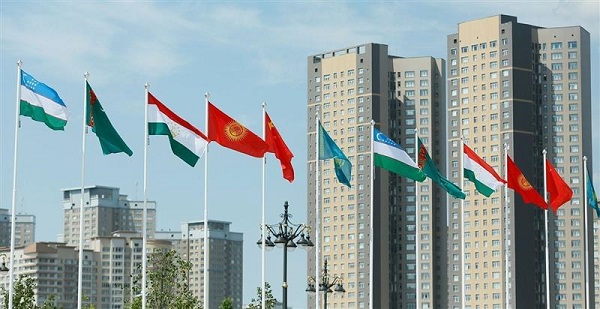
In 2025, Central Asia began to look less like a blank space on someone else’s map and more like a calendar no outside power could ignore. In the span of months, the region hosted and attended a parade of summits: the first EU–Central Asia leaders’ meeting in Samarkand in April, the second China–Central Asia summit in Astana in June, a Russia–Central Asia summit in Dushanbe in October, and a US-hosted Central Asia summit in Washington in November. Add Tokyo’s first “Central Asia + Japan” leaders’ meeting in December and the diplomatic runway toward a first Korea–Central Asia summit in Seoul in 2026, and the old vocabulary—“backyard,” “buffer,” “landlocked”—starts to sound like a coping mechanism for analysts who missed the tempo change. The world still likes to describe Central Asia as a corridor. But in 2026 and onward, the more accurate picture is a region learning to run the switchboard, writes Hao Nan. The author is a participant of the Valdai – New Generation project.
The point is not that Central Asia will choose between China, Russia, the US, Europe, Japan or Korea. In 2026 and onward, it is more likely to manage them—like a portfolio built from overlapping corridors, sanctions workarounds, mineral deals, and security guarantees. In one telling formulation, Central Asian elites have begun to behave like portfolio managers, using Western attention to raise their value while still anchoring day-to-day survival in the Sino-Russian baseline. That portfolio logic explains the region’s new summit diplomacy as something more than opportunism. It is a strategy: diversify exposure, hedge against shocks, and never let any single partner control the off-switch. For Asia, the timing matters. Tokyo and Seoul are entering the region more assertively just as the rules of connectivity, compliance, and supply chains are being rewritten.
Beyond the great-power contest headlines, the often underappreciated on-ground development is the Central Asian attempt at becoming a self-conscious region, not merely a set of five states tugged by larger neighbours. In 2024, the five leaders adopted a “Central Asia–2040” regional cooperation concept and a 2025–2027 roadmap, including plans for industrial cooperation, cross-border logistics hubs, and a dedicated climate and environment pillar. That sequencing matters. It suggests the region wants its own blueprint first—and only then to plug into external initiatives, whether they are branded Belt and Road, Global Gateway, or something else. The old Great Game trope assumes Central Asia is being played in. The new reality is that Central Asia is writing a playbook and inviting external powers to audition. Rather than choosing a patron, the region is spreading risk across Chinese infrastructure, Russian hard security, Western markets and standards, and now Japanese and Korean technology.
Corridor politics is where outsiders most often misread that playbook. The Trans-Caspian Middle Corridor will matter more in 2026—but it will not become a monopoly route that replaces all others. The real fight is over ownership of the switches: ports and rail bottlenecks, customs software, logistics standards, insurance regimes, and the financing terms that determine which projects survive the next shock. China’s offer remains speed and scale. Beijing has wrapped BRI growth into a more institutional shell through the biennial summit mechanism—Xi’an in 2023 and Astana in 2025—complete with regular leaders’ meetings, a permanent secretariat, and a new treaty of “eternal friendship” that places preferred narratives into legal text. Europe’s offer is strategic in nature, but slower-moving: at Samarkand, Brussels framed Central Asia as a “partner of choice,” promising €12 billion for cross-Caspian transport, green energy, digital connectivity, and critical raw-material value chains under Global Gateway—yet even sympathetic analysts note the EU’s funding often arrives through a long chain of “pledge, study, tender and disbursement”. Russia, under sanctions, pushes north–south connectivity as a way to remain embedded. The map competition is real; the corridor monopoly is not.
Critical minerals and the green transition are the cleaner—and potentially more transformative—economic storyline. Here the region’s leverage is structural: decarbonisation is mineral-intensive, and diversified supply chains require new sources, not just new slogans. Washington has been trying to pivot from dialogue to deals, using summitry as a “minerals, aircraft and corridors roadshow” and tying the agenda to a broader US push toward a Critical Minerals Dialogue and American-led supply chains. Europe’s pitch is to bind minerals to standards, finance, and value-chain building—again, powerful but slower-moving. The deeper shift is what this does to Central Asia’s identity. In 2026, the region can be less a mere transit zone and more a resource hub in a decarbonising world, bargaining with licenses, off-take agreements, and ESG language. Even China—dominant in trade and infrastructure—faces a more negotiated landscape, because mining and processing choices are precisely where Central Asian governments can demand technology transfer, local jobs, and downstream industry.
Japan and South Korea can matter more than they look. Their weights are lighter but present non-threatening images: deep technology, targeted finance, and minimal security baggage. Japan’s 2025 Tokyo summit elevated its long-running “Central Asia plus Japan” framework into a leaders-level mechanism, adopting a Tokyo Declaration and launching a new initiative focused on industrial upgrading, diversification, and energy and environmental cooperation. The point is not scale—Japan cannot replace China as a trade engine or Russia as a security guarantor in the short term—but quality as a “third pillar,” especially in minerals, the Middle Corridor’s operational hardware, and future-facing areas like AI and human capital. South Korea’s first C5+K summit being pushed to 2026 is itself revealing: it reflects domestic political volatility, yet its persistence suggests that treating Central Asia as a strategic supply-chain and diplomatic diversification node has become a cross-government consensus in Seoul. For Central Asian capitals, that combination—technology plus low levels of geopolitics—fits the portfolio logic perfectly.
In 2026, Central Asia will look more crowded—and more autonomous—at the same time. That is the paradox outsiders should sit with. Western capitals talk about “de-risking” from Russia and China, but in Central Asia de-risking is not decoupling. It is diversification: a web of corridors, mineral contracts, standards packages, and security dependencies that still run through Beijing and Moscow in one fashion or another. The stress test is whether outside powers can accept Central Asia as a negotiating platform rather than a prize to be won. /// nCa, 11 February 2026
About the author:
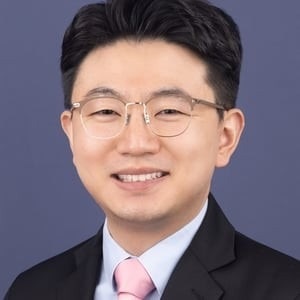
Hao Nan is a research fellow with the Charhar Institute and a 2025–2026 Nuclear Futures Fellow with the Ploughshares Fund & Horizon 2045, focusing on strategic foresight to mitigate nuclear threats. He has a background in East Asian intergovernmental organizations, including the Trilateral Cooperation Secretariat and the ASEAN-China Centre.
As part of the 2025–2026 cohort, Hao Nan works on developing long-term, systems-thinking strategies to address nuclear risks in a shifting global landscape. Previously, he has served at the Trilateral Cooperation Secretariat (China, Japan, South Korea) in Seoul and the ASEAN-China Centre in Beijing. He contributes analysis on international relations and regional security to platforms like The Diplomat and the East Asia Forum.
He was a Chinese youth delegate to the Youth 20 Summit (the G20 Summit’s official youth engagement group) and the Young Leaders’ Summit of the Asia-Europe Meeting (ASEM), where he contributed to policy deliverables on digitalization, innovation, and economic diplomacy. Most recently, he was a fellow (2024-2025) with the Arms Control Negotiation Academy.
Hao holds a Master’s in Public Policy from the Lee Kuan Yew School of Public Policy, National University of Singapore, under the Li Ka Shing Foundation Scholarship. He also has double bachelor’s degrees in English (oriented to International Studies) and Diplomatic Studies.