


Tariq Saeedi
As of 16 January 2026, there is peace and some semblance of normalcy in the streets of Iran. With this abatement, more information has become available. This affords some clarity.
In an Op-Ed, published on 15 January 2026, I wrote: “When the entire system becomes the target, a significant portion of the population—those who align with the government’s worldview or fear instability—mobilizes in counter-demonstrations.
“This isn’t a fringe element; it’s a considerable segment that views the regime as a bulwark against foreign interference. Their presence on the streets acts like an alkali to acid, neutralizing the original protests’ impact and turning public spaces into arenas of competing narratives.”
Now, we have the complete text of the briefing given by the Iranian Foreign Minister Dr. Seyed Abbas Araghchi to the representatives of the diplomatic community and international organizations in Tehran on 12 January 2026.
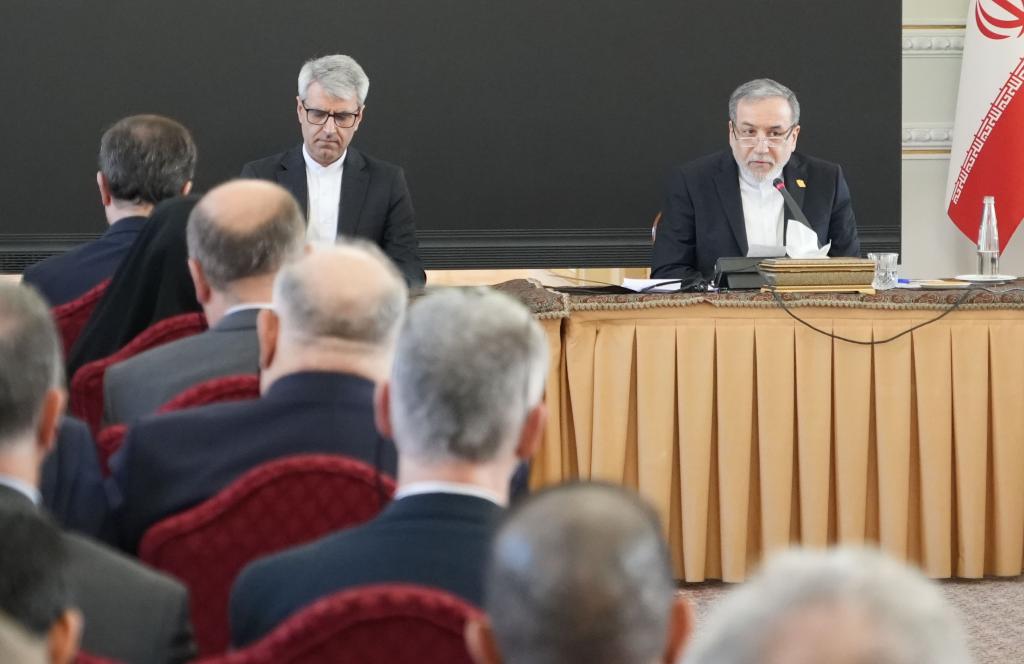
Araghchi provides the government’s account of protests that occurred in Iranian cities from late December 2025 through early January 2026. He describes the events as unfolding in distinct phases, beginning with peaceful economic protests by bazaar merchants and trade guilds from December 28-30, which he characterizes as constitutionally protected demonstrations. According to Araghchi, the government responded by initiating dialogue, with the President and economic ministers meeting protest representatives to address their concerns and implement reforms.
According to Araghchi, the protests then evolved into something more violent. From January 1-7, new elements introduced violence into the demonstrations.
He asserts that from January 8-10, terrorist elements and armed groups infiltrated the protests, deliberately targeting both police and civilians with the aim of increasing casualties.
He implied that the violence injected into the peaceful protests was purposely aimed at attracting the foreign intervention. He told the international community that audio evidence was available on the distribution of arms and incitement of violence.
Simultaneously, pictures have become available of some of the places burnt by the infiltrators among the crowds. — During the early phase of the violent protests, these were vaguely described in the press as the ‘symbols of the regime.’ — In the pictures we have now, these were mainly mosques and healthcare centres. A mosque is a place of worship, not a symbol of regime, any kind of regime. A healthcare centre is just a healthcare centre, not a symbol of any regime by any stretch of imagination. At least 54 ambulances were burnt during the violence. How can an ambulance be described as a symbol of the regime?
When we look at the anatomy of street protests in any part of the word, we can see clearly that when the demands keep expanding rapidly, the clear purpose is not to solve the matter but to stoke the violence and ultimate collapse of the system.
* * *
According to the reports from 16 January 2026, the Internet restrictions have eased to some extent. The National Information Network (intranet ecosystem) has been partially restored in some areas, allowing limited internal communications, access to government-approved sites, and certain economic functions like banking and payment processors.
On January 13, restrictions on international phone calls were eased, allowing outbound calls abroad.
Iran’s airspace has reopened following a brief, temporary closure. The closure lasted approximately five hours overnight from January 14 to early January 15, 2026. Airspace fully reopened around 3:30 AM UTC on January 15 (early morning local time), with domestic and international flights resuming, including overflights.
* * *
Quiet on the streets should not induce complacency. The incitement to violence may return in the next 4-7 days when the relocation of some foreign military assets is completed. The government in Iran should not waste this small window of opportunity. There is the need to do everything it can to resolve the complaints of the population with compassion and sincerity, and with solid, concrete steps rather than mere words. /// nCa, 16 January 2026 [photo credit – Xinhua]