


nCa Report
As 2025 draws to a close, China’s Central Economic Work Conference (CEWC) has laid out a pragmatic blueprint for the year ahead, emphasizing stability amid domestic slowdowns and global uncertainties (source). The meeting, held in Beijing from December 10 to 11, reaffirmed commitments to boosting domestic demand, stabilizing the property sector, and leaning on exports as a key growth driver—especially as trade frictions with the West intensify.
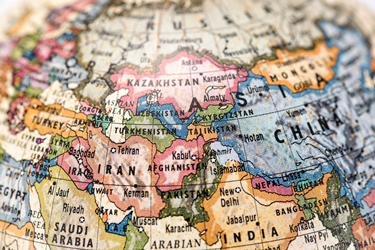
But beyond the headlines of continuity, the CEWC signals a subtle shift: a reliance on emerging markets to sustain momentum. Nowhere is this more evident than in China’s burgeoning relationship with Central Asia, a region that’s becoming increasingly vital for Beijing’s economic strategy.
Drawing from recent developments, including soaring trade figures and landmark summits, it’s clear that 2026 could mark a new chapter in China-Central Asia interactions. With the region designated as a focal point for “high-quality cooperation” through 2026, expect intensified trade, energy partnerships, and infrastructure investments that align neatly with China’s domestic priorities (source).
This isn’t just about economics—it’s a strategic hedge against headwinds like U.S. tariffs and European market pressures.
Exports as the Lifeline: Central Asia’s Growing Role
The CEWC readout was notably terse on exports, mentioning them only in the context of services. Yet analysts interpret this as quiet confidence in their continued centrality, given China’s record $1.08 trillion trade surplus in the first 11 months of 2025 (source).
Shipments to non-U.S. markets surged—up 8.9% to Europe, 14.6% to Southeast Asia, and a whopping 26.3% to Africa—offsetting an 18.3% drop to the United States. This pivot to diversified markets is where Central Asia fits in, offering a stable, proximate outlet for Chinese goods amid rising global tensions.
Trade with the five Central Asian republics—Kazakhstan, Kyrgyzstan, Tajikistan, Turkmenistan, and Uzbekistan—jumped significantly in 2025. Overall turnover reached new highs, with Kyrgyzstan seeing the sharpest rise from $17.4 billion to $23.6 billion in the first 10 months (source). Kazakhstan, the region’s economic heavyweight, saw trade climb to $39.8 billion (source), while Uzbekistan hit $12.9 billion (source).
These figures underscore Central Asia’s emergence as a buffer against Western trade barriers, with Chinese exports of machinery, electronics, and consumer goods flooding in.
Looking to 2026, Beijing’s push for “sustainable” trade expansion could amplify this trend.
Officials have signaled plans to boost both exports and imports, potentially through streamlined procedures and diversified structures agreed upon at the second China-Central Asia Summit in June 2025 (source).
With trade frictions likely to escalate—as warned by French President Emmanuel Macron during his December visit to China—Central Asia’s markets could absorb more Chinese overcapacity, particularly in sectors like manufacturing where “involutionary competition” is a domestic concern.
Energy Partnerships: Balancing Tradition and Green Ambitions
Energy security remains a cornerstone of China-Central Asia ties, and the CEWC’s emphasis on building an “energy-strong nation” through green initiatives opens doors for expanded collaboration.
Traditionally, the region supplies vital fossil fuels: Turkmenistan alone exported $8.1 billion worth of natural gas to China in 2025’s first 10 months, highlighting the enduring role of pipelines like the China-Central Asia Gas Pipeline (source).
But 2026 projections point to a greener tilt, aligning with Beijing’s long-term growth bets on innovation and renewables. The summit established a China-Central Asia energy development partnership, spanning the full value chain and prioritizing green minerals (source).
China has already inked deals for wind projects in Kazakhstan and solar initiatives in Uzbekistan, with a major new energy efficiency project in Uzbekistan slated for completion in September 2026 (source). These efforts reflect Beijing’s drive to export clean tech while securing resources like copper and aluminium, crucial for its EV and solar industries.
As domestic property woes drag on investment—FAI fell 1.7% in the first 10 months of 2025—overseas green projects could help “halt the decline” by channeling funds abroad. With COP30 outcomes fresh in mind, China’s global green leadership push might accelerate joint ventures, making Central Asia a testing ground for affordable clean energy exports (source).
Infrastructure Boom: BRI as the Backbone
The Belt and Road Initiative (BRI) is the glue binding these economic threads, and 2025 saw a record surge in funding—$124 billion globally in the first half alone, with Central Asia snagging $25 billion for mining and infrastructure (source). This focus stems from resource needs amid U.S. export controls, as seen in Kazakhstan’s $23 billion haul, including a massive aluminium complex.
For 2026, the designation of 2025-2026 as “Years of High-Quality Development” promises more: upgraded railways like the China-Kyrgyzstan-Uzbekistan line, highway restorations, and expanded freight services (source). These align with CEWC calls for stabilizing investment and upgrading industrial chains, potentially injecting vitality into China’s slack domestic sectors. Beijing’s grants of RMB1.5 billion for livelihood projects and 3,000 training spots further sweeten the deal, fostering people-to-people ties (source).
Geopolitical Underpinnings and Risks
This deepening engagement isn’t purely economic—it’s strategic. The “eternal strategic partnership” declared at the summit elevates ties to new heights, countering Western influence in a region rich in resources and transit routes (source). As China navigates “uneasy rivalry” with the U.S., Central Asia offers a low-friction arena for influence, especially with Russia’s distractions in Ukraine.
Yet risks loom: Overreliance on exports could spark local resentments over trade imbalances, and debt concerns from BRI projects persist. If global green transitions falter, fossil fuel dependencies might prolong vulnerabilities.
Outlook: A Symbiotic Path Forward
In sum, China’s 2026 agenda—rooted in export resilience, green innovation, and investment stabilization—positions Central Asia as a key partner. With trade poised to exceed 2025 highs and projects like the Uzbekistan energy initiative coming online, interactions could yield mutual benefits: resources and markets for China, infrastructure and tech for Central Asia.
But success hinges on navigating trade disputes and ensuring equitable growth. As Beijing fine-tunes its path, this regional synergy might just be the steady hand it needs in turbulent times. /// nCa, 18 December 2025