


On 31 May, SRSG for Central Asia, Head of UNRCCA Kaha Imnadze, intervened at the High-Level International Conference on Glaciers’ Preservation in Dushanbe. In his statement he called on strengthening partnerships and deepening regional cooperation with the view to arrive at mutually beneficial solutions on addressing the outstanding issues of regional and global agendas. SRSG Imnadze noted that the region is emerging as a model of regional cooperation. He underlined that addressing the water-climate nexus was one of the priorities of the preventive activities of the Centre. He counted on engagement of all five Central Asian states in advancing these important endeavors.
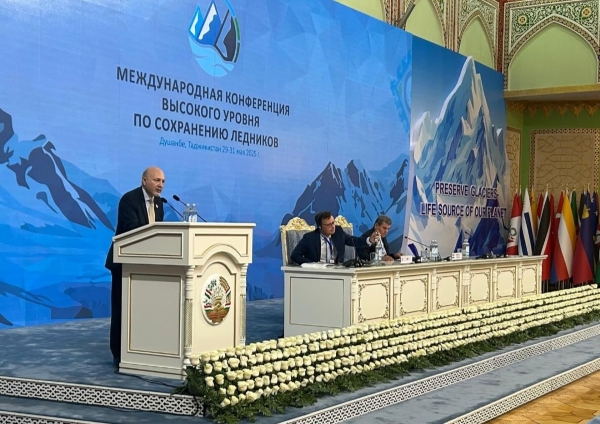
The High-Level conference in Dushanbe was organized in line with the United Nations General Assembley resolution, declaring 2025 as the International Year of Glaciers’ Preservation. The event gathered state representatives, politicians, experts, NGOs, and media from more them 80 countries. The Conference endorsed the Dushanbe Glaciers’ declaration, Chair’s Summary and the Dushanbe Appeal: A call for action, with respective recommendations and actions to follow.
SRSG Kaha Imnadze Highlights Importance of Regional Cooperation at Forum on Transboundary Water Cooperation and Climate Resilience in Glacier-Dependent Basins of Central Asia
On May 29, UNRCCA co-organized a High-Level Regional Forum on “Enhancing Transboundary Cooperation for Water Security and Climate Resilience in Glacier-Dependent Basins of Central Asia, held in Dushanbe, Republic of Tajikistan. The Forum was launched within the framework of the High-Level International Conference on Glaciers’ Preservation in Dushanbe (30–31 May 2025) in partnership with the Ministry of Energy and Water Resources of the Republic of Tajikistan, the International Fund for Saving the Aral Sea, the Interstate Commission for Water Coordination, the International Water Management Institute, the Swiss Agency for Development and Cooperation, the Organization for Economic Co-operation and Development, and the World Bank through the Central Asia Water and Energy Program.
The Forum aimed to contribute to regional efforts in support of the International Year of Glaciers’ Preservation, as declared by the United Nations General Assembly for 2025. It gathered senior officials from all five Central Asian states, including Daler Shofakir Juma, Minister of Energy and Water Resources of the Republic of Tajikistan; Nurjan Nurjigitov, Minister of Water Resources and Irrigation of the Republic of Kazakhstan; and Askhat Orazbay, Chairman of the Executive Committee of IFAS. Representatives of regional organizations, development partners, and the scientific community also took part. Discussions focused on the accelerating retreat of glaciers and its far-reaching impacts on water security, climate resilience, and sustainable development, with a strong emphasis on coordinated, science-based, and preventive approaches.
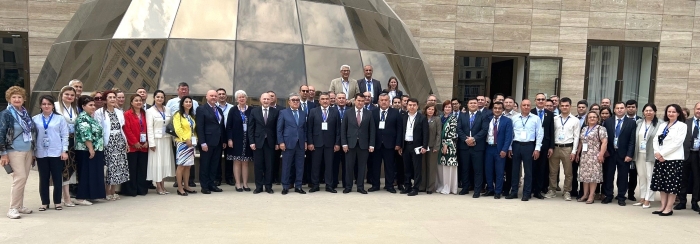
In his opening remarks, SRSG Kaha Imnadze, underscored the importance of preventive diplomacy, regional solidarity, and integrated governance in addressing climate risks across the water-energy-food-environment nexus. “The UNRCCA views this Forum and the upcoming Glaciers Conference as critical platforms for practical, forward-looking solutions. Climate security and transboundary water cooperation remain essential pillars of our regional peace and sustainable development agenda,” he stated.
As part of its contribution, UNRCCA prepared and moderated a dedicated session on “Strengthening Transboundary Governance and Policy Coordination,” which explored opportunities to reinforce cooperation through existing regional mechanisms, including IFAS, UNRCCA, and other initiatives led by UN agencies and development partners. Participants highlighted the importance of inclusive dialogue, harmonized policies, open data exchange, scientific tools for climate adaptation, and sustainable financing mechanisms.
The Forum concluded with a joint commitment to deepen regional cooperation in glacier-dependent basins. The outcomes and recommendations will be presented at the High-Level International Conference on Glaciers’ Preservation, further reinforcing shared efforts to address climate change and accelerate progress toward the Sustainable Development Goals.
UNRCCA reaffirms its continued support to the countries of Central Asia in advancing peaceful, cooperative, and climate-resilient approaches to shared transboundary challenges.
UNRCCA And EC IFAS Sign Memorandum of Understanding to Strengthen Environmental Cooperation in the Aral Sea Basin
On 31 May, on the margins of the International High-Level Conference on Glaciers’ Preservation, held in Dushanbe, the Republic of Tajikistan, SRSG Kaha Imnadze and Chairman of the Executive Committee of the International Fund for Saving the Aral Sea, Mr. Askhat Orazbay, signed a Memorandum of Understanding on Cooperation to develop monitoring mechanisms and preventive response to environmental threats in the Aral Sea Basin.
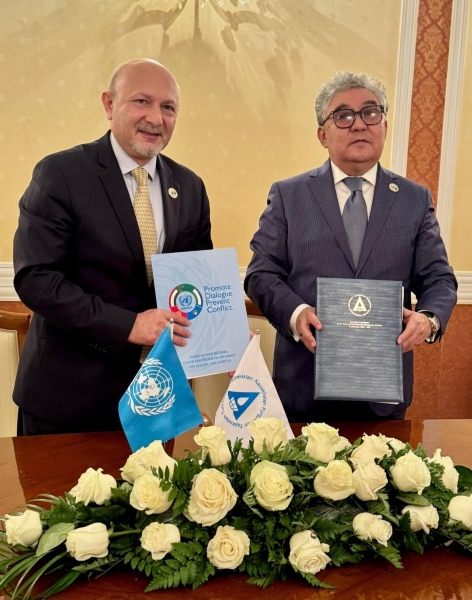
The MoU is aimed at strengthening cooperation and coordination between the two regional entities in responding to climate and ecological challenges faced by the Central Asian states, and improving socio-economic conditions in the Aral Sea Basin.
SRSG Kaha Imnadze Meets EU Special Representative for Central Asia on the Margins of the High-Level Conference on Glaciers’ Preservation
On 31 May, SRSG Kaha Imnadze met with the European Union Special Representative for Central Asia, Mr. Eduards Stiprais, on the margins of the High-Level International Conference on Glaciers’ Preservation in Dushanbe, the Republic of Tajikistan.
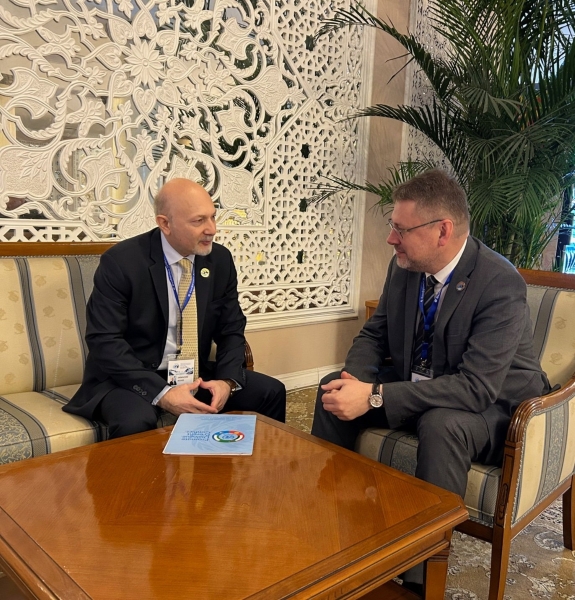
The meeting provided an opportunity to exchange views on recent developments in Central Asia and to coordinate upcoming activities in support of regional cooperation. The discussion, inter alia, focused on enhancing collaboration within the framework of the Central Asian Women Leaders’ Caucus, as well as on identifying opportunities for joint initiatives.
Both sides reiterated their commitment to strengthening dialogue and synergy among regional and international partners, including through the “Troika” format of cooperation between UNRCCA, the European Union, and the OSCE. ///UNRCCA, 31 May 2025