


nCa Analysis
There was a time when wars were fought with tanks, diplomacy with carefully worded cables, and public opinion was something governments tried—often imperfectly—to manage after the fact. That world is gone.
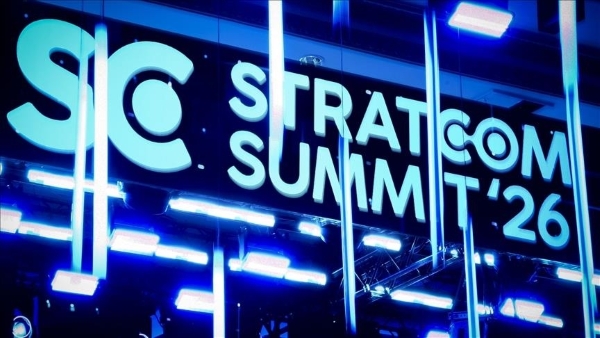
At the Stratcom Summit 2026 in Istanbul, held on March 27–28, one message came through with striking clarity: today, the battle often begins—and sometimes ends—with the story that prevails.
Hosted by Türkiye’s Communications Directorate, the summit brought together an unusually potent mix of political authority, intelligence insight, and narrative expertise. Figures such as Cevdet Yılmaz, Hakan Fidan, and İbrahim Kalın were not there merely as dignitaries. Their presence signaled something deeper: strategic communication is no longer an accessory to policy—it is policy.
Alongside them stood global voices like Tawakkol Karman and seasoned practitioners such as Robert Ford, underscoring that this is not just a state-centric conversation. It is also about civil society, legitimacy, and the increasingly fragile boundary between truth and persuasion.
A World Where Truth Is Contested
The summit’s theme—“Disruption in the International System: Crises, Narratives, and Search for Order”—could hardly be more apt. The international system is not just under strain; it is losing its shared vocabulary.
Conflicts today are fought twice: once on the ground, and once in the information space. In places like Gaza or in the shadow of tensions involving Iran, the question is no longer only what is happening, but whose version of what is happening gains acceptance. Legitimacy is being shaped in real time, often by actors far removed from the battlefield.
This is where strategic communication enters as a decisive force. Disinformation, selective framing, and algorithm-driven amplification have turned narratives into instruments of power.
The summit repeatedly returned to a sobering idea: we may be entering a post-consensus era, where facts alone are no longer sufficient to anchor global understanding.
The AI Factor: Speed, Scale, and Uncertainty
If the information battlefield was already complex, artificial intelligence has made it exponentially more so. Deepfakes, synthetic media, and automated content generation are not just technological curiosities—they are tools capable of reshaping perception at scale.
The concern voiced in Istanbul was not simply about falsehoods, but about velocity. Narratives now spread faster than they can be verified, and corrections rarely travel as far as the original claim. In such an environment, the line between reality and fabrication becomes increasingly difficult to defend.
The implication is profound: credibility itself is under siege.
Türkiye’s Strategic Positioning
Amid this uncertainty, Türkiye is carving out a distinct role—not only as a geopolitical actor but as a narrative broker.
Its mediation efforts, from the Russia–Ukraine conflict to engagements in Africa and the Middle East, were presented not just as diplomatic initiatives but as examples of how communication can enable negotiation. The ability to speak to multiple sides, to frame issues in ways that resonate across divides, is emerging as a form of strategic capital.
By convening the Stratcom Summit, Ankara is effectively saying: in a fragmented world, those who can shape dialogue may shape outcomes.
From Words to Structures
Unlike many international gatherings that dissolve into generalities, the summit produced concrete steps. Plans for a Trilateral Maritime Cybersecurity Center of Excellence and new coordination mechanisms on emergency preparedness point to an effort to institutionalize strategic communication within broader security frameworks.
There were also agreements aimed at strengthening media cooperation, particularly with partners like Azerbaijan—an indication that aligned narratives are becoming part of alliance-building.
Even initiatives on environmental response and energy connectivity carried a communication dimension. After all, infrastructure projects today are not just built with steel and capital; they are sustained by public trust and shared perception.
“The World Is Bigger Than Five”—Again
Perhaps the most familiar refrain to emerge from the summit was also one of its most telling: “The world is bigger than five.”
This long-standing call for reform of the UN Security Council has often been framed as a political demand. In Istanbul, it was equally a narrative strategy—a way of articulating dissatisfaction with the current global order in terms that resonate beyond diplomatic circles.
It reflects a broader shift: countries are not only contesting power structures; they are contesting the stories that justify those structures.
The Deeper Shift
What the Stratcom Summit 2026 ultimately revealed is that we are living through a transformation in how power operates.
Military strength still matters. Economic resilience still matters. But increasingly, the ability to define reality—to frame events, assign meaning, and shape perception—may matter just as much.
This is not a comfortable evolution. A world where narratives compete without a shared baseline of truth is inherently unstable. Yet it is the world we are entering.
In Istanbul, the conversations did not resolve this tension. They could not. But they did something equally important: they acknowledged it.
And in doing so, they made one thing unmistakably clear—the quest for the future of the international system is, at its core, a struggle over who gets to tell its story. /// nCa, 29 March 2026