


Tariq Saeedi
There are truths that transcend every border, every flag, every ideology. Children are not “ours” or “theirs.” They belong to all of humanity. Their safety, their laughter, their right to grow up without fear—these are not negotiable.
Any crime against a child is a crime against every one of us. When that crime is deliberate, when it takes the lives of little girls in their school desks, something fundamental in the human conscience is wounded.
On 28 February 2026, a Tomahawk missile struck the Shajareh Tayyebeh primary school in Minab, southern Iran. Nearly 200 people died that day. At least 168 of them were children—mostly girls between seven and twelve years old. There is no softer word for it: this was the Minab massacre.
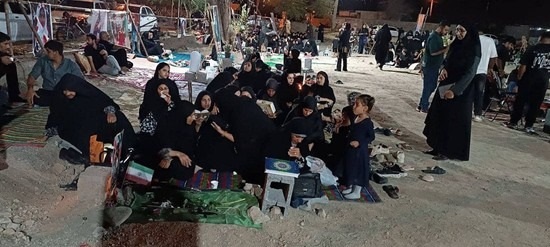
For nineteen consecutive nights since then, the families of those children and the entire community of Minab have gathered at the site. They sit together through the darkness, keeping vigil beside their lost sons and daughters.
They fasted through Ramadan; they prayed through the holy month; and now, on 20 March 2026, the morning of Eid al-Fitr, they are still there.
Eid al-Fitr is meant to be the children’s day. New clothes are laid out the night before. Toys are wrapped. Pockets are filled with small gifts of money. Mothers cook special sweets—the ones their little ones ask for all year.
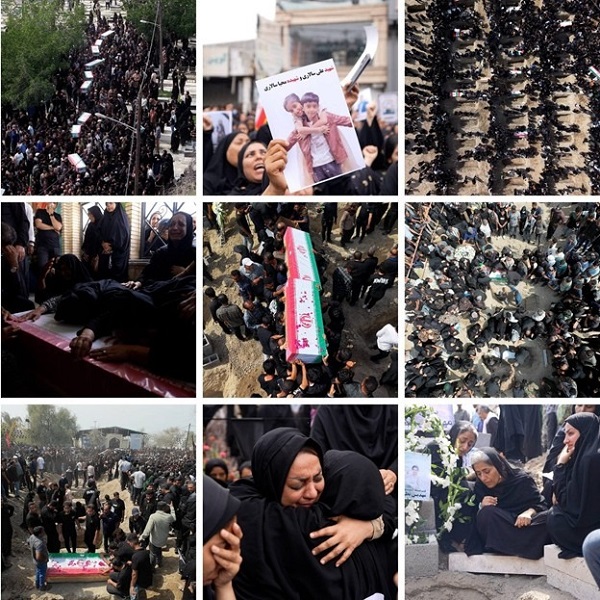
Instead of celebration, the families of Minab are still sitting in the dust where their children fell, unable to return home to empty rooms and silent voices.
Minab lies roughly ninety kilometres east of Bandar Abbas. Its people are a living mosaic of Iran itself: Arab, Persian, Baloch, Sub-Saharan African, Azeri, Armenian, South Asian. In one strike, every ethnic thread that makes up the Iranian nation was torn. If the intent was to fracture the country, the choice of Minab was brutally efficient. It has instead done the opposite.
I look at the images of Minab before that day—quiet streets, palm trees, the gentle curve of the coastline—and then I think of the children who once ran through those streets. I think of the Eid mornings that will never come for 168 families. And I feel a deep, quiet anger that any nation, any leader, any military planner could believe that such an act would “break the will” of a people.
The vigils continue. Night after night, through fasting and festival alike.
The families are not asking for revenge in their words; they are simply refusing to let their children be forgotten. They sit together, as one community, as one nation, as one witness to what was done.
No strategic objective, no military doctrine, no political calculation can justify this. Children are not collateral. They are not acceptable losses. They are the future we all claim to protect.
The people of Minab have shown the world something profound in their nineteen nights of vigil. They have shown that grief, when shared, becomes strength. They have shown that even in the deepest pain, a community can choose dignity over despair.
The rest of us—every nation, every leader, every citizen—must now look at Minab and ask ourselves a simple question: if we cannot protect the children, what exactly are we fighting for?
The vigils continue. The grief is real. And the responsibility belongs to all of us. /// nCa, 20 March 2026 [Pictures from Drop Site News – Mahmoud Aslan]