


Tariq Saeedi
Roots in the Steppes
Amir Khusro (1253–1325) was born in Patiyali, in what is now Uttar Pradesh, India, but his soul belonged to a much wider world.
His father, Amir Saifuddin Mahmud, was a chieftain of the Lachin tribe — a Turkic clan that fled the Mongol onslaught under Genghis Khan and found refuge in the Delhi Sultanate. This single act of migration planted Central Asian roots deep into South Asian soil and, in doing so, gave the world one of its most extraordinary poets, musicians, and mystics.
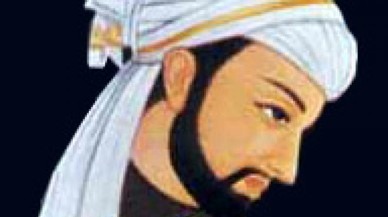
The Lachin were never a large tribe. Over generations, through the usual turbulence of migrations and alliances, they merged into larger groupings. Elements of the Lachin eventually became absorbed into the Ersari — one of the five great Turkmen tribes, still prominent today across Turkmenistan and Afghanistan. Within the Ersari, a sub-clan called Gara-Lachin preserves this ancestral memory. It is a quiet but powerful thread connecting Khusro to modern Turkmenistan, transforming him from a medieval Indian poet into a shared cultural icon — a son of Central Asian steppes who enriched South Asia beyond measure.
In Pakistan, where Urdu is the national language, this connection resonates with particular force. Khusro was among the earliest architects of Hindavi, the precursor to Urdu, weaving Persian, Turkic, Arabic, and local Indian elements into a lingua franca for millions.
Pakistan’s Sufi traditions, its qawwali music, its poetic heritage — all carry Khusro’s fingerprints. The Turkmen carpet-weaver and the Pakistani qawwal are, in a sense, distant cousins, bound by a heritage neither may fully know.
Inclusion as a Way of Life
Running beneath everything Khusro did was a single, radical principle: inclusion always produces something greater than exclusion. His Sufi worldview refused boundaries — ethnic, linguistic, religious, or artistic.
In music, he blended Central Asian string traditions with Indian instruments, contributing to the sitar’s evolution and pioneering vocal forms like khayal and tarana. These weren’t compromises between traditions; they were elevations of them.
In language, his multilingual Hindavi poetry gave voice to people across ethnic lines, turning diversity into literary strength. In society, he served multiple sultans while remaining devoted to his spiritual master Nizamuddin Auliya, holding the worlds of power and piety in the same hands without letting either corrupt the other.
He once said of India: “Though the Hindu is not like me in religion, he believes in the same things that I do.” In an age of conquest and division, that was a remarkable thing to say — and to mean.
Khusro and Dante: Two Poets, One Moment
It is one of history’s more striking coincidences that Amir Khusro and Dante Alighieri (1265–1321) were near-contemporaries, both laboring in the late 13th and early 14th centuries to do essentially the same thing: rescue their native tongues from the shadow of a dominant literary language and make them worthy vessels for the deepest human experiences.
Khusro did it with Hindavi against Persian. Dante did it with Tuscan Italian against Latin. Neither knew the other existed, yet scholars studying “vernacular hybridity” group them naturally together, recognizing a shared instinct to democratize literature.
Their parallels go further. Both used poetry to convey moral and metaphysical truths — Khusro through Sufi allegory and devotional ghazals, Dante through his great Christian epic of Hell, Purgatory, and Paradise. Both invented new poetic forms: Khusro the tarana and qaul, Dante the terza rima.
Both wrote works with an episodic, paradisiacal structure — Khusro’s Hasht Bihisht (“Eight Paradises”) and Dante’s Paradiso feel like distant cousins. No direct influence has ever been established, and scholars are cautious about claiming one. But the resonance is real, rooted in the broader exchange of mystical and narrative archetypes across the medieval Eurasian world.
Khusro and Yunus Emre: Sufi Brothers Across Borders
A more intimate comparison can be drawn between Khusro and Yunus Emre (c. 1238–1320), the wandering Turkish Sufi poet of Anatolia. Here, the parallels are not merely thematic — they are biographical and spiritual.
Both men lived through the trauma of the Mongol era. Both were Sufi mystics writing in vernacular languages to bring mysticism down from the elite Persian and Arabic heights into the everyday lives of ordinary people. Yunus wrote in Old Anatolian Turkish; Khusro wrote in Hindavi. In doing so, each became the founding father of a great literary tradition — Turkish and Hindi-Urdu respectively.
Their poetry breathes the same air. Both are saturated with divine love, longing, and the soul’s yearning for union with God. Both use nature as a spiritual mirror. Yunus writes: “What I desire in both worlds is the same: / You’re the One I need, You’re the One I crave.” Khusro writes of unity in love with equal intensity: “I am the body, you the soul; / So that no one can say hereafter, that you are someone, and me someone else.”
They differ in texture. Yunus is more folkloric, aphoristic, rooted in Anatolian rural life. Khusro is more courtly and erudite, a man of palaces as much as prayer halls. But they represent parallel currents of the same river — one flowing toward Anatolia and eventually Turkey, the other toward India and eventually Pakistan.
The Shadow of Rumi
Behind both Khusro and Yunus stands a larger figure: Jalaluddin Rumi (1207–1273). No direct meeting was possible — Rumi died in Konya when Khusro was twenty, and they lived on opposite ends of the Islamic world. But Rumi’s great work, the Masnavi, reached India just three years after his death, carried by disciples traveling the Sufi networks that connected Konya to Multan to Delhi. By the time Khusro was in his prime, Rumi’s ideas were part of the intellectual atmosphere he breathed.
The evidence of influence is indirect but compelling. Khusro’s master, Nizamuddin Auliya, taught a mysticism of love and unity — the very essence of the Masnavi. Thematic echoes abound: the soul’s separation from its divine source, music as a path to God, love as the only true knowledge. Khusro’s famous lines on spiritual union mirror passages in Rumi with striking closeness.
A 2001 documentary, Rumi in the Land of Khusrau, made this kinship explicit, portraying Khusro as part of Rumi’s extended spiritual legacy.
No smoking gun exists. But in the interconnected world of 13th-century Sufism, where Persian was the shared language of civilization and texts traveled with pilgrims and merchants, the idea that Khusro was unaware of Rumi strains credulity.
The Paradox of Chaos and Creativity
There is a pattern that repeats across history: the greatest bursts of creative energy tend to erupt in the worst of times. The Renaissance followed the Black Death. The Harlem Renaissance bloomed in economic depression. And Khusro’s own era — fractured by Mongol invasions, political upheaval, and mass migrations — produced a flowering of poetry, music, and mysticism across the Eurasian world that has never been surpassed.
Why? Perhaps because catastrophe strips away the comfortable and the conventional, forcing minds toward deeper questions.
Perhaps because migrations and conquests force cultures into contact, generating the creative friction from which new forms are born. Khusro himself was the product of exactly such a collision — Turkic warrior heritage meeting Indian spiritual tradition, Persian literary culture meeting Hindavi folk expression.
The same dynamic appears to be at work in our own turbulent era. Post-pandemic disruption, geopolitical conflict, climate crisis, and the shock of artificial intelligence have combined to produce a wave of innovation across fields that would have seemed miraculous a generation ago.
Quantum computing is solving problems that would take conventional supercomputers longer than the age of the universe. Hybrid solar cells are achieving efficiencies once thought physically impossible. A twice-yearly HIV prevention injection has been called the medical breakthrough of 2024. AI is composing music, writing poetry, and generating images — blurring the line between human and machine creativity in ways that are philosophically unresolved.
The medium has changed. Khusro’s world expressed its creative surge through ghazals, qawwalis, and masnavis. Ours expresses it through quantum chips, gene-edited crops, and AI-generated art. But the underlying dynamic is the same: chaos, as it always has, is forcing the human mind to reach further than it thought it could.
This was perhaps what the great philosophers meant when they spoke of poets and visionaries as those who receive ideas first — not through supernatural descent, but through a heightened sensitivity to the pressures and possibilities of their moment. Plato called it divine inspiration. Bergson called it intuition. Whatever we call it, Khusro had it in abundance.
The Company He Kept (Across Time and Space)
Khusro did not stand alone. His lifetime overlapped with a remarkable constellation of literary and artistic greatness around the world, a reminder that his era was one of the most creatively fertile in human history.
In the Islamic world, Saadi Shirazi (1210–1291) was perfecting the moral tale and the ghazal in Shiraz while Khusro was growing up in Delhi. Rumi died just as Khusro’s career was beginning.
Yunus Emre was composing his folk hymns in Anatolia throughout Khusro’s adult life. Mahmud Shabistari was writing his great Sufi allegory Gulshan-i Raz in the same decades. The young Hafez, who would become the greatest master of the Persian ghazal, was born in the final decade of Khusro’s life.
In Europe, Dante was writing the Divine Comedy in Florentine exile, completing it just five years before his death in 1321. Guido Cavalcanti, Dante’s closest friend and the other great figure of the dolce stil novo, died in 1300. Petrarch and Boccaccio, the two writers who would bridge medieval and Renaissance literature, were born in Khusro’s final decades.
In China, the Yuan dynasty — itself a product of the same Mongol upheaval that had driven Khusro’s ancestors to India — was producing a golden age of drama. Guan Hanqing, often called China’s Shakespeare, was writing his social plays. Wang Shifu was composing the Romance of the West Chamber. The scholar-poet Zhao Mengfu was painting and writing verse under Mongol patronage with a melancholy elegance that echoes, across all cultural distance, the mood of Khusro’s own exile poetry.
In India itself, the Bhakti saint-poets were emerging as a parallel current to Khusro’s Sufi mysticism. Dnyaneshwar translated the Bhagavad Gita into Marathi before dying at twenty-one. Namdev was composing devotional hymns that would eventually find their way into the Sikh scriptures.
All of these figures were, in one sense, responding to the same world — the same Mongol shockwave, the same unraveling of old certainties, the same hunger for meaning in an age of destruction. That they produced such beauty in response is perhaps the most human thing about them.
Khusro, standing at the intersection of more traditions than almost any of them, remains the most emblematic figure of that extraordinary moment — a Turkmen warrior’s son who became one of South Asia’s greatest poets, a bridge between continents and centuries that time has not managed to burn. /// nCa, 2 March 2026