


nCa Report
A 134-kilometre waterway threading through southern China is quietly rewriting the economic geography of an entire continent.
From Landlocked to Sea-Linked
There is a particular kind of frustration that comes with being landlocked. Goods cost more to move. Markets feel further away. Opportunity seems to pool at the coast and struggle to reach inland. For the people of Guangxi, Yunnan, and Guizhou — three of China’s less prosperous southwestern provinces — that frustration has been a fact of economic life for generations.
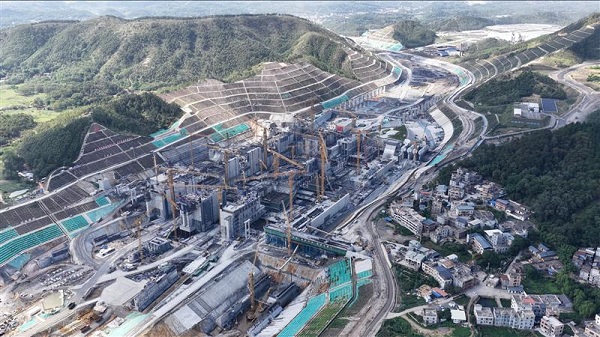
The Pinglu Canal, currently racing toward completion in Guangxi, is designed to change that. Stretching 134.2 kilometres from the Yu River near Hengzhou down to the Beibu Gulf — also known as the Gulf of Tonkin — it will give these inland regions something they have never had before: a direct, navigable route to the sea.
It is China’s first major canal project in over 70 years. At a cost of approximately 72.7 billion yuan (around $10.1 billion USD), with construction underway since August 2022 and completion targeted by the end of 2026, it is not a modest undertaking. But then, the ambitions behind it are anything but modest either.
The 560-Kilometre Problem — and Its Solution
To understand why the Pinglu Canal matters, it helps to look at a map. Currently, cargo from southwestern China heading to sea must travel through Guangdong province before reaching a port. That detour adds roughly 560 kilometres to the journey — 560 kilometres of fuel costs, handling fees, transit time, and competitive disadvantage.
The canal cuts straight through that problem. Once operational, goods from Nanning or Guiyang will be able to travel down the new waterway and out into the Beibu Gulf in a fraction of the time. Economists estimate this will save over 5.2 billion yuan annually in transportation costs across the region — savings that flow directly to producers, exporters, and ultimately to consumers on both ends of the supply chain.
For industries like agriculture, minerals, and manufacturing — all significant in the southwestern provinces — shaving that distance off every shipment is not a marginal improvement. It is the kind of structural change that makes entire product categories newly viable for export, or makes a local factory competitive where it previously was not.
Nanning’s Coastal Ambition
One of the more striking phrases in the official framing of the project is the ambition to transform Nanning into a “coastal city.” Nanning, the capital of Guangxi, sits about 200 kilometres from the sea. It will not move. But the canal means it will effectively function like a coastal city, with direct waterway access to international shipping lanes.
The economic implications of that shift are real. Coastal cities in China have historically attracted investment and industrial development at rates that inland cities struggle to match, precisely because of their logistics advantages. If Nanning can close that gap, the city stands to become a genuine hub for manufacturing, warehousing, and trade services — drawing activity westward in a way that has proved elusive under previous development strategies.
New industrial zones are already being planned along the canal corridor. Infrastructure, historically, does not just move goods — it moves people, investment, and ideas. The communities along the canal’s 134-kilometre route are positioned to benefit from that pull.
A Gateway to Southeast Asia
The canal’s outlet into the Beibu Gulf places it at one of the most strategically interesting maritime interfaces in Asia. The Gulf is China’s window onto Southeast Asia, with Vietnam directly across the water and the broader ASEAN market within easy reach beyond.
For ASEAN partners, particularly the smaller economies of mainland Southeast Asia, the canal offers something valuable: faster, cheaper access to Chinese markets and supply chains. Vietnam, Laos, Thailand, and Cambodia all stand to benefit from reduced shipping times and costs as goods move more fluidly in both directions across the gulf.
The Pinglu Canal is explicitly positioned as a flagship component of the New International Land-Sea Trade Corridor — a sprawling initiative linking China’s interior to ports across Southeast Asia. The canal adds a powerful maritime dimension to what has until now been primarily a land and rail-based corridor. Trade integration with ASEAN, already deepening through agreements like RCEP, gets a further structural boost from the waterway itself.
Diversifying Beyond Malacca
There is a geopolitical dimension to the canal that sits beneath the economic headlines.
A significant share of China’s international trade currently flows through the Strait of Malacca, a narrow channel between Malaysia and Indonesia that represents one of the world’s most consequential maritime chokepoints. The concentration of trade through a single passage creates vulnerability — one that Chinese planners have long sought to reduce.
The Pinglu Canal is not a solution to that problem on its own. But it is part of a broader and deliberate pattern of developing alternative routes to the sea — alongside pipelines through Myanmar, rail links through Laos, and port investments across the region. Each addition to this network makes China’s trade flows a little more resilient and a little less dependent on any single corridor.
For China’s trading partners, this diversification also creates opportunities. Ports along the Beibu Gulf, in Vietnam and elsewhere, are well-placed to serve as nodes in the expanded network.
The infrastructure investment that the canal stimulates tends to radiate outward, and the countries neighbouring the gulf have every reason to position themselves to capture a share of the new trade flows it enables.
The Bigger Picture: A Canal That Could Grow
With 89.7% of planned investment already committed as of early 2026, and shipping preparations expected to begin in May of this year, the Pinglu Canal is entering its final stretch. Thirteen of the twenty-seven planned bridges are already operational.
The engineering challenge is enormous — three massive ship locks, dozens of bridges, and a 134-kilometre channel designed to carry 5,000-ton vessels — but the project is on track.
Beyond the canal itself, China is already considering an even more ambitious extension: the Xianggui Canal, a proposed 300-kilometre link running northward from the Pinglu Canal to connect with the Yangtze River system. If built, it would stitch together China’s two great river basins with a southern sea outlet — effectively creating a navigable corridor from the heartland of Chinese industry all the way to the Gulf of Tonkin. The economic implications of such a link would be difficult to overstate.
For now, the Pinglu Canal alone represents a meaningful shift in the economic geography of southern China and its neighbourhood. When the first cargo vessels make their way down its 134 kilometres to the sea, they will carry more than goods. They will carry the accumulated logic of a project that has been building for years: that the interior need not be left behind, that distance from the coast need not mean distance from opportunity, and that infrastructure, done right, can quietly but durably transform the lives of the people it connects. /// nCa, 25 February 2026