


Tariq Saeedi
Nadir Shah Afshar rose from modest beginnings in the rugged borderlands of Central Asia to become one of the most formidable rulers of the 18th century.
His tribe, the Afshars—a Turkmen (Turkoman) people—hailed from the Abivard (Abe-verd) region in what is today Turkmenistan, part of the broader Oghuz Turkic migrations that shaped much of the Iranian plateau and beyond.
Born into the Qirqlu clan around 1688, Nadir (originally Nader Qoli) grew up in a semi-nomadic world of horsemen and warriors near Khorasan. He started as a local fighter, perhaps even a bandit leader, but quickly proved himself a military genius amid the chaos of the collapsing Safavid dynasty.
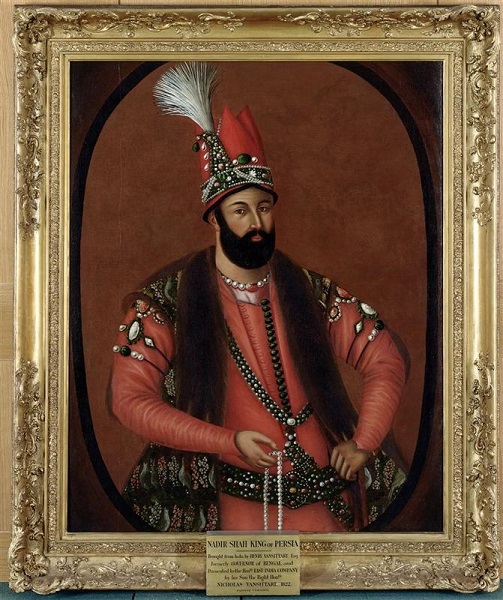
In those turbulent years, as Afghan invaders overran Persia and the once-mighty Safavids crumbled, Nadir chose loyalty over ambition at first. He rallied forces to restore Shah Tahmasp II, expelling the Hotaki Afghans in a series of brilliant campaigns that showcased his tactical brilliance and iron will. He did everything possible to prop up the faltering dynasty—reclaiming territories, rebuilding armies, and defending the realm against Ottomans and others.
But when the Safavids proved too weak and fractious to endure, Nadir took the throne himself in 1736. He founded the short-lived Afsharid dynasty, ruling as a bridge between the Shia-centric Safavid era and the later Qajar period. His reign was a forceful interlude of Persian resurgence, preventing total fragmentation and setting the stage for future stability, even if his own empire did not long outlast him.
What truly sets Nadir apart as a visionary, however—and what has received far too little acknowledgment—is his bold attempt to heal one of Islam’s deepest divides: the rift between Shia and Sunni branches. With little formal education himself, he relied on assemblies of scholars and ulema to craft a pragmatic theological bridge. He promoted the Ja’fari madhhab (or Jafri school), named after the revered sixth Shia Imam, Ja’far al-Sadiq, whom Sunnis also respect. The idea was to present Twelver Shiism in a form more compatible with Sunni jurisprudence—potentially as a fifth legitimate school alongside the Hanafi, Maliki, Shafi’i, and Hanbali traditions.
He banned the ritual cursing of the first three caliphs (a practice that inflamed Sunni sensibilities), adjusted the call to prayer, and sought Ottoman recognition for Persian pilgrims to perform the Hajj. — It was a statesmanlike, ecumenical vision driven by both genuine conviction and realpolitik: reducing sectarian strife at home while easing tensions with Sunni neighbors like the Ottomans.
Though the effort faded after his death, it remains a remarkable early initiative in Islamic reconciliation—one that feels strikingly modern in its ambition to prioritize unity over division.
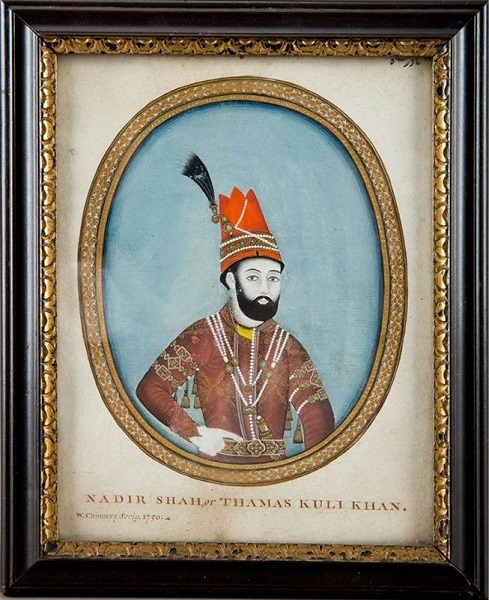
Equally enduring was Nadir’s military innovation: the creation and expansion of the Kizilbash (literally “Red Heads” or “Red Hats”), a multi-ethnic, multi-tribal fighting force that became the backbone of his conquests. Drawing on the legacy of the original Qizilbash Turkmen tribes that had once powered the Safavids (including his own Afshars), he transformed the concept into a broader, more inclusive army.
It incorporated not just Turkmen but Persians, Kurds, Afghans, Uzbeks, Georgians, Armenians, and others—united by loyalty to him rather than narrow ethnicity or sect. These red-hatted warriors accompanied him on epic expeditions, from Central Asia to the decisive 1739 invasion of India, where his forces sacked Delhi and brought back unimaginable wealth, including the Peacock Throne and the Koh-i-Noor diamond.
The Kizilbash left a lasting human legacy far beyond the battlefield. In South Asia, their descendants formed enduring communities. The Talpur tribe, a Baloch group that later ruled Sindh for generations (from 1783 to 1843), traces connections to Nadir Shah’s era—some historical accounts link their founder, Mir Tala Khan, to service or alliance under Nadir, suggesting they were part of the broader Kizilbash military network that moved into the region during the Indian campaign.
In Pakistan today, particularly in the upper regions (Punjab and Khyber Pakhtunkhwa areas), the Kizilbash communities—often Shia, with some Sunni branches—proudly descend from Afshar-linked contingents of Nadir’s forces. They settled as soldiers, administrators, or migrants and preserved their distinct Turkic-Persian heritage.
Other clans from the original Qizilbash confederation (such as elements of Shamlu, Ustajlu, or related groups) also appear in the broader diaspora across Pakistan, Afghanistan, and India, reflecting the diverse ethnic tapestry Nadir wove into his armies.
Nadir Shah was a conqueror in the mold of Timur or Alexander—ruthless when necessary, yet driven by grander designs. His empire stretched from Iraq to Delhi at its peak, but his true genius lay in forging unity from diversity: across sects, tribes, and peoples.
In an age of rigid orthodoxies and endless warfare, he dared to imagine a more cohesive Islamic world and a professional, merit-based military that transcended old divisions. Though his personal reign ended in assassination in 1747 amid growing paranoia and overreach, the echoes of his vision endure in the communities his soldiers left behind and in the idea that faith and power could, with effort, bridge even the widest chasms.
Nadir was more than a warlord; he was a powerful and visionary Turkmen emperor whose bold experiments still invite reflection today. /// nCa, 17 February 2026