


This week the Ambassador of Turkmenistan, Sapar Palvanov had a cycle of negotiations with key representatives of European Union institutions. The meetings covered a wide range of issues, from climate security and water resources to the institutional framework of high-level partnership.
The content and agenda of these talks take on particular significance following the previously announced visit of the President of Turkmenistan to Brussels.
A New Status for Partnership
During a meeting with Viviane Loonela, Head of Cabinet of the EU High Representative for Foreign Affairs and Security Policy / Vice-President of the European Commission, the Ambassador highlighted that the European Union holds a key place in Turkmenistan’s foreign policy priorities for 2026.
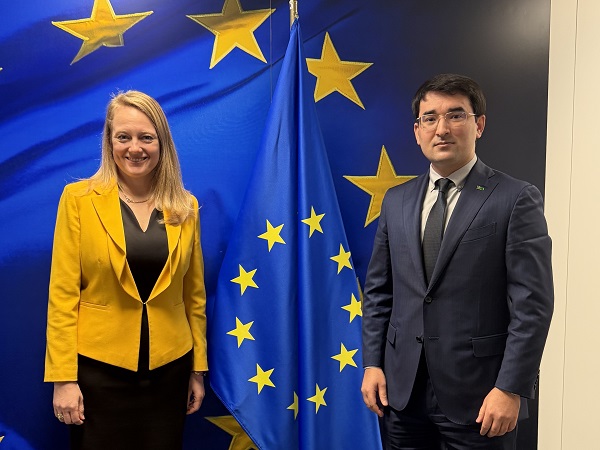
Ambassador Palvanov called for an “update” to the cooperation format, transitioning toward more substantive and institutionally structured engagement. This includes advancing the Partnership and Cooperation Agreement (PCA) and launching the process for the Enhanced Partnership and Cooperation Agreement (EPCA), which will provide a more systematic and sustainable character to the interaction.
The following were identified as priority sectors:
- Green energy and critical raw materials;
- Transport connectivity between Europe and Asia;
- Research and development cooperation.
The next step is the formation of an effective platform for direct interaction between the relevant agencies and institutions of both sides, moving from political agreements to the practical implementation of joint initiatives.
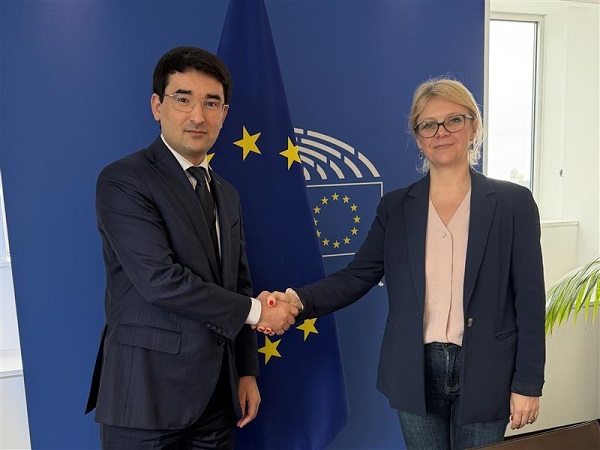
The need to further improve the legal framework for cooperation was also discussed with Sylwia Kosińska, Diplomatic Advisor to the President of the European Parliament. It was noted that Turkmenistan is strengthening its role as a “stable transport bridge,” where the combination of national resource potential and European technological expertise opens unique opportunities for business.
Humanitarian Dialogue and Social Policy
Issues regarding the protection of human rights were discussed during a meeting with Mounir Satouri, Member of the European Parliament and Chair of the Subcommittee on Human Rights (DROI).
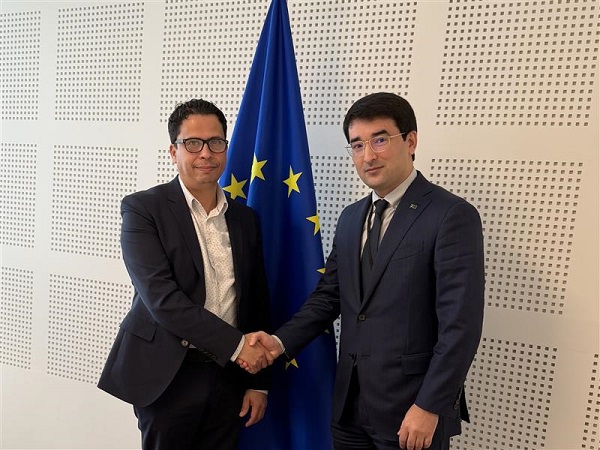
Ambassador Palvanov provided detailed information on the implementation of national action plans aimed at ensuring social security and increasing the well-being of the population. Special attention was paid to transparency and cooperation with international organizations, such as the International Labour Organization (ILO). Both parties expressed interest in continuing expert-level dialogue focused on achieving concrete results and strengthening mutual understanding.
Ecology and Water: Technologies of the Future
During the meeting with Patrick Child, Deputy Director-General of the European Commission’s Directorate-General for Environment (DG ENV) both sides recognized that the ecological and climate agenda is becoming an increasingly significant part of Central Asian development.
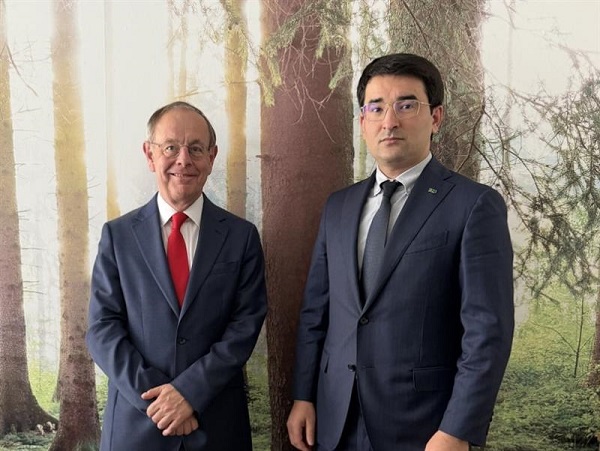
A specific emphasis was placed on water resource management—a critical factor for the region’s economy. It was noted that the economies of Central Asian countries, including Turkmenistan, rely heavily on water supply, particularly for agriculture. In this regard, increasing pressure on water systems requires a science-based approach, the implementation of modern technologies, and the expansion of international experience exchange.
The Ambassador recalled Ashgabat’s initiative to establish the Regional Center for Technologies Related to Climate Change in Turkmenistan. This center is envisioned as a common platform for environmental monitoring, data exchange, and scientific research in collaboration with EU partners. To consolidate these efforts, it was proposed to develop framework agreements or “roadmaps” between relevant departments. ///nCa, 28 March 2026 (Based on press releases issued by the Embassy of Turkmenistan in Belgium)