


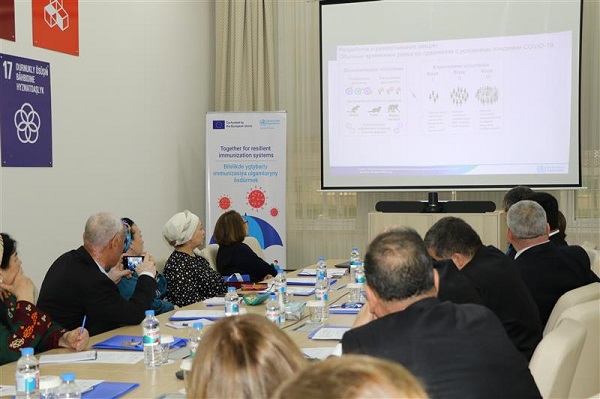
Ashgabat, Turkmenistan, 23–27 March 2026 – Dr. Oleg Benes, Technical Officer in Vaccine Safety and Vaccine-preventable Diseases and Immunization Division at the WHO Regional Office for Europe, supported Turkmenistan in advancing national efforts to strengthen vaccine safety systems.
On March 24-25, Dr. Benes worked closely with the specialists from the State Sanitary and Epidemiological Surveillance Service (SSES) of the Ministry of Health and Medical Industry of Turkmenistan on implementing the national AEFI surveillance system. This included reviewing the organizational structure, roles, and responsibilities of the system, applying WHO recommendations and tools to strengthen vaccine safety monitoring, and developing a comprehensive action plan to further enhance AEFI surveillance.
Online session on pharmacovigilance and the WHO Programme for International Drug Monitoring (PIDM) with Dr. Ayako Fukushima, PhD, Registered Pharmacist and Technical Officer in the Pharmacovigilance Group at WHO Headquarters, presented the WHO global strategy for smart pharmacovigilance. It outlined WHO support for national pharmacovigilance systems, and explained the PIDM membership application process—a collaborative global network established in 1968 that enables countries to share safety data and strengthen medicines and vaccine safety surveillance.
Participants were also introduced to the Uppsala Monitoring Centre (UMC) by Sara Oliveira, Pharmacovigilance Technical Specialist at UMC. The session highlighted UMC’s role as the WHO Collaborating Centre for International Drug Monitoring and its work in providing pharmacovigilance tools, training, and access to global safety data—including VigiBase, the WHO global database of adverse event reports for medicines and vaccines—to strengthen national systems for monitoring vaccine and medicine safety.
On March 26, specialists from the National Immunization Programme participated in a training session led by Dr. Benes. The seminar covered key topics, including key concepts, terms, and definitions of AEFI surveillance; AEFI causal assessment (introduction and case studies); follow-up to AEFI causal assessment results; and Q&A discussions.
The session strengthened participants’ competencies in reviewing and investigating AEFI, applying standardized causality assessment methods, distinguishing coincidental events from those potentially associated with vaccination, and using WHO-aligned tools for assessment and reporting. The training promoted knowledge sharing and a consistent approach to vaccine safety surveillance, supporting timely and transparent responses.
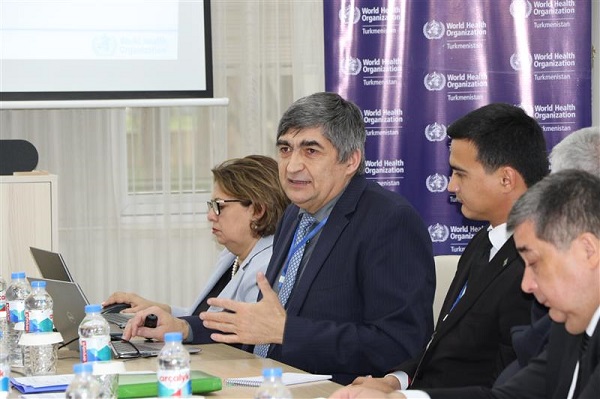
On March 27, Dr. Benes collaborated with the National Immunization Team on Turkmenistan’s accession as an associate member to the WHO Global Programme for International Monitoring of Drugs and Vaccines.
These activities highlight the strong and ongoingcollaboration between Turkmenistan and WHO to strengthen vaccine safety systems, build public trust, and contribute to broader national and global health security. ///nCa, 27 March 2026 (in cooperation with WHO Turkmenistan)