


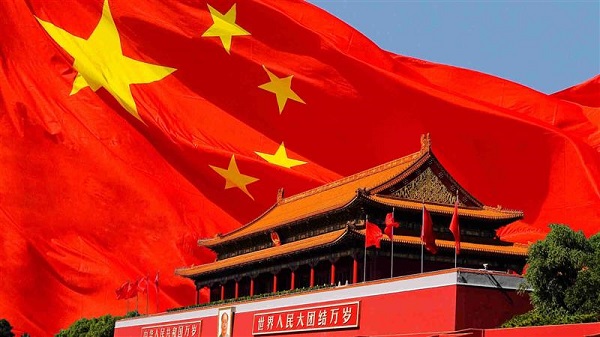
The adoption of the 15th Five-Year Development Plan of the People’s Republic of China opens a new chapter in the history of Chinese modernization and offers the global community a unique array of opportunities for cooperation. This was stated by the Ambassador of China to Turkmenistan, Ji Shumin, during a press briefing held in Ashgabat on Friday, 27 March 2026.
The remarks by the Chinese Ambassador focused on the recent visit of the National Leader of the Turkmen people, Gurbanguly Berdimuhamedov, to Beijing, as well as the outcomes of the “Two Sessions”—the most significant political events of the year in the PRC.
The diplomat highlighted a notable fact: Gurbanguly Berdimuhamedov was the first foreign leader welcomed by the Chinese side immediately following the conclusion of the “Two Sessions.” These sessions not only outlined China’s new development blueprint for the next five years but also unlocked fresh avenues for cooperation with international partners, including Turkmenistan.
A Strategy for Stability in an Unstable World
The Ambassador emphasized that the 15th Five-Year Plan will provide the world with much-needed certainty and stability. The document includes 20 key indicators in vital areas such as economic development, innovation, public welfare, and the green and low-carbon transition. It also identifies 109 major projects, including those aimed at developing “new quality productive forces.”
Innovation and the “Golden” Component of the Economy
In the coming five-year period, China has set ambitious goals to “accelerate high-level scientific and technological self-reliance and self-improvement.”
Among the priority areas for future development, the Ambassador named quantum technologies, artificial intelligence, brain-computer interfaces, embodied intelligence, and sixth-generation (6G) telecommunications.
Crucially, China is keen to share its technologies on a global scale. This commitment was reflected in Ambassador Ji Shumin’s remarks: “Both the ‘green’ and ‘golden’ components of the Chinese economy are growing simultaneously. China is transforming from the ‘world’s factory’ into a source of innovation: moving from the model of ‘buying and selling globally’ to the model of ’empowering the entire world’.”
Openness as a Long-term Strategy
“In 2025, despite a complex and harsh external environment, China’s foreign trade grew steadily against negative trends. Export diversification increased significantly. China has become a major trading partner for more than 160 countries and regions worldwide,” the Ambassador stressed, describing the economic context in which the new five-year program was adopted.
According to the plan, China will continue to expand its openness to partners. This entails greater market access, particularly in services, telecommunications, and biotechnology, as well as the expansion of bilateral investment partnerships and guaranteeing national treatment for foreign-invested enterprises.
“For the entire world, China’s openness is not a short-term ‘Black Friday’ style sale, but a long-term, stable, and constantly expanding set of mutually beneficial opportunities,” the diplomat stated.
“To choose China is to choose opportunity. To invest in China is to invest in the future,” Ji Shumin concluded. ///nCa, 27 March 2026