


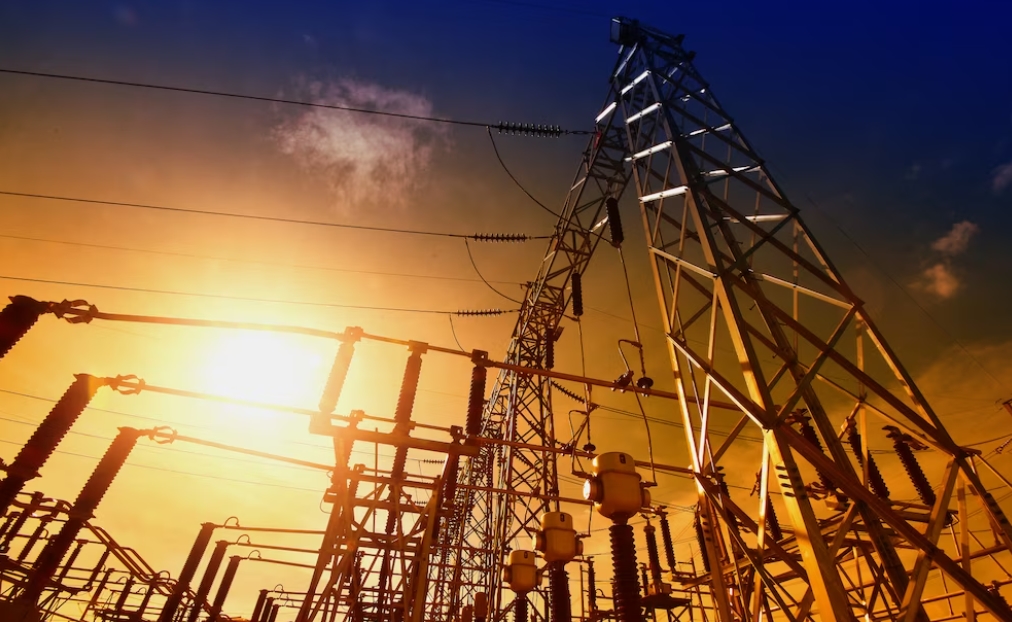
The State News Agency of Turkmenistan (TDH) has published an overview of the country’s energy sector. The following are the key points of the article:
Energy Policy: Turkmenistan’s energy policy is based on the fundamental principle of diversification—transitioning from the export of raw materials to the export of high-tech products and electricity. Thanks to massive investments in this critical sector, the production capacity of the energy industry has increased significantly in recent years. This allows the country not only to meet domestic demand but also to annually increase the volume of electricity exports abroad.
National grids: As part of the efforts to improve the material and technical base, special attention is being paid to the modernization of domestic distribution systems. A prime example is the project to integrate the power grid into a single ring.
- Stage 1: The construction of the Akhal–Balkan high-voltage overhead power line, successfully launched in October 2021.
- Stage 2: The construction of the Mary–Akhal power line was completed in record time in November 2023.
- Final Stage: In 2024, the new Balkan–Dashoguz power line was commissioned, serving as the third and final link in the country’s unified energy ring.
This engineering solution enables the rapid redistribution of energy between regions and guarantees an uninterrupted power supply for industrial enterprises and residential buildings.
Combined Cycle Power Plant: A combined cycle power plant with a capacity of 1,574 megawatts is currently under construction in the Turkmenbashy district of the Balkan province. The realization of this project will facilitate the opening of new export routes and increase the volume of electricity supplies to neighboring states.
Ecology: ISO 14001 environmental management standards are being actively implemented in the national energy sector. Air quality monitoring around power plants is carried out in an automated mode, with data transmitted to the relevant authorities.
Domestic Production of Electrical Equipment: The country has already established the production of modern transformers and cable products. Additionally, a Center for Repair and Service Maintenance of Energy Equipment is operational in the Buzmeyin district of Ashgabat. The center provides high-quality repairs for General Electric gas turbines and maintenance for modern energy equipment. This facility is the only service enterprise of its kind in Central Asia.
Renewable Energy: The construction of a 10 MW combined solar and wind power plant in the Gyzylarbat district of the Balkan region marked the beginning of a new stage in the innovative development of “green” energy. This project serves as a testing ground for the use of renewable energy sources in a desert climate. Solar panels and mobile wind turbines provide electricity to pastures and remote settlements in the Karakum Desert.
Smart Substations: Technological partnerships with world-renowned companies such as General Electric and Sumitomo Corporation allow Turkmenistan to implement “Smart Grid” digital management systems for its transmission networks. Modern substations in the country are equipped with microprocessor-based relay protection and automation systems, which reduce the risk of failures and energy losses during long-distance transmission.
Gas Turbine Power Plant: The commissioning of a new 432-megawatt gas turbine power plant in 2021 at the existing Lebap State Power Plant in the Charjew district of the Lebap province has furthered the country’s successful integration into the global energy system and increased the volume of Turkmen energy resource exports to foreign markets.
International Projects: The development of energy infrastructure along the Serhetabat–Herat section of the Turkmenistan–Afghanistan–Pakistan–India (TAPI) gas pipeline creates vast opportunities for establishing new industrial zones. The availability of a stable power supply along the pipeline route attracts investors to build processing plants in Afghanistan. Currently, Turkmenistan’s energy system operates in close coordination with the Unified Energy System of Central Asia.
Hydrogen Energy: Turkmenistan has proposed the development of a Global Program for the Transition to Hydrogen Energy for 2030–2040 under the auspices of the UN. The country is implementing a “Roadmap for the Development of International Cooperation in the Field of Hydrogen Energy.”
A specialized center at the Yagshygeldi Kakaev International University of Oil and Gas, in collaboration with Japan, conducts R&D on plasma-chemical natural gas processing and develops water electrolysis technologies for pure hydrogen production. Turkmenistan’s vast reserves of renewable energy and natural gas create favorable conditions for the production of “green” and “blue” hydrogen. Currently, possibilities for implementing the first pilot projects with leading technological companies from Japan and Europe are being discussed. ///nCa, 26 March 2026