


Tariq Saeedi
As the fighting enters its fourth week, the Islamic Republic of Iran has circulated a detailed report through its Ministry of Foreign Affairs that sets out its formal assessment of the events between 28 February and 13 March 2026.
The document, which has been shared with the United Nations, offers a sober accounting of what Tehran describes as the human, material, and legal consequences of the military campaign launched against it.
According to the ministry, the operations that began on the morning of 28 February constituted a deliberate use of force against Iran’s territorial integrity and political independence. The report frames these actions as inconsistent with Article 2(4) of the UN Charter and, more broadly, with peremptory norms of international law. It notes that Iran has formally notified the UN Secretary-General and the Security Council, invoking its right of self-defence under Article 51 of the Charter.
The human toll receives particular attention. — The ministry’s figures indicate that, in the first two weeks, at least 202 children under the age of 18 lost their lives, with a further 1,190 injured. Among adult civilians, 225 women were reported killed and 2,969 wounded.
The document also records the deaths of 17 healthcare workers and injuries to 101 others, incidents linked to strikes on medical facilities. These numbers, while still under verification by independent sources, underscore the scale of civilian suffering that has accompanied the conflict.
Infrastructure damage is catalogued in similar detail. — The report speaks of more than 54,500 civilian objects affected, including approximately 36,500 residential buildings. It lists around 120 schools damaged or destroyed, with particular reference to the primary school in Minab where more than 170 students were reported killed. Some 160 hospitals and healthcare units were said to have been hit, among them the Gandhi Hospital in Tehran.
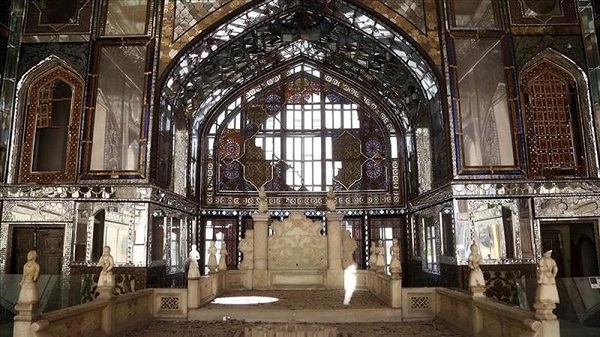
Cultural heritage sites were not spared: the ministry counts damage to 56 locations, including two UNESCO World Heritage properties — the Golestan Palace in Tehran and the Naqsh-e-Jahan complex in Isfahan. Additional targets mentioned include the Azadi sports complex, civil aviation airports at Kish, Bushehr and Mehrabad, and installations vital for civilian survival such as water desalination plants and electricity facilities.
The report also highlights specific incidents that, in Iran’s view, raise questions of international humanitarian law.
These include the targeting of senior state officials, including the Supreme Leader, and statements attributed to US officials that appeared to suggest hostilities would be conducted without restraint. It further records the sinking of the Iranian frigate Dena by a US submarine while the vessel was on a training mission near Sri Lanka, with at least 87 lives lost.
Iran maintains that its own military responses have been proportionate and defensive, aimed at deterring further attacks rather than initiating escalation. The ministry emphasizes that it has acted within the bounds of international law while expressing concern that the UN Security Council has not yet taken decisive steps to restore peace.
In its conclusion, the report calls on the international community to address what it terms a “culture of impunity.” It invokes the Articles on Responsibility of States for Internationally Wrongful Acts, urging the responsible parties to provide full reparation for the material and moral harm inflicted.
The document closes with an appeal to all UN member states to uphold the principles of the Charter and to prevent the normalisation of serious breaches of international law.
Whether or not one accepts every detail or legal characterization in the Iranian assessment, the report stands as an official record of the costs Tehran attributes to the conflict. In any war, such accounting is painful and inevitably contested. Yet it serves as a reminder that behind the daily headlines of strikes and counter-strikes lie concrete human losses and long-term questions about accountability that the international system will eventually have to address.
As the fighting continues, these questions are likely to remain at the centre of diplomatic efforts to find a path toward de-escalation. /// nCa, 25 March 2026 (photo credit – Anadolu)