


Tariq Saeedi
As I follow the latest developments in this conflict, two Israeli strikes stand out for their deliberate focus on Iran’s economic and maritime foundations.
One targeted facilities connected to the South Pars natural gas field in the Persian Gulf — the world’s largest such reservoir and the source of roughly 70 percent of Iran’s domestic gas production. The other, confirmed by the Israeli Defense Forces, struck naval vessels and infrastructure at Bandar Anzali, Iran’s principal port on the Caspian Sea. Together, these actions mark a clear shift toward sustained pressure on Iran’s economic infrastructure rather than purely military targets.
South Pars is not merely an energy asset; it underpins much of Iran’s electricity generation, heating, and petrochemical industry. Disrupting it carries immediate domestic consequences for Iran while sending ripples through global markets — oil and gas prices have already reacted sharply.
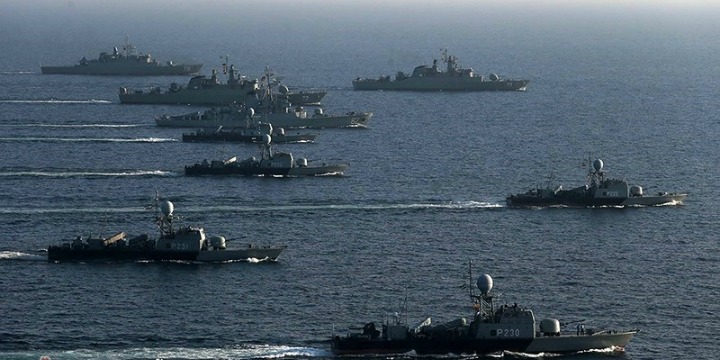
Bandar Anzali, on the northern coast, serves as a vital gateway for Caspian trade, handling commercial shipping, naval assets, and connections to Russia and Central Asian republics. Its targeting represents the first time in this war — and, indeed, the first time in modern history — that a foreign power has struck Iranian facilities on the Caspian Sea.
These moves appear part of a broader pattern.
By hitting high-value economic nodes, the US-Israeli side seems intent on forcing Iran into a difficult choice: absorb the damage or respond in ways that could draw additional parties into the fighting. Iran has already retaliated against energy sites in Qatar (which shares the South Pars field) and issued threats toward facilities in Saudi Arabia, the UAE, and Kuwait.
The sequence suggests a calculated effort to goad Tehran into attacking its Gulf neighbours, in the hope that those states might then feel compelled to join the coalition against Iran. So far, the Gulf capitals have shown restraint, but the risk of escalation remains real.
The Caspian dimension is especially concerning. The Caspian Sea is a shared, landlocked body of water bordered by Iran, Russia, Kazakhstan, Turkmenistan, and Azerbaijan. It has long been treated as a zone of economic cooperation rather than conflict. No outside power had previously conducted military operations against facilities there.
The strike on Bandar Anzali changes that precedent. — It raises legitimate questions about potential environmental risks — from possible spills or debris — and about the security of regional trade routes that link Central Asia to global markets.
Countries across the Caspian basin and beyond now face a new calculus: if one side can reach this far north with impunity, what safeguards exist for the rest of the shared maritime space?
None of this diminishes the human and strategic costs already visible in other parts of the country. It does, however, illustrate how the conflict is expanding in scope.
Economic pressure is being layered onto military operations, with the apparent aim of stretching Iran’s resources and testing its alliances. At the same time, the provocation of wider regional involvement carries the danger of turning a bilateral confrontation into something far harder to contain.
The Caspian strike, in particular, should serve as a quiet but urgent signal. The entire region — including the Central Asian republics — would be wise to treat this as a threshold moment.
Trade corridors, energy pipelines, and maritime stability that once seemed insulated from southern Gulf tensions are now potentially exposed. Preparation, in the form of heightened vigilance, diplomatic coordination among Caspian littoral states, and contingency planning for supply-chain disruptions, is no longer theoretical.
This phase of the war underscores a simple reality: once economic lifelines become targets and once long-stable geographic boundaries are crossed, the path back to de-escalation grows narrower.
The strikes on South Pars and Bandar Anzali have not only damaged infrastructure; they have also opened new fronts of uncertainty across a wider geography. Managing those uncertainties — before they pull more actors into the vortex — remains the central challenge for all parties with a stake in regional stability. /// nCa, 20 March 2026 (Photo: Wikimedia Commons)