


Tariq Saeedi
As the conflict moves through its third week, the pattern of escalation continues despite repeated shortfalls in expected outcomes. The hope that overwhelming force and mounting destruction might somehow sway public sentiment inside Iran has not materialized in the anticipated way.
Instead, the gap between preconceived notions and the realities on the ground appears wider than many planners accounted for.
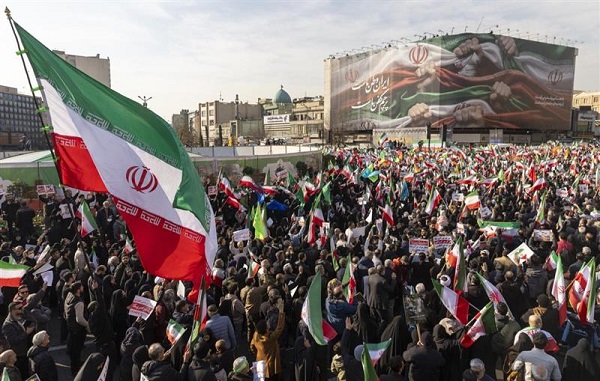
Iranians have long carried a deep, historically rooted sense of national pride.
The transformative period that began in 1979 did not diminish this identity; it layered upon it new dimensions of self-reliance and collective purpose.
One small but telling illustration comes from the diaspora: a young Iranian woman living in the West, openly critical of the current government, begins nearly every social media video with the simple declaration “Irani here.” She speaks with the refined Tehran University accent — polished, confident, unmistakably tied to Iran’s tradition of higher education. Her critique of policy coexists comfortably with an unapologetic pride in being Iranian.
Recent events have reinforced rather than fractured that resolve.
The assassination of senior national security official Ali Larijani and his son, alongside strikes on oil and gas infrastructure, has not produced the fragmentation some anticipated. In statements attributed to him shortly before his death, Larijani emphasized that the loss of individuals would not slow the broader effort or weaken the “resistance.” Such declarations reflect a deeper structural reality.
The primary legacy of Iran’s post-1979 transformation — whether one describes it as a renaissance, reformation, revitalization, or reimagining — has been the institutionalization of the nation. This process created layered systems, redundant capabilities, and a culture in which leadership and expertise are developed through performance rather than inherited position.
Removing any single figure does not leave a vacuum; the next competent individual moves into the role. The system, for better or worse, continues to function as designed.
This institutional depth helps explain Iran’s resilience under prolonged pressure. Despite extensive sanctions, the country produces over 90 percent — and in many categories closer to 98 percent — of the medicines it consumes domestically. It maintains self-sufficiency or near-self-sufficiency in several areas of food production and is a net exporter of hygiene and cleanliness products. In select technological domains, including aspects of asymmetrical warfare hardware, Iran ranks among the more capable nations globally. These achievements did not occur in isolation; they emerged from decades of deliberate investment in domestic capacity, scientific education, and adaptive innovation.
The everyday rhythm of life in Iranian cities further illustrates this institutionalization.
Shops and restaurants remain open. People continue their routines. The most visible adjustment has been the shift of schools to online platforms — a pragmatic response to the reality that educational facilities have not been spared from bombardment. The decision to protect children by moving classes into the digital realm speaks to both vulnerability and organizational adaptability.
None of this suggests immunity to suffering. The human cost is real and accumulating on all sides. Yet the assumption that external pressure would quickly unravel the social fabric or collapse the administrative structure underestimates the extent to which Iranian society has internalized mechanisms for continuity.
Leadership transitions occur, technical systems keep running, and national identity absorbs new layers of shared experience.
As escalation proceeds, the question remains whether further destruction will alter these underlying dynamics or simply entrench them. The evidence so far points toward the latter.
Understanding Iran as an institutionalized nation — not merely a collection of individuals or ideologies — may be essential for any realistic assessment of how this composite conflict can eventually move toward resolution. /// nCa, 19 March 2026