


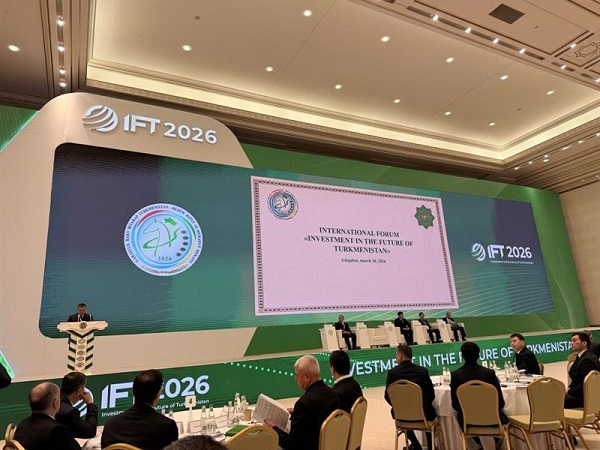
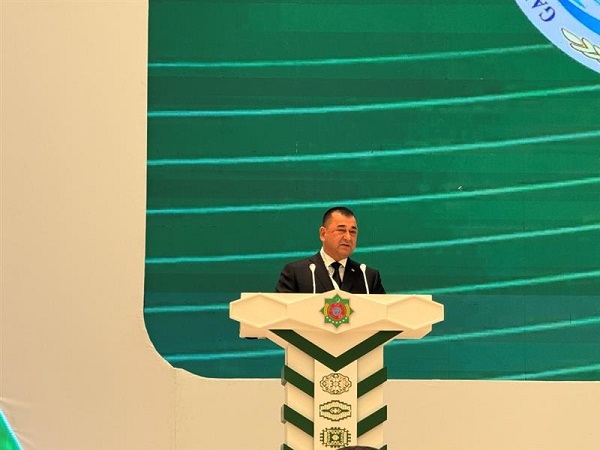
At the plenary session of the International Forum “Investment in the Future of Turkmenistan” (IFT 2026), held in Ashgabat on 18 March, Deputy Prime Minister Nokerguly Atagulyev, who oversees Turkmenistan’s trade sector, presented an overview of the activities of the Union of Industrialists and Entrepreneurs of Turkmenistan (UIET). Today, this umbrella organization brings together more than 29,000 members and forms the foundation of the country’s innovative economy, providing hundreds of thousands of jobs and driving active expansion into foreign markets.
From Small Business to Powerful Infrastructure
Established in 2008, the Union of Industrialists and Entrepreneurs has evolved into a diversified ecosystem over the past 18 years. As the DPM noted, the private sector now possesses not only production capacities but also its own development institutions: the School of Entrepreneurship and the new International University of Industrialists and Entrepreneurs (opened in 2025); its own financial base in the form of the “Rysgal” Joint-Stock Commercial Bank; a specialized construction department, and its own newspaper.
One of the major social achievements of the UIET has been the creation of more than 422,000 new jobs, highlighting the private sector’s role as the country’s primary employer.
Investments and Strategic Projects
Within the framework of the Presidential Development Program for 2022–2028, Turkmen entrepreneurs are successfully implementing 155 investment projects. Funding is provided through concessional lending, equity, and attracted capital. New plants and factories are being commissioned across the country, covering almost all sectors of the national economy.
Industrial Breakthrough and Export Potential
The DPM particularly emphasized successes in the field of high-tech production and raw material processing.
“Our entrepreneurs are achieving impressive results in the industrial sector. By processing polyethylene and polypropylene raw materials, members of the Union produce various types of polymer and plastic products that are in high demand in foreign markets,” Atagulyev continued.
“In the agro-industrial sector, export goods include fruits and vegetables, processed food products, cereals, confectionery, soft drinks, fruit juices, baby food, dairy products, and other goods,” he said.
Furthermore, high-tech enterprises produce carpets and carpet products, synthetic detergents, disinfectants, and sealants, as well as construction materials (paints and varnishes, adhesives, aerated concrete, and ceramic products).
In addition, large textile enterprises specializing in spinning, garment manufacturing, and footwear production are in operation, with exports in these categories also on the rise.
Electronics and the Digital Future
Turkmenistan is actively developing its electronics market. Today, private companies produce televisions, payment terminals, laptops, and tablets. In parallel, leveraging the opportunities of the digital economy, the number of IT companies implementing innovations in business processes is rapidly increasing in the country.
Logistics and Tourism: New Horizons
Given the country’s geographical location, the “Turkmen Logistics” Association, operating under the auspices of the UIET, has acquired strategic importance.
A modern fleet of equipment allows private companies to serve major industrial projects not only in Turkmenistan but throughout the entire region.
The development of tourism infrastructure also remains among the Union’s top priorities.
Closing his speech, Nokerguly Atagulyev called forum participants to utilize the IFT 2026 platform to establish direct partnerships with Turkmen businesses, which are today open to new ambitious projects.
///nCa, 18 March 2026