


The European Union and ALIPH have launched 29 cultural heritage projects across Central Asia to safeguard endangered tangible and intangible heritage from the impact of climate change, following a highly successful Call for Projects that elicited 233 applications.
© ALIPH, 2026
The European Union and ALIPH have launched 29 cultural heritage projects across Central Asia to safeguard endangered tangible and intangible heritage from the impact of climate change, following a highly successful Call for Projects that elicited 233 applications. This initiative is co-funded for a total of EUR 1.5 million, wherein EUR 1.1 million is provided by the European Union and the remaining amount contributed by ALIPH. The projects will be implemented in Kazakhstan, Kyrgyzstan, Tajikistan, Turkmenistan, and Uzbekistan.
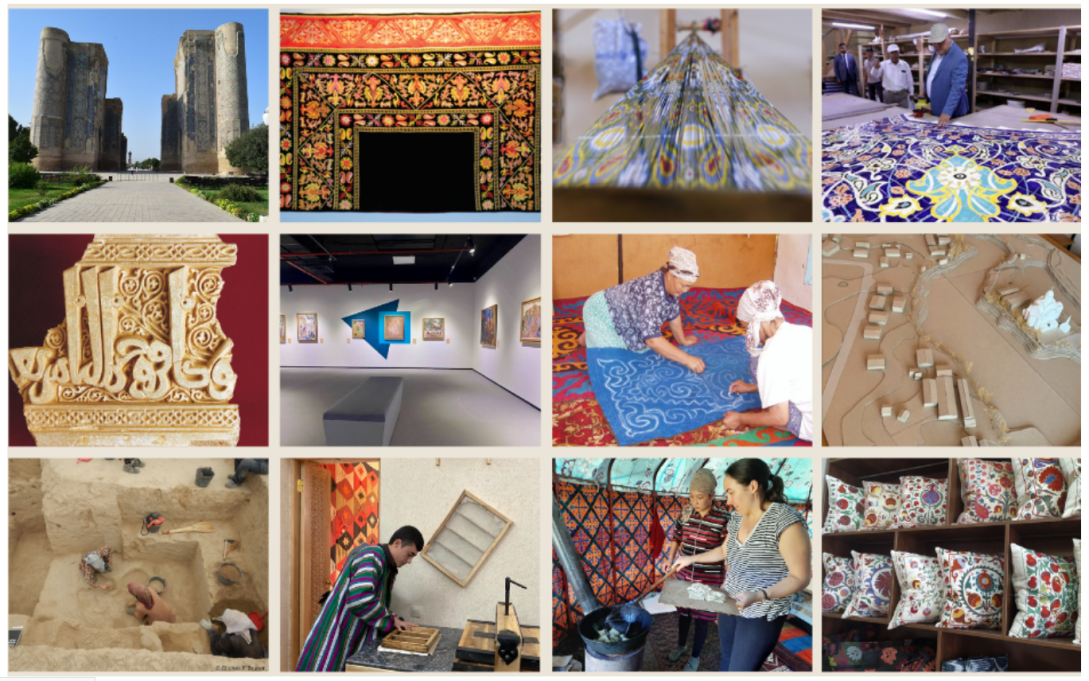
The projects address iconic heritage sites and living cultural traditions, and combine conservation, documentation, skills development, and economic empowerment. Interventions include safeguarding sites, such as the World Heritage site of Sarazm in Tajikistan, the Ak-Saray Palace and the Kayrit Oasis in Uzbekistan, and the Dandanakan Mosque in Turkmenistan.
Others will strengthen museums through restoration works or professional training, such as at the Kasteyev Museum in Almaty, the National Museum of Antiquities of Tajikistan, and two institutions in Karakalpakstan, Uzbekistan: the Savitsky Museum in Nukus and the Ecological Museum in Muynak, which preserves the heritage of the Aral Sea. This initiative will also support the restoration of paintings from the Romanov Palace’s collection in Tashkent. In addition, regional programs on conservation and climate-resilient restoration practices and a museology forum in Astana will enable regional exchange among museum professionals.
These new projects will also focus on intangible heritage, including documenting nomadic and mountain cultural practices, preserving epic poetry, and revitalizing traditional games and music in Kyrgyzstan. In Uzbekistan, sustainable silk and ikat production will be supported by restoring natural dyeing techniques and facilitating knowledge transfer.
Creative industries will be bolstered through artisan and entrepreneurship training in felt-making, suzani embroidery, ceramics, wall painting, and digitization of ornamental traditions. Special attention will be given to supporting youth and returnee communities.
“The European Union is pleased expand its partnership with ALIPH. Our cooperation with ALIPH is grounded in concrete action and innovative approaches to safeguarding cultural heritage at risk as an enabler of peace and security,” said Peter Wagner, Director and Head of the Service for Foreign Policy Instruments (FPI), European Commission.
“This initiative allows us to strengthen our engagement in protecting heritage from the impact of climate change and to expand our work in Central Asia. Thanks to the support of the European Union, we will be able to work with local heritage professionals to adapt creative industries and traditional crafts sectors to the climate change challenges,” said Valéry Freland, Executive Director of ALIPH.
See factsheet for more details on the projects.
About ALIPH
The International alliance for the protection of heritage (ALIPH) is the main global fund dedicated to its protection in conflict, post-conflict, and crisis areas. ALIPH supports the people on the ground who take concrete measures to protect or restore museums, sites and monuments, and intangible heritage in the most challenging contexts. ALIPH is a first responder in times of conflict and crisis, providing quick and flexible support within hours or days to prevent heritage from being lost forever. Since its creation in Geneva in 2017, ALIPH has supported about 600 projects in 64 countries. The Foundation carries out its mission thanks to the support of its nine member States (United Arab Emirates, Saudi Arabia, Kuwait, Morocco, France, China, Luxembourg, Cyprus, and Uzbekistan), its three private members (Dr. Thomas S. Kaplan, Getty Trust, and Fondation Gandur pour l’Art), and a dozen other donors. ///Press and information team of the Delegation to TAJIKISTAN, 16 March 2026