


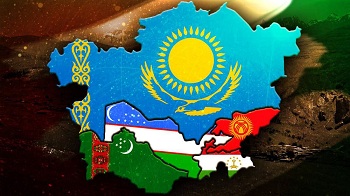
Ashgabat, Tashkent, Astana, Bishkek, Dushanbe, 2 March 2026 — The states of Central Asia have issued official statements regarding the sharp escalation of tensions in the Middle East. The situation, triggered by U.S. and Israeli strikes on Iran and subsequent Iranian retaliatory attacks on American military bases in Arab nations, has drawn a unified regional response.
Despite nuanced differences in diplomatic phrasing, the positions of Kazakhstan, Kyrgyzstan, Tajikistan, Turkmenistan, and Uzbekistan demonstrate a regional consensus: an urgent call for immediate de-escalation and a return to international law.
Erlan Zhetybaev, the official representative of the Ministry of Foreign Affairs of Kazakhstan, expressed deep condolences to the people of Iran following the loss of civilian lives and members of the country’s top leadership. Astana specifically emphasized that strikes on civilian infrastructure in nations not involved in the conflict are unacceptable.
“Compliance with the norms of international humanitarian law requires special protection for civilian objects and the peaceful population during conflicts,” the Kazakhstan Foreign Ministry stated, urging all parties to exercise “maximum responsibility.”
Relying on its status of permanent neutrality, Turkmenistan expressed regret that this new wave of tension occurred despite active international diplomatic efforts to stabilize the region. Ashgabat reaffirmed its principled stance: “The resolution of all complex international issues must be carried out on the basis of the UN Charter and international law, using only political and diplomatic means and methods.”
Uzbekistan responded within the first 24 hours of the conflict, expressing “serious concern.” Tashkent warned that further steps could lead to a dangerous escalation with “difficult to predict consequences,” affecting not only the military-political landscape but also the humanitarian situation.
Both Kyrgyzstan and Tajikistan focused on the necessity of an immediate halt to hostilities.
The Ministry of Foreign Affairs of the Kyrgyz Republic called on the global community to consolidate efforts to return the parties to a constructive dialogue.
The Ministry of Foreign Affairs of Tajikistan described the current escalation as “unprecedented” and insisted on “urgent measures” to prevent a tragic turn of events.
The collective stance of the Central Asian quintet underscores the supremacy of the UN Charter as the only legitimate basis for a settlement. All five nations emphasized that there is no alternative to a political-diplomatic path.
Notably, of the five countries, Turkmenistan shares a direct border with Iran, stretching approximately 1,150 kilometers (its longest land border after the Turkmen-Uzbek frontier).
Of the three primary checkpoints on the Turkmen-Iranian border, the Sarakhs border crossing (located approximately 350–360 km southeast of Ashgabat) has been opened to facilitate the exit of foreign nationals from Iranian territory by road. ///nCa, 2 March 2026