


Tariq Saeedi
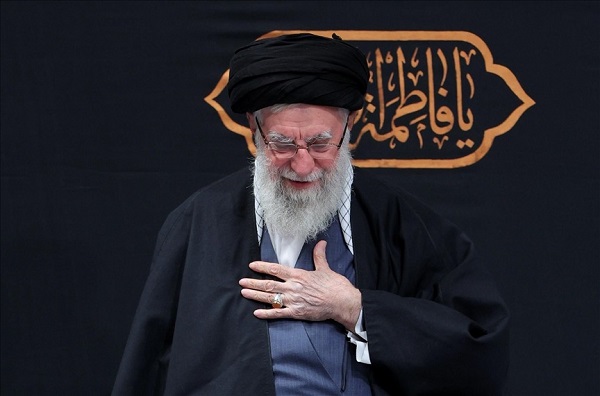
In the early hours of March 1, 2026, the Supreme Leader of Iran, Ayatollah Ali Khamenei, was killed in the initial wave of strikes launched by US-Israeli forces on his compound in central Tehran.
This event marked a pivotal moment in the escalating conflict, drawing immediate reactions from across the political spectrum.
While the strikes were framed by the attackers as a targeted operation against Iran’s leadership, a closer examination suggests that Khamenei’s death may not have been an unintended outcome for him. At 86 years old and facing a series of health challenges, he appears to have positioned himself in a way that embraced the possibility of martyrdom, aligning with deeper cultural and strategic imperatives within Shia Islam and Iranian society.
Khamenei’s awareness of his vulnerability was evident. As the longstanding figurehead of the Islamic Republic, he had long been identified as a primary target in any major military confrontation with adversaries like Israel or the United States.
Intelligence reports and public analyses over the years highlighted his central role in Iran’s decision-making apparatus, making his location a focal point for potential strikes. The Islamic Revolutionary Guard Corps (IRGC), or Pasdaran, maintained a dedicated contingent capable of relocating him to secure bunkers or remote sites at short notice, as demonstrated during previous threats, such as the brief 2025 conflict where he reportedly went underground to evade assassination attempts.
Yet, in this instance, no such evacuation occurred, raising questions about whether this was a calculated decision on his part.
Central to this perspective is the role of martyrdom in Shia Islam, a tradition that reveres sacrifice as a path to spiritual elevation and communal inspiration. From the foundational narrative of Imam Hussein’s death at Karbala to contemporary interpretations, martyrdom is not merely an end but a deliberate act of devotion that strengthens the faith and unites believers.
Khamenei, a cleric steeped in this heritage, often invoked such themes in his speeches, positioning resistance against external foes as a sacred duty. By remaining in place during the strikes, he may have sought to embody this ideal, transforming his death into a symbol that reinforces the system’s ideological foundations.
Compounding this is Khamenei’s documented history of medical ailments, which had progressively diminished his physical capacity. He probably had a heart condition since at least 1998, underwent surgery for prostate cancer in 2014, a paralyzed right arm because of an assassination attempt in 1981, and some other medical issues.
At his age and with these conditions, the prospect of a prolonged decline may have influenced a choice to meet an end that carried greater meaning.
This act, arguably intentional, serves multiple purposes. It sends a clear message to Iranians that Khamenei lived—and died—by the principles he espoused, turning personal loss into a national gain. In a country marked by internal divisions, from economic hardships to generational shifts in political expectations, his martyrdom could act as a rallying point, fostering unity among disparate factions.
Religious and political leaders might frame it as the ultimate service to the nation, invigorating support for the Islamic Republic’s core tenets.
On the international front, Khamenei’s death could indirectly temper hostilities toward Iran. Adversaries might view it as a step toward regime change, potentially opening avenues for de-escalation or negotiations.
However, this interpretation overlooks a key distinction: removing a leader does not equate to dismantling the system. Iran’s theocratic framework, woven into its constitution and society, persists beyond any individual. Public sentiment, as observed in recent years, often calls for reforms—such as greater economic openness or social freedoms—rather than a wholesale overhaul.
Khamenei’s exit, presented as martyrdom, might facilitate such adjustments without precipitating chaos, allowing the system to evolve while honoring its roots.
Interpretations of this event will vary. For Iran’s leadership and supporters, it represents a heroic stand against aggression. For external actors, it might signal the achievement of a strategic objective.
Yet, in the broader context of the conflict, Khamenei’s choice—believably deliberate—highlights the interplay between personal agency, cultural values, and geopolitical realities. As the war unfolds, its implications for Iran’s future cohesion and international relations will become clearer. /// nCa, 1 March 2026