


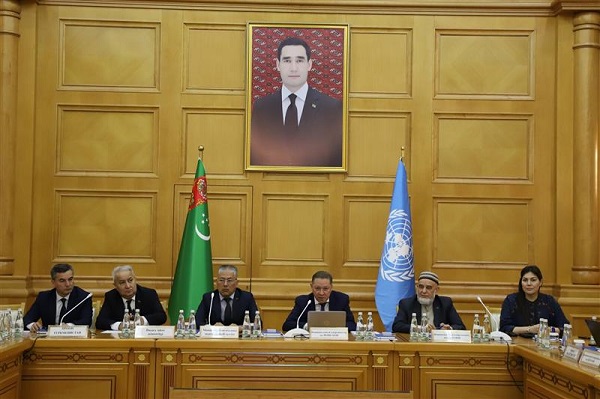
Ashgabat, 16 February 2026: The United Nations Development Programme (UNDP) in Turkmenistan, in partnership with the Ministry of Environmental Protection of Turkmenistan, held the national closing meeting to present the final version of Turkmenistan’s Fourth National Communication (NC4) under the country’s commitments to the United Nations Framework Convention on Climate Change (UNFCCC).
The event brought together representatives from government agencies, as well as international and civil society organizations. During the meeting, participants reviewed the preparation of the document and discussed next steps for its official submission to the UNFCCC Secretariat.
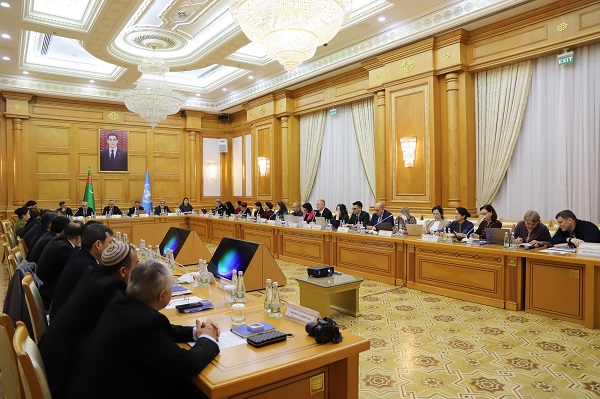
NC4 includes updated data on greenhouse gas emissions, an overview of mitigation measures, emission projections, and priority needs for financing and capacity-building, including the development of a national monitoring, reporting, and verification (MRV) system. The report also highlights Turkmenistan’s progress in adopting modern technologies, expanding the use of renewable energy, and improving energy efficiency.


“The preparation of the Fourth National Communication demonstrates Turkmenistan’s commitment to international climate obligations and transparency principles. UNDP, together with partners, supports the country in strengthening its climate reporting system and implementing national priorities for low-carbon development,” said Mr. Farhat Orunov, Programme Analyst of the UNDP Environmental Portfolio in Turkmenistan.
The Fourth National Communication was prepared by the Ministry of Environmental Protection of Turkmenistan with technical support from the United Nations Environment Programme (UNEP) and UNDP, and financial support from the Global Environment Facility (GEF). The document reflects the country’s progress in fulfilling its international climate obligations and implementing the Paris Agreement.

NC4 was prepared in parallel with the First Biennial Update Report (BUR1) and the First Biennial Transparency Report (BTR1), also with the support of UNDP and UNEP, ensuring a coordinated and systematic approach to climate reporting. The documents provide transparent information on greenhouse gas emissions from 2010–2021, applying the updated methodology of the Intergovernmental Panel on Climate Change (IPCC, 2006). ///nCa, 17 February 2026 (in cooperation with UNDP Turkmenistan)