


nCa Report
Reframing Subsistence Farming in the Context of Central Asia
The term subsistence farming is often treated as a synonym for stagnation, poverty, or underdevelopment. While technically neutral, it has acquired negative undertones in policy discourse and popular usage.
In Central Asia, however, this framing is not only inaccurate—it is strategically counterproductive. Properly understood and supported, subsistence farming is an essential pillar of sustainable food security, ecological resilience, and social stability across the region.
1. Is “Subsistence Farming” a Derogatory Term?
A Neutral Concept with Loaded Usage
From a technical standpoint, subsistence farming simply describes agricultural systems in which production is primarily oriented toward household consumption rather than market exchange. Standard definitions used by institutions such as Britannica, Cambridge Dictionary, and Merriam-Webster are descriptive, not judgmental.
However, in practice, the term is often deployed pejoratively:
- As shorthand for “backward” or “pre-modern” agriculture
- As an implicit contrast to “efficient,” “commercial,” or “advanced” farming
- As a proxy for poverty rather than a description of production logic
This mirrors the historical trajectory of other terms such as peasant, which was long used dismissively before being reclaimed by global movements like La Vía Campesina as a marker of stewardship, autonomy, and connection to land.
Why Language Matters
Contrast this with terms such as:
- Self-sufficiency or homesteading, often romanticized in Western contexts
- Smallholder farming, preferred by international organizations because it avoids civilizational judgment
The difference is not agricultural practice, but narrative framing. The same activity can be seen either as deprivation or resilience, depending on who is doing it and how it is described.
2. Subsistence Farming in Central Asia: A Misunderstood Reality
What “Subsistence” Actually Looks Like in the Region
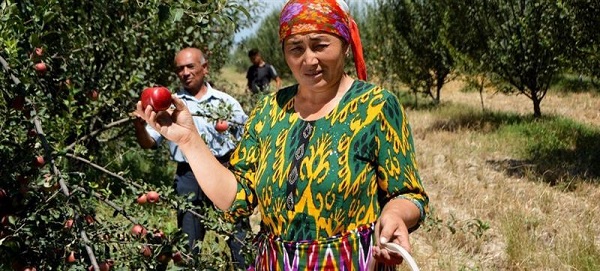
In Central Asia, small-scale farming typically falls into two broad categories:
- Household plots (Dehqon/Dekhan farms)
- Very small parcels, often 0.1–0.5 hectares
- Primarily oriented toward family consumption
- Widespread in Uzbekistan, Kyrgyzstan, Tajikistan, and parts of Kazakhstan
- Peasant or family farms
- Larger than household plots but far smaller than agro-industrial enterprises
- Often semi-commercial, selling surplus fruits, vegetables, or livestock
- Increasingly integrated into local and urban markets
Labeling all of these as “subsistence farming” obscures critical realities.
Why the Term Is Often Too Narrow
Even the smallest household plots in Central Asia are rarely isolated from markets:
- Surpluses are sold to generate cash income
- Produce is exchanged informally within communities
- Inputs such as fuel, education, and healthcare are financed through partial commercialization
More importantly, these farms are highly productive. In several Central Asian countries, household plots account for a disproportionate share of fruit, vegetable, dairy, and meat output relative to their land area.
Calling this system “subsistence” in a dismissive sense ignores its economic weight and social function.
3. Subsistence Farming and Sustainability: Overlap, Not Identity
Not the Same — But Naturally Aligned
Subsistence farming and sustainable farming are not identical concepts:
- Subsistence describes purpose (who the food is for)
- Sustainability describes method (how food is produced over time)
That said, subsistence systems often align closely with sustainability by default.
Areas of Natural Convergence
- Low external inputs: Limited reliance on synthetic fertilizers, pesticides, and heavy machinery
- Biodiversity: Mixed cropping for household nutrition discourages monocultures
- Circular practices: Manure recycling, composting, and crop–livestock integration are common
- Low carbon footprint: Short supply chains and minimal mechanization
Real Risks That Must Be Acknowledged
Romanticizing subsistence farming is as dangerous as dismissing it:
- Land pressure can lead to soil exhaustion
- Poverty can force environmentally harmful practices
- Lack of surplus limits resilience to climate shocks
This is precisely why policy alignment, not eradication, is the correct response.
4. Why Subsistence-Oriented Farming Is Essential for Food Security
A Strategic Safety Net, Not a Relic
Allowing — and supporting — a subsistence-oriented segment of agriculture is critical for Central Asia’s overall food system.
Buffer Against External Shocks
Commercial agriculture in the region often prioritizes export crops such as wheat or cotton. Subsistence plots:
- Shield households from global food price volatility
- Reduce dependence on imports
- Maintain local availability during supply chain disruptions
Nutritional Security
Large-scale agriculture delivers calories; small farms deliver nutrition. Household plots are the primary source of:
- Fresh vegetables
- Fruits
- Dairy and small livestock
This diversity is indispensable for public health.
Social and Economic Stability
In transition economies:
- Subsistence farming prevents extreme rural poverty
- It slows forced urban migration
- It provides continuity during economic downturns or political shocks
Eliminating or marginalizing this sector would increase vulnerability, not reduce it.
5. Aligning Subsistence Farming with Sustainability: A Policy Agenda
The goal should not be to eliminate subsistence farming, but to intentionally align it with eco-friendly and climate-resilient practices.
Priority Areas for Concerted Effort
- Integrated crop–livestock systems
Strengthening manure management, composting, and biogas production reduces chemical dependency and improves soil health. - Agroforestry and microclimate management
Fruit and nut trees (apricots, walnuts, mulberries) improve resilience in arid zones while diversifying diets and income. - Seed sovereignty and indigenous varieties
Supporting local, drought-resistant crops enhances biodiversity and climate adaptation. - Digital extension services
Mobile-based weather, soil, and advisory services can reach even the smallest farms. - Voluntary cooperatives without collectivization
Shared access to drip irrigation, storage, or renewable energy — without loss of land autonomy.
Conclusion: From Stigma to Strategy
In the Central Asian context, subsistence farming is not a failure of modernization. It is a rational, adaptive response to economic uncertainty, ecological constraints, and historical transitions.
Treating it as a derogatory category blinds policymakers to one of the region’s most reliable food-security assets. Recognizing, upgrading, and sustainably integrating subsistence-oriented farming systems is not nostalgia — it is strategic realism.
If food security, resilience, and sustainability are genuine goals, then subsistence farming must be seen not as a problem to be solved, but as a foundation to be strengthened. /// nCa, 9 February 2026