


nCa Report
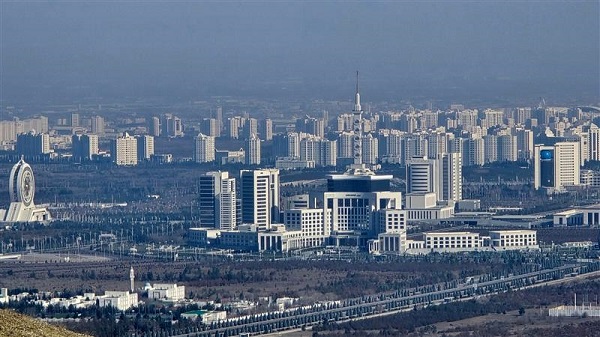
Preparation for the establishment of the regional centre for Climate Change Technologies in Ashgabat are almost complete, said the UN Resident Coordinator for Turkmenistan is Dmitry Shlapachenko, in his remarks at a briefing hosted by the foreign office of Turkmenistan on 5 February 2026.
He said that the formal announcement would possibly be made in April 2026.
Regional Center for Climate Change Technologies in Central Asia
The initiative, first proposed by Turkmenistan at the Rio+20 conference in 2012, is being established in collaboration with the United Nations, specifically the UN Environment Programme (UNEP) and the Climate Technology Centre and Network (CTCN).
The center is designed to serve as a regional hub for Central Asian countries to facilitate the transfer of environmentally sound technologies for both climate change adaptation and mitigation.
- Primary Focus Areas:
- Adaptation: Rational use of water resources, modernization of agriculture and irrigation, combating desertification, and land degradation.
- Mitigation: Energy efficiency, the transition to “green” energy, and reduction of methane emissions.
- Funding and Infrastructure: The Government of Turkmenistan has pledged to provide the necessary infrastructure and fully fund the center’s operations for its first three years before transitioning to independent financing from international “green” and climate funds.
- Current Status: In 2024 and 2025, several high-level agreements were signed to formalize the center’s establishment, including a Memorandum of Understanding with UNEP. As of early 2026, the UN and Turkmenistan are implementing a “Roadmap” for 2025–2026 to further strengthen international cooperation in this field.
Related Research and Technical Centers in Ashgabat
While the UN-affiliated Regional Center is being finalized, several existing institutions in Ashgabat support climate and technology research:
- Centre of Technologies of Academy of Sciences of Turkmenistan: Located in the Bekreve living complex, this center conducts various scientific and technological research projects.
- Research and Production Center “Renewable Energy Sources”: Based at the State Energy Institute, this center recently received modern IT equipment through EU-funded projects to enhance research in sustainable energy solutions.
- Innovative Scientific and Educational Center: Affiliated with the Yagshigeldi Kakayev International University of Oil and Gas, focusing on new technologies in the industrial and energy sectors.
Contact and Location
The headquarters for the new Regional Center is designated for Ashgabat, utilizing infrastructure provided by the Ministry of Environmental Protection of Turkmenistan. For further updates, interested parties can monitor the United Nations Turkmenistan portal or the UNEP Climate Technology Centre & Network official site.
Climate change technologies
Climate Change Technologies (often called “climatetech”) encompass the diverse set of tools, processes, and systems used to address the global climate crisis. These technologies are generally categorized into two main functions: mitigation (reducing greenhouse gas emissions) and adaptation (increasing resilience to climate impacts).
1. Mitigation Technologies
These aim to lower the concentration of greenhouse gases in the atmosphere to slow global warming.
- Renewable Energy: Systems like Solar PV, wind turbines, and geothermal power that replace fossil fuels.
- Energy Storage: Advanced lithium-ion or flow batteries that stabilize grids by storing surplus clean energy.
- Sustainable Transport: Electric vehicles (EVs), hydrogen fuel cells for heavy shipping, and expanded mass transit networks.
- Carbon Capture & Storage (CCS): Technologies that trap CO2 emissions from industrial plants and store them underground.
- Industrial Decarbonization: Innovations such as green hydrogen for steelmaking and “green concrete” that locks in carbon.
2. Adaptation Technologies
These help communities and ecosystems survive the changes that are already occurring.
- Climate-Smart Agriculture: Drought-resistant crop varieties, precision irrigation, and AI-driven soil monitoring.
- Water Management: Advanced desalination systems, smart leak detection, and rainwater harvesting.
- Early Warning Systems: High-resolution satellite monitoring and AI models that predict extreme weather events like floods or wildfires.
- Resilient Infrastructure: Sea walls to combat rising sea levels and heat-reflective building materials (“cool roofs”).
3. Emerging Trends for 2026
Recent breakthroughs are moving from experimental to commercial scales:
- Direct Air Capture (DAC): Giant fans that pull existing CO2 out of the ambient air.
- AI Integration: Autonomous systems that manage city-wide energy grids or detect methane leaks in real-time.
- Circular Economy Tools: Automated sorting robots that turn food waste into bio-based materials. /// nCa, 5 February 2026