


Tariq Saeedi
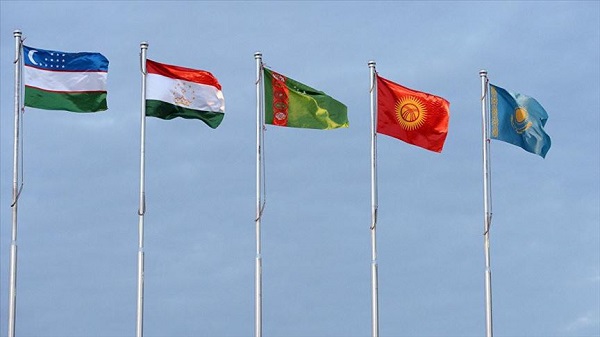
The five republics of Central Asia—Kazakhstan, Uzbekistan, Tajikistan, Kyrgyzstan, and Turkmenistan—are experiencing a quiet but significant transformation. Three decades after independence, these countries are no longer merely buffer states caught between larger powers.
They’re actively crafting foreign policies that maximize their autonomy while pursuing economic strategies that could finally deliver on the region’s long-promised potential.
The New Multi-Vector Diplomacy
Central Asia’s recent foreign policy trajectory reflects a sophisticated balancing act. These nations have learned to play what scholars call “multi-vector diplomacy”—maintaining productive relationships with Russia, China, the West, and increasingly, Middle Eastern powers and India, without becoming dependent on any single partner.
Kazakhstan exemplifies this approach. Despite its deep historical ties to Russia and its extensive border with China, Astana has carefully cultivated relationships across the board. When the Russia-Ukraine conflict erupted, Kazakhstan didn’t join Western sanctions, but it also notably refused to recognize the independence of Donetsk and Luhansk.
President Kassym-Jomart Tokayev has walked this tightrope with considerable skill, as noted by Marlene Laruelle of George Washington University’s Central Asia Program, who describes Kazakhstan’s strategy as “pragmatic sovereignty.”
Uzbekistan under President Shavkat Mirziyoyev has perhaps undergone the most dramatic foreign policy evolution. After decades of isolationism under Islam Karimov, Tashkent has opened up remarkably. Mirziyoyev has prioritized regional cooperation, resolving long-standing border disputes with Kyrgyzstan and improving relations with Tajikistan.
This intra-regional détente, though fragile, represents genuine progress in a region historically plagued by post-Soviet tensions over borders, water resources, and ethnic minorities.
China’s Belt and Road Initiative looms large across the region, bringing much-needed infrastructure investment but also concerns about debt dependency. Yet Central Asian states have proven surprisingly adept at extracting benefits while maintaining autonomy.
As Alexander Cooley of Columbia University has observed, these countries have learned to leverage Chinese investment without becoming client states—they’ve seen what happened to some of China’s partners elsewhere and adjusted accordingly.
Promising Directions Forward
The most promising foreign policy direction for Central Asia lies in deepening regional integration while maintaining multi-vector relationships. The recent uptick in intra-regional trade, though still modest, shows potential.
Water and energy cooperation between upstream and downstream states remains contentious, but there’s growing recognition that these issues require collective solutions rather than zero-sum competition.
Central Asian states should also continue strengthening ties with the European Union and the United States, not as a counterbalance to Russia or China necessarily, but as additional pillars of support. The EU’s recent increased engagement with the region, particularly in green energy and economic diversification, offers opportunities that don’t come with the geopolitical strings attached to investment from certain quarters.
The “Middle Corridor” connecting China and Europe through Central Asia and the Caucasus, bypassing Russia, has gained urgency because of various reasons. This route could give Central Asia genuine strategic weight as a transit hub, though significant infrastructure investment is needed to make it competitive.
Economic Growth: Good, But Could Be Better
Central Asia’s economic performance has been respectable in recent years. The region has benefited from commodity exports, particularly from Kazakhstan’s oil and gas sector.
Uzbekistan’s economy has grown impressively following Mirziyoyev’s reforms, which liberalized currency exchange, reduced state intervention, and opened the economy to foreign investment. Remittances from workers in Russia have traditionally buoyed Tajikistan and Kyrgyzstan, though this dependence creates vulnerability.
But “satisfactory” growth isn’t enough for countries with young, growing populations and high expectations.
Here’s where Central Asia could genuinely excel:
Economic diversification remains the most critical priority. Kazakhstan and Turkmenistan are working diligently to break from the hydrocarbon-dependent economy. A lot is being done and a lot more needs to be done. As economist Richard Pomfret has argued, the region needs to move beyond resource extraction toward manufacturing, services, and knowledge-based industries.
Some progress is evident—Kazakhstan’s fintech sector is emerging, Turkmenistan has declared self-sufficiency in milk and meat, and Uzbekistan has seen growth in textile manufacturing—but much more is needed.
Regional economic integration offers enormous untapped potential. The five Central Asian economies combined represent a market of about 75 million people, yet intra-regional trade accounts for less than 6% of their total trade.
Compare this to ASEAN countries, where intra-regional trade exceeds 20%. Reducing non-tariff barriers, harmonizing regulations, and improving transport connections could unlock significant growth. The recent railway connecting Uzbekistan, Turkmenistan, and Afghanistan shows what’s possible when political will exists.
Human capital development needs greater emphasis. The region has high literacy rates inherited from the Soviet era, but education systems haven’t kept pace with modern economic needs. Investment in technical education, digital skills, and English-language proficiency would pay enormous dividends.
Countries like Uzbekistan are making progress here, partnering with international universities to establish branches in-country, but the scale needs to expand dramatically.
Governance and institutional quality remain significant obstacles. Corruption, weak rule of law, and arbitrary regulation, wherever they exist, deter foreign investment and stifle entrepreneurship. Uzbekistan’s recent reforms demonstrate that improvement is possible—the country jumped 13 places in the World Bank’s Doing Business rankings between 2017 and 2020—but sustained commitment is essential.
As development economist Daron Acemoglu might argue, inclusive economic institutions are fundamental to long-term prosperity.
Green transition opportunities could position Central Asia advantageously. The region has enormous potential for solar and wind energy.
Developing green hydrogen production, which several countries are exploring, could create a new export industry as global demand grows. This would also reduce dependence on fossil fuels and appeal to Western investors increasingly focused on sustainability.
The Path Forward
Central Asia stands at a pivotal moment. The international system is fragmenting into competing blocs, but this polarization paradoxically creates opportunities for states that can position themselves as bridges rather than choosing sides definitively. The region’s location between Europe and Asia, its resources, and its potential as a transit corridor give it latent strategic value that skillful diplomacy can convert into concrete benefits.
Economically, the fundamentals are in place for genuine transformation. Young populations, increasing connectivity, and growing openness to reform create possibilities that didn’t exist a decade ago.
What’s needed is sustained commitment to difficult reforms, regional cooperation despite historical animosities, and strategic investment in human capital and infrastructure.
The challenge for Central Asian leaders is to maintain the delicate balance they’ve achieved in foreign policy while pushing harder on domestic economic transformation. They’ve proven adept at the former; the test now is whether they can deliver on the latter. Their citizens, particularly a restless and connected younger generation, are watching closely.
The next decade will reveal whether Central Asia remains a region of unfulfilled potential or finally becomes the dynamic crossroads its geography and history suggest it should be. /// nCa, 5 February 2026