


Tariq Saeedi
Greatness—the net result of talent and effort—transcends borders. We are who we are, and all of us have greatness somewhere inside us.
Some of us, like Erbacan, draw upon our many dimensions of talent and excel in several different areas. Some of us, like Albert Schweitzer, cluster all of our many great talents and put them in pursuit of a single purpose. Let me share with you the story of this remarkable man and his equally remarkable wife, a tale that has inspired me deeply and reminds me of the power of focused devotion.

Albert was born on January 14, 1875, in the lush valleys of Alsace, a region where French and German influences intertwined. Coming from a family rich in faith and music—his father a Lutheran pastor, his grandfathers accomplished organists—he grew up immersed in the resonant tones of church organs and the deep inquiries of theology.
As a teenager, he emerged as a prodigy, his hands gliding over piano and organ keys with effortless elegance. He delved into philosophy and theology at the University of Strasbourg, earning doctorates and delivering sermons that touched hearts.
He became a distinguished scholar, writing influential books like The Quest of the Historical Jesus in 1906, and a acclaimed musician, authoring works on Johann Sebastian Bach while captivating audiences in concert halls throughout Europe.
But beneath this rich mosaic of intellectual and artistic achievements, a profound calling began to take shape within him. At 30 years old, in 1905, Albert came across harrowing accounts of suffering in colonial Africa—tropical illnesses devastating populations, with leprosy inflicting the most heart-wrenching cruelty.
Those afflicted were frequently shunned, exiled to the edges of their villages, abandoned to the mercy of the wild and predatory animals in solitary torment.
Driven by a deep sense of responsibility and what he would articulate as “Reverence for Life”—a belief that all forms of existence merit compassion and respect—Albert chose a path of radical transformation. He left behind his secure world of scholarship and performance to train as a doctor, committing himself to healing in Africa’s core.
Enrolling in medical school back at the University of Strasbourg, he encountered doubt from peers who viewed his abilities as too expansive for such a narrow focus.
Yet his determination was unbreakable. To finance his education and care for his elderly parents, he persisted in his musical endeavors, offering evening recitals and talks that not only provided for his family but also laid the groundwork for his mission ahead.
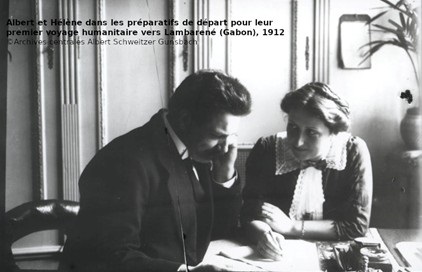
In 1912, he wed Helene Bresslau, a soulmate who embraced his dream. She trained as a nurse and anesthetist, becoming his steadfast ally in this venture. Though they later had a daughter, Rhena, in 1919, their initial years were defined by selflessness, free from other children to distract from their goal.
With his medical qualification secured by 1913, Albert and Helene journeyed to French Equatorial Africa, reaching the isolated village of Lambaréné in Gabon. There, along the Ogooué River’s banks, they converted a simple chicken coop into the foundation of a hospital.
They rounded up those tormented by leprosy and other maladies—many rejected by their societies, enduring ulcers, malaria, sleeping sickness, and the ravages of Hansen’s disease—and provided not merely medical care but also human worth.
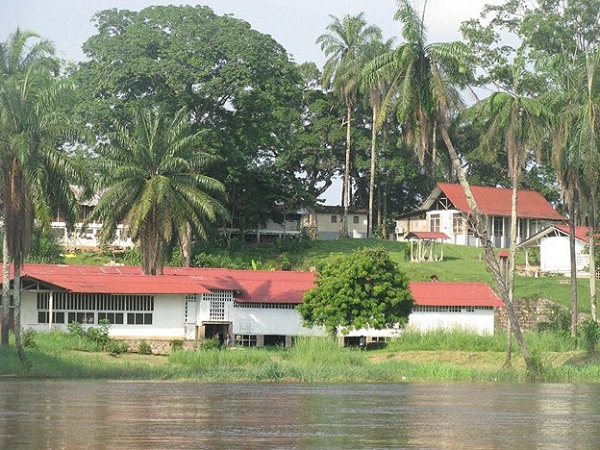
Albert Schweitzer Hospital, Lambaréné, Gabon
Albert conducted operations under flickering lanterns, dispensed nascent treatments, and instructed local helpers to broaden the reach of aid. Helene oversaw anesthesia and nursing, her reliable presence a cornerstone amid the jungle’s turmoil.
The Great War disrupted their efforts, detaining them as Germans in French lands, but they resumed in 1924, reconstructing and enlarging the facility. Across the years, the hospital evolved from a rudimentary setup to a network of more than 70 structures, tending to hundreds simultaneously.
Albert channeled earnings from his publications, European performances, and his 1952 Nobel Peace Prize into a specialized leprosarium—a haven where leprosy patients could reside, recover, and learn to assist others.
While leprosy wasn’t wiped out continent-wide—it lingers in isolated areas even now—Schweitzer’s work preserved innumerable lives, lessened prejudice, and spurred international progress in tropical health. He cared for thousands, laboring relentlessly as physician, operator, overseer, and constructor, all while creating music on a pedal piano imported from Europe.
Albert spent his final years in Lambaréné, departing this world serenely on September 4, 1965, at 90, his remains interred by the river that had sustained his life’s work. He never succumbed to leprosy, but his deep involvement in combating it epitomized his absolute dedication.
To the youth of Central Asia, I say this: Draw inspiration from wherever it finds you. The figure who ignites your spirit may not share your nation, ethnicity, faith, or traditions—and that matters not at all.
Truly great individuals are the shared legacy of humanity. What counts is spotting and assessing your own talents as soon as you can, then relentlessly honing them until they evolve into something distinctly yours, something that uplifts and motivates multitudes. /// nCa, 3 February 2026