


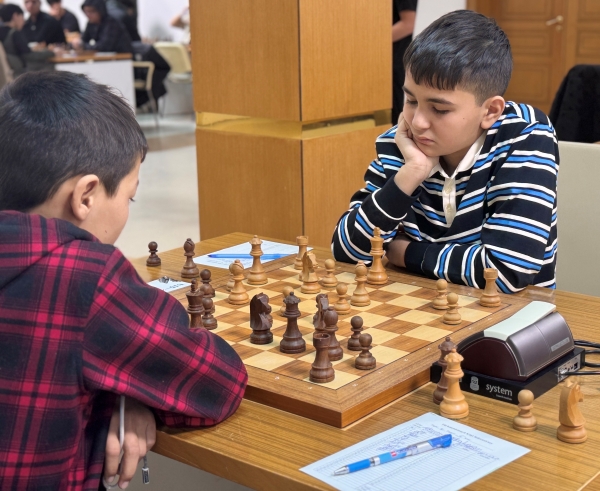
Nearly 500 schoolchildren are participating in the Turkmenistan Chess Championship for boys and girls in age categories under 7, 9, 11, 13, 15, and 17. The competitions are taking place during the winter break, from January 5 to 11, at the Specialized Chess and Draughts School in Ashgabat.
Young talents will compete for medals in three formats: the prestigious Classical, Rapid, and Blitz. The tournament follows a 9-round Swiss system.
This year has seen a record-breaking turnout of 492 students across all 12 age categories (separate divisions for boys and girls). Consequently, 36 sets of medals—108 medals in total—will be awarded throughout the week.

The participants represent a wide geographical range:
- Ashgabat — 191 participants
- Lebap province — 109
- “Kusht Alemi” Academy (Ashgabat, Mary, and Arkadag) — 82
- Mary province — 61
- Dashoguz province — 38
- Ahal province — 9
- Balkan province — 2
After four rounds, sole leaders have already emerged in several groups. The most uncompromising struggle is unfolding in the Boys U11 category, which features 89 players. The tournament has already produced a number of surprises, with new names—particularly from the Lebap and Dashoguz provinces—defeating established favorites. The winners of the classical stage will be determined this Friday, January 9.
Since 2023, championships for school students in odd-numbered age categories have been held in addition to the traditional even-numbered categories (U8, 10, 12, 14, 16, and 18). These events aim to identify winners for international tournaments in alignment with the calendars of the International Chess Federation (FIDE) and the Asian Chess Federation (ACF).
Furthermore, a key goal is to popularize chess among children nationwide and motivate them to regularly engage in this deeply creative and strategic sport, thereby fostering an intellectual foundation for the country’s youth.
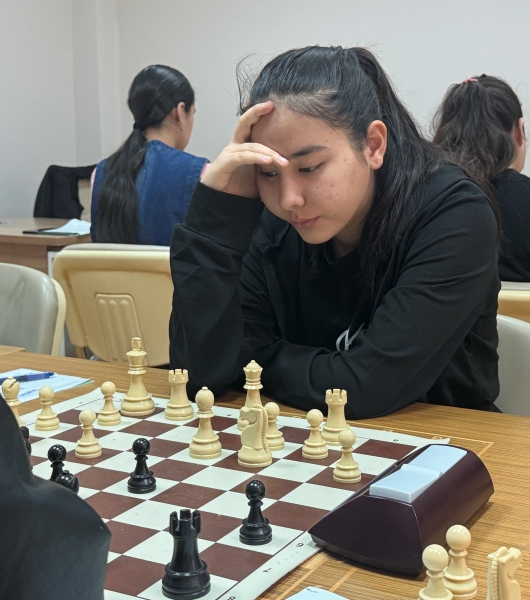
According to Vepa Malikgulyyev, Chairman of the Chess Federation of Turkmenistan:
“In an era where gadgets and social media ‘capture’ the attention and minds of children, chess builds concentration, patience, character, and social skills. Chess also molds young people to think creatively, strategically, and algorithmically—calculating the consequences of their actions in advance and managing the logical connections between stages and events. Scientists believe that specialists with this ‘engineering’ mindset will be increasingly in demand in the labor market in the age of Artificial Intelligence.”
In recent years, the number of youth tournaments in the country has grown from 12 to 79 per year, with the total number of all tournaments exceeding 100 annually. The number of chess players regularly participating in professional national competitions has surged from 60 to 1,500 over the last four years.
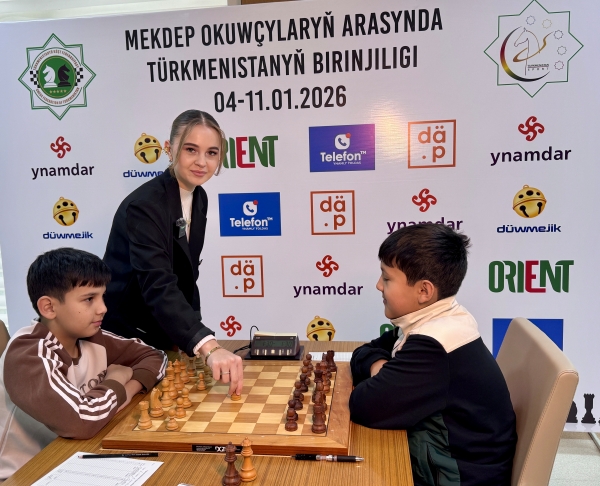
To motivate the young participants, companies such as “Düwmejik”, Ynamdar.com, TelefonTM, Dap.tm, and Orient have stepped forward to provide prizes and other forms of support to the organizers. ///Chess Federation of Turkmenistan, 7 January 2026