


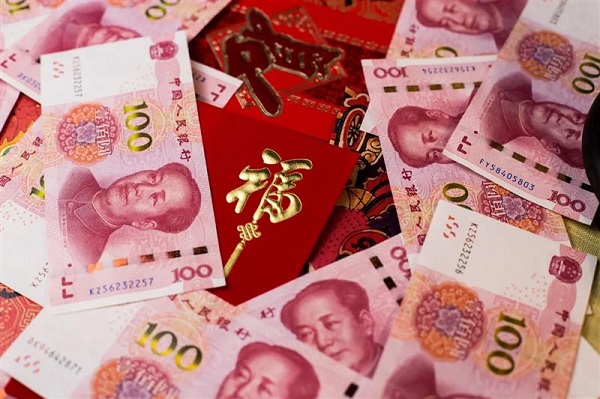
Russia has taken a major step toward fuller integration with China’s financial system by issuing its first sovereign bonds denominated in Chinese renminbi, raising nearly $3 billion in a transaction that both sides hailed as a milestone in their rapidly expanding economic partnership. The information comes from the Financial Times and the Russian media.
The Russian Finance Ministry placed 20 billion renminbi (approximately $2.8 billion) in offshore “dim sum” bonds last week: 12 billion renminbi maturing in 2029 at a 6 percent yield and 8 billion renminbi due in 2033 yielding 7 percent. More than half the issue was purchased by banks that have built substantial renminbi positions through the explosive growth in Russia-China trade finance.
“We have succeeded in creating a liquid sovereign benchmark that will serve as a pricing guide for corporate borrowers and will contribute to the deepening of bilateral cooperation between Russia and China in the financial sector,” Russia’s Finance Minister Anton O. Siluanov said in a statement celebrating the placement.
The sale is the largest renminbi sovereign bond offering anywhere in the world this year and marks a concrete advance in Beijing’s long-standing goal of increasing the international role of the yuan.
Russia’s move provides a high-profile endorsement of that ambition while opening a new channel for Russian entities to access China’s vast pool of low-cost capital.
Maximilian Hess, founder of Enmetena Advisory and a fellow at the Foreign Policy Research Institute, described the transaction as a clear signal of strategic alignment. “This gives the Chinese more confidence that Russia is fully aligned with their geoeconomic agenda of internationalizing the yuan,” he said. “Beijing would certainly have given this a nod of approval.”
The bond issue builds on an already dramatic reorientation of Russia’s external economic relations toward China. The renminbi has become Russia’s primary foreign reserve currency, with much of the liquid portion of the $50 billion National Wealth Fund now held in yuan.
More than 90 percent of bilateral trade is already settled in rubles or renminbi, and China now purchases nearly half of Russia’s oil exports — a volume that reached almost $7 billion in October alone, according to the Centre for Research on Energy and Clean Air.
For Beijing, Russia’s sovereign benchmark creates favorable conditions for other countries to follow. Hungary and the emirate of Sharjah issued renminbi bonds earlier this year, while Indonesia and Pakistan are actively considering panda bonds in mainland China for 2025.
Russia’s offering, however, dwarfs all others and is expected to encourage a wave of Russian corporate issuance in the currency.
Several Russian companies have already dipped into renminbi funding — aluminum giant Rusal issued panda bonds in mainland China in 2017 and renminbi bonds domestically in 2022 — but analysts expect the new sovereign curve to dramatically expand activity.
“Russian companies have been borrowing in Chinese yuan for some time, but there is still a lot of room for that to grow,” Mr. Hess said. “One day, Chinese yuan borrowing in Russia could be as large as dollar borrowing once was.”
Chinese officials have quietly encouraged such steps for years, viewing Russia as a key partner in building a multipolar financial order.
The successful placement of Moscow’s dim sum bonds demonstrates that the infrastructure for large-scale renminbi financing outside China is maturing rapidly — and that Russia and China are moving in lockstep to make it happen.
As Mr. Siluanov put it, the new benchmark will “contribute to the deepening of bilateral cooperation.” In an era of expanding Sino-Russian trade and investment, those words read less as diplomatic courtesy than as a statement of strategic intent. /// nCa, 9 December 2025