


Chevron: Falling Caspian Sea Levels Demand Pipeline Construction
The persistent decline in water levels of the Caspian Sea is challenging existing transportation logistics and forcing the search for new environmentally sustainable approaches to moving oil and gas across the trans-Caspian corridor, according to Vestnikavkaza.
Dylan Morgan, vice president of Chevron’s Eurasian division, made these remarks during his participation in the SPE Caspian Technical Conference 2025 in Azerbaijan’s capital, which brought together representatives from the oil and gas industry.
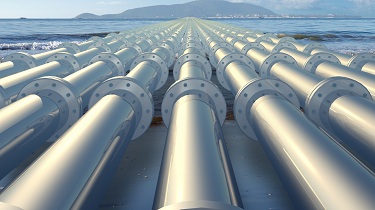
Morgan emphasized that pipelines remain the safest method for delivering oil and gas, stating that their use should be prioritized when discussing sustainable and responsible approaches.
The Chevron representative sees the solution to the Caspian’s shrinking water resources in coordinated integration of common transportation infrastructure, which would optimize cargo transportation efficiency, reduce logistics costs for maintaining vessels and servicing ports, and decrease dependence on dredging operations.
Technical and Economic Challenges
However, economist Rovshan Ibragimov, speaking with Vestikavkaza’s correspondent, outlined significant technical and economic obstacles that prevent Azerbaijan, Kazakhstan, and Turkmenistan from currently considering trans-Caspian pipeline projects.
The seafloor topology presents major difficulties. While the Caspian becomes shallow near the shores in the northern region, its middle section features extreme depths with abrupt transitions. The seabed takes the shape of a bowl, making it difficult to envision constructing an oil pipeline from Kazakhstan to Azerbaijan across such terrain.
Ibragimov stressed that while the problem of the Caspian’s declining water levels and its negative impact on cargo transportation is real, underwater pipeline construction does not appear to be a viable solution. The physical construction of a marine oil pipeline under Caspian conditions is extremely complex, which explains why such ideas have never been seriously discussed. /// nCa, 28 November 2025