


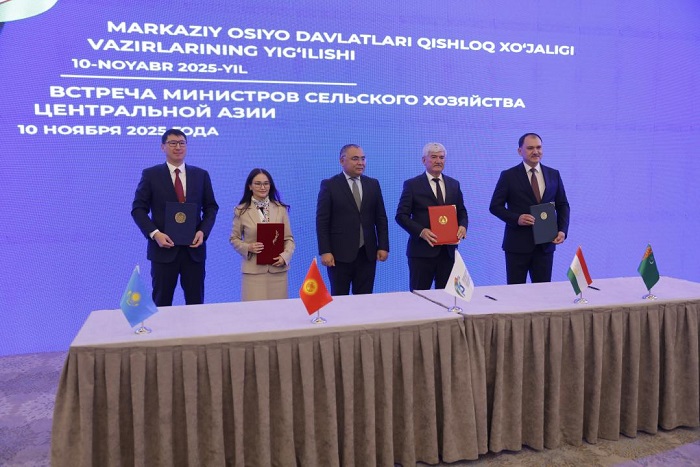
Central Asian nations have taken a significant step toward bolstering their food security and agricultural cooperation. According to the Kazakh Agriculture Ministry’s press service, ministers from across the region gathered in Tashkent on November 10 to sign a joint declaration and unveil an ambitious Central Asia Food Security Plan extending through 2030.
The high-level meeting brought together government officials, diplomats, and representatives from international organizations, signaling the region’s commitment to sustainable agricultural development. Kazakhstan’s delegation was headed by Deputy Agriculture Minister Yerbol Taszhurekov, who emphasized that partnerships among Central Asian neighbors have entered an exciting new phase.
Kazakhstan has been making impressive strides in modernizing its agricultural sector. The country is expanding oilseed cultivation by 1 million hectares and legume production by 300,000 hectares. Perhaps most notably, areas using water-saving irrigation technologies have nearly doubled over just two years, reaching 590,000 hectares—a figure expected to more than double again to 1.3 million hectares by 2030. These improvements have helped Kazakhstan achieve record grain and oilseed harvests for two years running.
The economic benefits of regional cooperation are already apparent. Agricultural trade between Kazakhstan and its Central Asian neighbors surged to $2.3 billion in the first nine months of this year, representing a 24.4% jump from the previous year. Kazakhstan primarily exports wheat, flour, vegetable oil, beef, and sugar to the region, while importing fruits and vegetables.
The ministers also discussed ambitious cross-border projects, including the Central Asia International Center for Industrial Cooperation on the Uzbekistan-Kazakhstan border and the Alatau Industrial and Logistics Complex near Kyrgyzstan.
Additionally, participants explored the possibility of establishing a regional center for sustainable agriculture that would serve as a knowledge-sharing hub and help implement international best practices across Central Asia. /// nCa, 12 November 2025