


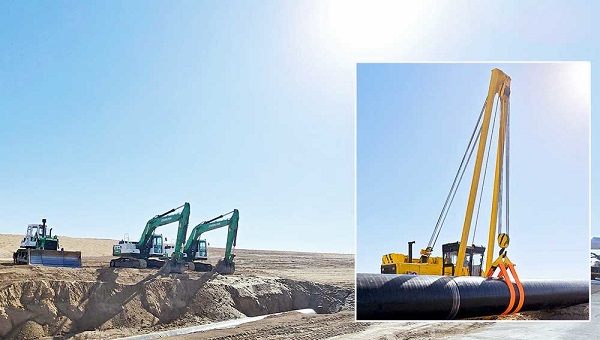
Recently, in Afghanistan’s Herat province, the National Leader of the Turkmen people and Chairman of the Halk Maslahaty of Turkmenistan, Gurbanguly Berdimuhamedov, alongside a high-level Afghan delegation, launched the construction of the next phase of the Turkmenistan–Afghanistan–Pakistan–India (TAPI) gas pipeline. This 153-kilometer section along the Serhetabat (Turkmenistan border) – Herat route marks a significant step in the implementation of one of the region’s largest energy projects.
A report published by the official newspaper ‘Turkmenistan’ highlights several facts and figures underscoring the scale and importance of the project for both the economy of Herat province and Afghanistan as a whole. Here are some key details:
Scale and Significance of the Project
The TAPI project is expected to create approximately 12,000 jobs in Afghanistan and generate an annual revenue of US $ 1 billion. Moreover, the pipeline’s launch will serve as a catalyst for dozens of other major infrastructure and industrial projects in the country.
The TAPI pipeline opens a new export route for Turkmen natural gas to South Asia, one of the world’s fastest-growing regions. With a population of about 2 billion people and rapidly developing industries in countries like India and Pakistan, the region represents a promising market. Once operational, the pipeline will supply 33 billion cubic meters of Turkmen gas annually to Afghanistan, Pakistan, and India, strengthening regional energy security.
Construction Progress

The total length of the TAPI pipeline is 1,821 kilometers, of which 214 kilometers within Turkmenistan have already been successfully completed. The next phase involves an 816-kilometer section across Afghanistan, passing through the provinces of Herat, Farah, Nimroz, Helmand, and Kandahar. The Serhetabat–Herat section is the first stage of the pipeline’s construction in Afghanistan.
To date, 14 kilometers of the Afghan section have been completed, with preparatory and leveling work on the pipeline route reaching the 75-kilometer mark.
Construction is being carried out in two 15-day shifts, each involving over 200 workers. The pipeline will have two gas metering stations: one in Turkmenistan and the other at the gas reception point under construction in Herat province.
Technical Support
The construction site employs over 200 units of specialized equipment, including bulldozers, excavators, loaders, cranes, pipe-laying machines, high-mobility and heavy-duty vehicles, trailers with mobile platforms, and motor graders. Most of this equipment is supplied by well-known Chinese manufacturers.
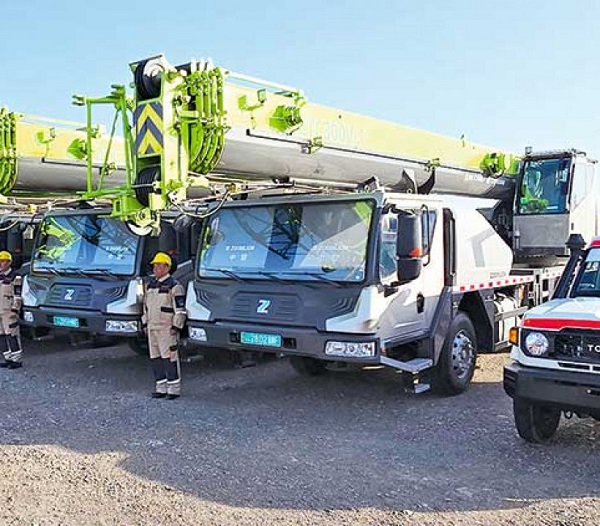
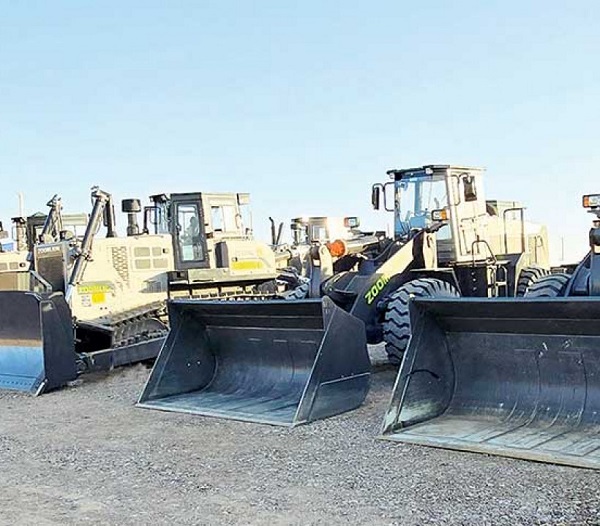
The machinery is equipped with heaters for engine operation in winter, cabin heaters, and air conditioners for driver comfort. Designed for harsh weather conditions, ranging from -30°C to +55°C, these machines are adapted for dusty environments and mountainous terrain.
Economic and Social Prospects
The TAPI pipeline will deliver Turkmen gas to power more than 500 industrial enterprises in Herat province. This will not only strengthen the region’s energy infrastructure but also create new opportunities for economic growth and improved living standards for the local population. ///nCa, 22 October 2025