


On 20 October 2025, a Turkmenistan delegation led by Deputy Minister of Foreign Affairs Myahri Byashimova participated in a ministerial meeting in Luxembourg, held following the EU Foreign Affairs Council session.

The meeting brought together foreign ministers and representatives from EU Member States, Armenia, Azerbaijan, the Republic of Moldova, Türkiye, Ukraine, and Central Asian partners (Kazakhstan, Kyrgyzstan, Tajikistan, Turkmenistan and Uzbekistan) to discuss the Cross-Regional Connectivity Agenda – whose aim is to link the EU with Central Asia via Türkiye and the South Caucasus.
From the EU side, the High Representative for Foreign Affairs and Security Policy/Vice-President of the European Commission Kaja Kallas, Commissioner for Enlargement Marta Kos, and Commissioner for International Partnerships Jozef Síkela took part in the discussions.
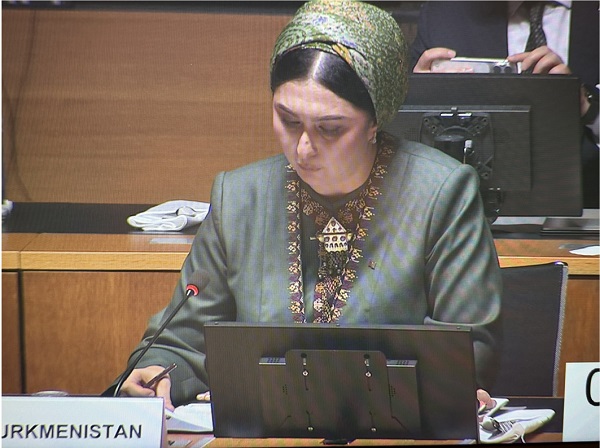
During the session, Myahri Byashimova reaffirmed Turkmenistan’s commitment to deepening mutually beneficial cooperation with the EU based on trust, respect, and equality.
The Turkmen side outlined its priorities:
– Development of modern and sustainable transport infrastructure, with an emphasis on the Trans-Caspian route;
– Expansion of energy connectivity with the EU, including support for the SECCA program, cooperation in renewable energy, and hydrogen technologies;
– Promotion of the green agenda, including initiatives to establish a Regional Center for Combating Desertification, a Regional Center for Climate Technologies, and the advancement of the Caspian Environmental Initiative.
During the session, EU representatives, along with ministers from EU Member States, Black Sea and South Caucasus countries and Central Asia countries discussed an ambitious Cross-Regional Connectivity Agenda.
The focus is on sustainable and resilient connections, in four priority areas:
- Transport: strengthening the cross-regional Trans-Caspian Transport Corridor (TCTC) and the extension of our transport connections.
- Digital: developing high-speed internet access to drive innovation, digital trade, and secure critical infrastructure.
- Energy: improving energy links and accelerating renewable energy deployment to enhance energy security and diversification.
- Trade: harmonising and digitalising customs procedures to simplify cross-border trade and deepen market integration.
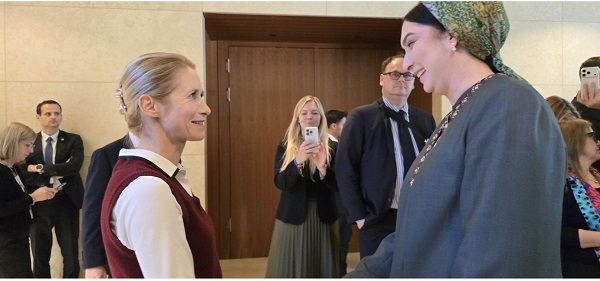
Following the ministerial meeting, the EU announced the development of a coordination framework to implement the Connectivity Agenda, involving states, international financial institutions, and the private sector.
A draft of this framework will be presented for discussion at the Investment Forum on the Trans-Caspian Transport Corridor in Tashkent in November 2025, accompanied by a mapping of existing expertise and an analysis of connectivity needs to identify priority investments and “soft” connectivity measures. Participants agreed to reconvene in a year. ///nCa, 21 October 2025 (based on materials from the Ministry of Foreign Affairs of Turkmenistan and the European External Action Service)