


nCa Report
Executive Summary
The wheat situation in Central Asia for the 2024-2025 agricultural season presents a generally positive outlook despite significant climate challenges. The region successfully completed autumn sowing under favorable conditions, achieved average to above-average harvests in most countries, and experienced robust export demand, particularly from Kazakhstan to neighboring nations. However, persistent water scarcity, below-average precipitation forecasts, and above-average temperatures pose ongoing risks to future production.
Regional Production Overview
Harvest Performance (2024)
The 2024 winter wheat harvest across Central Asia demonstrated resilience in the face of adverse climatic conditions:

Countries with Above-Average Yields:
- Tajikistan: Achieved above-average production despite irregular rainfall patterns
- Uzbekistan: Recorded above-average yields, contributing to regional food security
Countries with Average Yields:
- Kyrgyzstan: Met average production levels despite some regional variations
- Turkmenistan: Achieved average output, maintaining domestic supply targets
Countries with Below-Average Yields:
- Northern Kyrgyzstan: Experienced reduced yields due to dry conditions and high temperatures
- Southern Kazakhstan: Suffered below-average production as accelerated grain maturation caused by above-average temperatures combined with drought conditions shortened the growing period
Production Factors
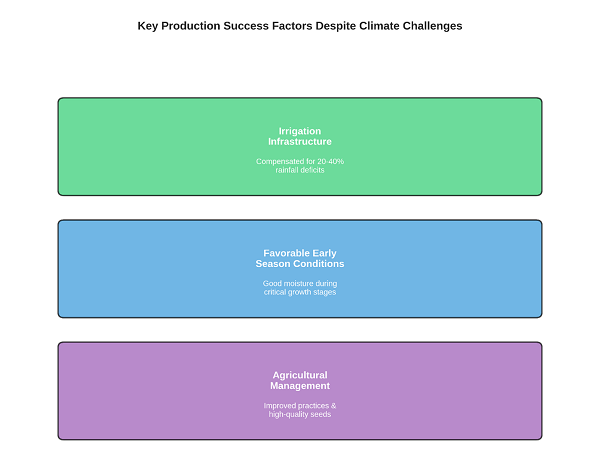
Despite facing irregular and below-average rainfall since November/December 2024 and above-average temperatures since April 2025, the region’s winter wheat production prospects remained favorable. This success can be attributed to:
- Irrigation infrastructure: Access to irrigation water compensated for rainfall deficits in key producing areas
- Favorable early-season conditions: Good moisture availability during critical growth stages
- Agricultural management: Implementation of improved agrotechnical practices and high-quality seed varieties
Country-Specific Developments
Kazakhstan: Regional Export Leader
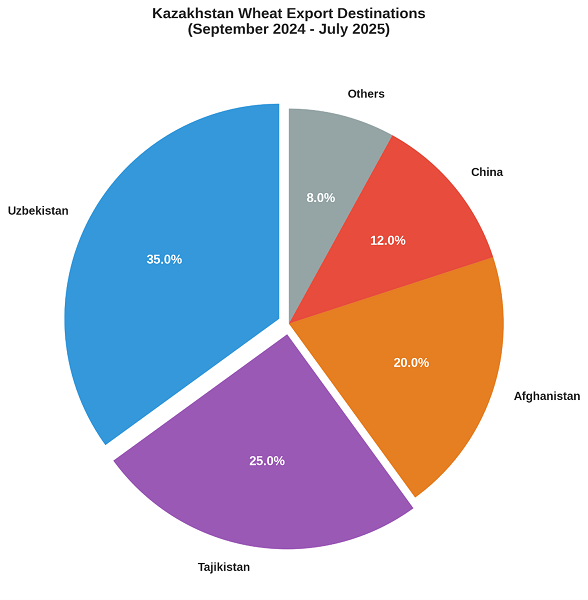
Kazakhstan has emerged as the dominant wheat exporter in Central Asia, with significant growth in trade during the 2024-2025 season:
Export Performance (September 2024 – July 2025):
- Substantial increase in exports of wheat, wheat flour, and feed flour compared to the previous year
- Strong demand from multiple regional buyers
Key Export Destinations:
- Uzbekistan: Major growth in purchases, representing the largest market
- Tajikistan: Notable increases in wheat imports from Kazakhstan
- Afghanistan: Continued significant demand
- China: Expanding market for Kazakh wheat products
Current Season Status:
- Winter wheat developing normally in most regions
- Spring wheat sowing progressing in northern producing areas
- Mixed conditions with northern and central Kazakhstan experiencing favorable moisture for spring wheat, contrasting with the drought-affected southern regions
Turkmenistan: Government-Led Sowing Campaign
Turkmenistan launched an organized autumn wheat sowing campaign:
2025 Sowing Initiative:
- Official start date: September 2, 2025
- Presidential approval: President Serdar Berdimuhamedow authorized the nationwide campaign
- Geographic scope: All regions participating in the autumn (güýzlük) wheat planting season
Agricultural Policy Framework:
- Emphasis on high-quality seed varieties
- Strict adherence to agrotechnical standards
- Integration with broader agricultural quotas (including 2,100 tonnes of raw cotton production target)
- Focus on meeting domestic food security requirements
Current Crop Status:
- Winter wheat developing under favorable conditions
- Crop biomass levels close to average despite rainfall challenges
Uzbekistan: Strong Production and Trade
Uzbekistan has demonstrated robust agricultural performance:
Production Achievements:
- Above-average winter wheat yields in 2024
- Successful harvest despite climatic challenges
- Maintained position as both producer and major importer of Kazakh wheat
Current Season:
- Winter wheat continues to develop under favorable conditions
- Crop conditions remain positive despite regional weather concerns
Tajikistan: Above-Average Performance
Tajikistan achieved notable success in wheat production:
Harvest Results:
- Above-average yields recorded for winter wheat
- Strong performance despite irregular precipitation patterns
- Continued reliance on wheat imports from Kazakhstan to supplement domestic production
Current Development:
- Winter wheat progressing favorably
- Concerns about upcoming precipitation deficits in long-term forecasts
Kyrgyzstan: Regional Variations
Kyrgyzstan experienced mixed outcomes across different regions:
Northern Region Challenges:
- Below-average winter wheat yields due to drought and heat stress
- Accelerated grain maturation reduced yield potential
- Water availability constraints affected production
Overall National Performance:
- Average production levels achieved nationally
- Southern and central regions performed better than northern areas
Current Season:
- Winter wheat developing under favorable conditions in most areas
- Spring wheat planting continues with some moisture concerns
Climate Challenges and Risks
Historical Climate Conditions (2024-2025 Season)
Rainfall Patterns:
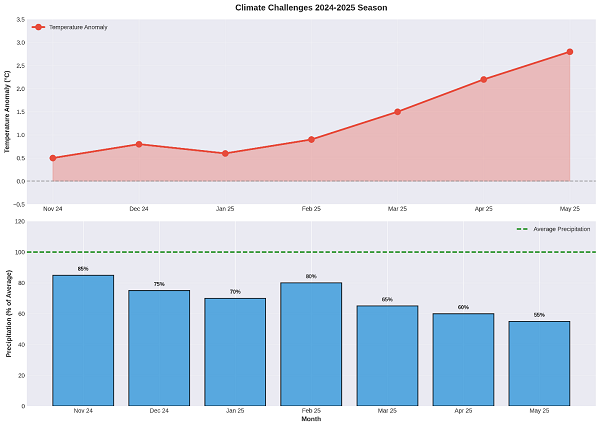
- Irregular and below-average precipitation since November/December 2024
- Drought conditions particularly severe in southern Kazakhstan and northern Kyrgyzstan
- Rainfall deficits persisted throughout the winter dormancy and spring growth periods
Temperature Anomalies:
- Above-average temperatures recorded since April 2025
- Heat stress accelerated crop maturation in vulnerable areas
- Temperatures reached 1-3°C above normal in several regions
- Some areas experienced temperatures up to 6°C above average during critical growth stages
Future Climate Outlook
Short-Term Forecast (Two-Week Outlook):
Precipitation:
- Above-average rainfall expected: North-central Kazakhstan, Kyrgyzstan, Tajikistan
- Below-average rainfall expected: Eastern Kazakhstan, western Turkmenistan
- Critical period for crop development and irrigation planning
Temperature:
- Above-average temperatures likely across Kazakhstan, Kyrgyzstan, Uzbekistan, and northern Turkmenistan
- Continued heat stress risk for crops in vulnerable areas
Long-Term Forecast (June-July-August 2025):
Precipitation:
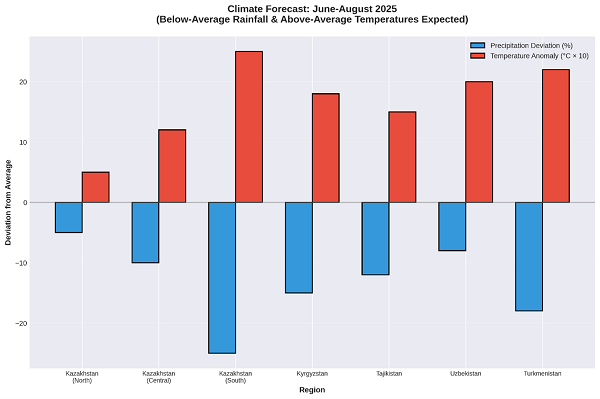
- Below-average rainfall forecast for parts of Kazakhstan, Kyrgyzstan, and Tajikistan
- Potential negative impact on spring wheat and summer crops
- Drier-than-average conditions expected to persist until at least April 2025 in some areas
- Irrigation water availability will be critical for crop survival
Temperature:
- Above-average temperatures likely across the entire region except northern Kazakhstan
- Increased evapotranspiration will compound water stress
- Risk of heat waves in southern regions
Water Resource Implications
The climate forecasts present significant challenges for Central Asian agriculture:
- Irrigation dependency: With below-average rainfall forecast, irrigation water availability becomes critical
- Reservoir levels: Water storage capacity will determine production outcomes in key growing areas
- Spring wheat risk: Spring-planted wheat faces particular vulnerability to projected dry conditions
- Inter-seasonal planning: Farmers and governments must prepare for potential water rationing
Trade Dynamics and Food Security
Regional Wheat Trade Network
The Central Asian wheat market demonstrates strong regional integration:
Kazakhstan’s Export Dominance:
- Functions as the primary wheat supplier to neighboring countries
- Export growth reflects both production capacity and regional demand
- Infrastructure supports efficient movement of grain products across borders
Import-Dependent Countries:
- Uzbekistan, Tajikistan, and Afghanistan rely on Kazakh wheat to supplement domestic production
- Trade relationships strengthen regional food security
- Diversification of suppliers (including China as a buyer) enhances market stability
Food Security Considerations
Positive Factors:
- Regional production exceeded baseline expectations despite climate challenges
- Strong trade networks facilitate grain movement to deficit areas
- Government attention to wheat production (particularly in Turkmenistan) signals policy priority
- Above-average harvests in Uzbekistan and Tajikistan buffer regional supply
Risk Factors:
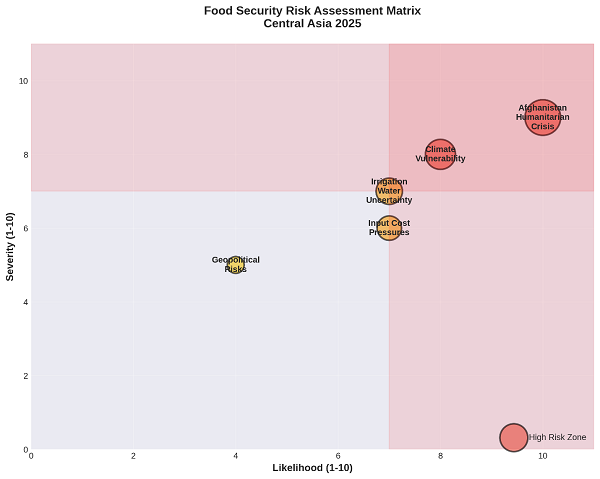
- Climate forecasts suggest increasing vulnerability to drought
- Irrigation water availability uncertainty threatens future production
- Afghanistan’s ongoing acute food insecurity (affecting 10 million people out of 42 million) creates humanitarian concerns
- Geopolitical tensions could disrupt trade flows
- Input costs (fertilizers, fuel) may constrain farmer investments
Agricultural Management and Technology
Sowing Campaigns and Practices
Turkmenistan’s Systematic Approach:
- Government-mandated sowing schedules ensure timely planting
- Quality control measures for seed selection
- Agrotechnical standards enforcement
- Coordinated regional implementation
Regional Best Practices:
- High-quality seed varieties increasingly adopted across the region
- Precision agriculture techniques emerging in Kazakhstan’s commercial farms
- Traditional practices maintained in smallholder systems
Irrigation Infrastructure
The region’s ability to achieve average to above-average production despite rainfall deficits highlights the critical role of irrigation:
Strengths:
- Established irrigation networks in Uzbekistan and Turkmenistan
- Kazakhstan’s northern regions benefit from better natural moisture
- Tajikistan’s mountain water resources provide seasonal flows
Vulnerabilities:
- Aging infrastructure requires maintenance investments
- Climate change threatens glacial water sources
- Increased competition for water between agriculture and other sectors
Outlook
Near-Term Outlook (2025 Harvest)
Optimistic Scenario:
- If short-term precipitation forecasts materialize (above-average rainfall in north-central Kazakhstan, Kyrgyzstan, and Tajikistan), current winter wheat crops will likely achieve average to above-average yields
- Favorable crop development conditions observed as of late May 2025 suggest crops have established well
- Spring wheat in northern and central Kazakhstan benefits from favorable moisture conditions
Pessimistic Scenario:
- Long-term below-average precipitation forecast for summer months could significantly reduce spring wheat and summer crop yields
- Continued above-average temperatures will increase water stress
- Southern Kazakhstan and northern Kyrgyzstan remain particularly vulnerable
- Irrigation water shortages could force reductions in planted area
Medium-Term Challenges (2025-2030)
- Climate adaptation: Region must invest in drought-resistant varieties and water-efficient technologies
- Infrastructure modernization: Irrigation systems require upgrading to improve efficiency
- Regional cooperation: Water sharing agreements essential for sustainable production
- Market development: Strengthening trade relationships and storage capacity
- Policy coordination: Harmonizing agricultural strategies across borders /// nCa, 8 October 2025