


Elvira Kadyrova, Gaziantep–Şanlıurfa, Türkiye
There are works of art that cannot be viewed simply as museum exhibits. You approach them, and instead of merely looking at the image, you begin to study the details — the faces of the figures, the symbols surrounding them, and the thousands of tiny elements that make up the overall composition. Stone, marble and limestone — each fragment, nearly two thousand years old, continues to tell stories of people, gods and entire cities.
It was with this sense of discovery that journalists from Turkmenistan, Kazakhstan and Azerbaijan visited two of southeastern Türkiye’s largest mosaic museums as part of the Gaziantep–Şanlıurfa press tour: the Haleplibahçe Mosaic Museum in Şanlıurfa and the Zeugma Mosaic Museum in Gaziantep.
The two museums are linked not only by their ancient heritage, but also by the early development of highly sophisticated techniques of interior decoration. Each fragment is, in its own way, a chronicle of the ancient world. Together, the mosaics offer a glimpse into the art, everyday life and worldview of people who lived in Mesopotamia many centuries ago.
Where the Mosaics Remain in Their Original Setting
In Şanlıurfa, the Haleplibahçe Museum makes an impression even before you begin looking at the exhibits. The building covers around 6,000 square metres and has a diameter of 82 metres. It is the largest structure of its kind in Türkiye built without intermediate supporting columns.
But the main attraction here is not above ground. It is literally beneath your feet.
One of the museum’s defining features is that it houses neither replicas nor relocated archaeological finds. The museum was built directly over the site where the artefacts were originally discovered. Visitors therefore find themselves in the very place where the rooms of ancient buildings stood thousands of years ago.
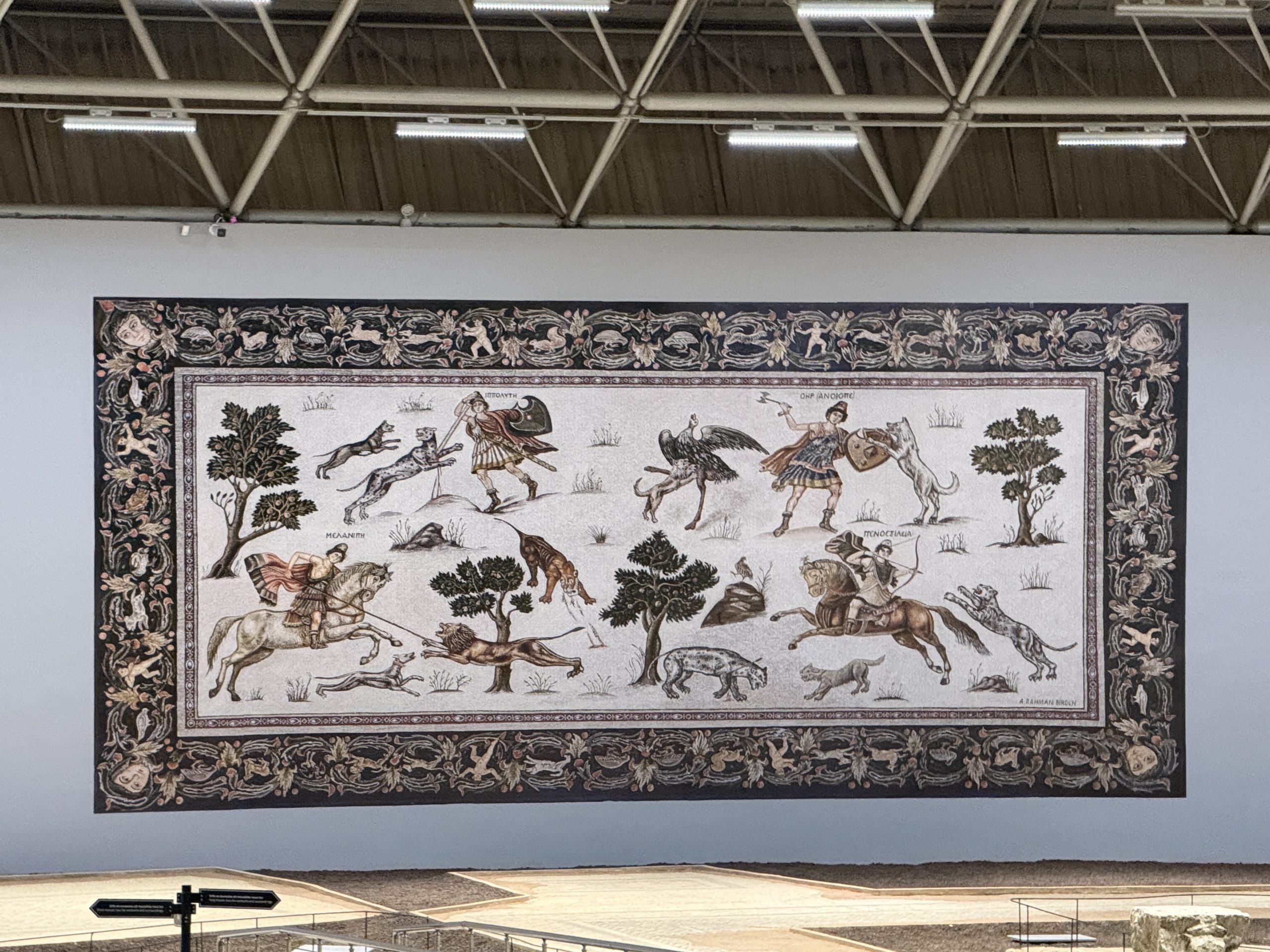
One of the most impressive archaeological complexes is the so-called Villa of the Amazons. It takes its name from the depictions of Amazons uncovered during excavations.
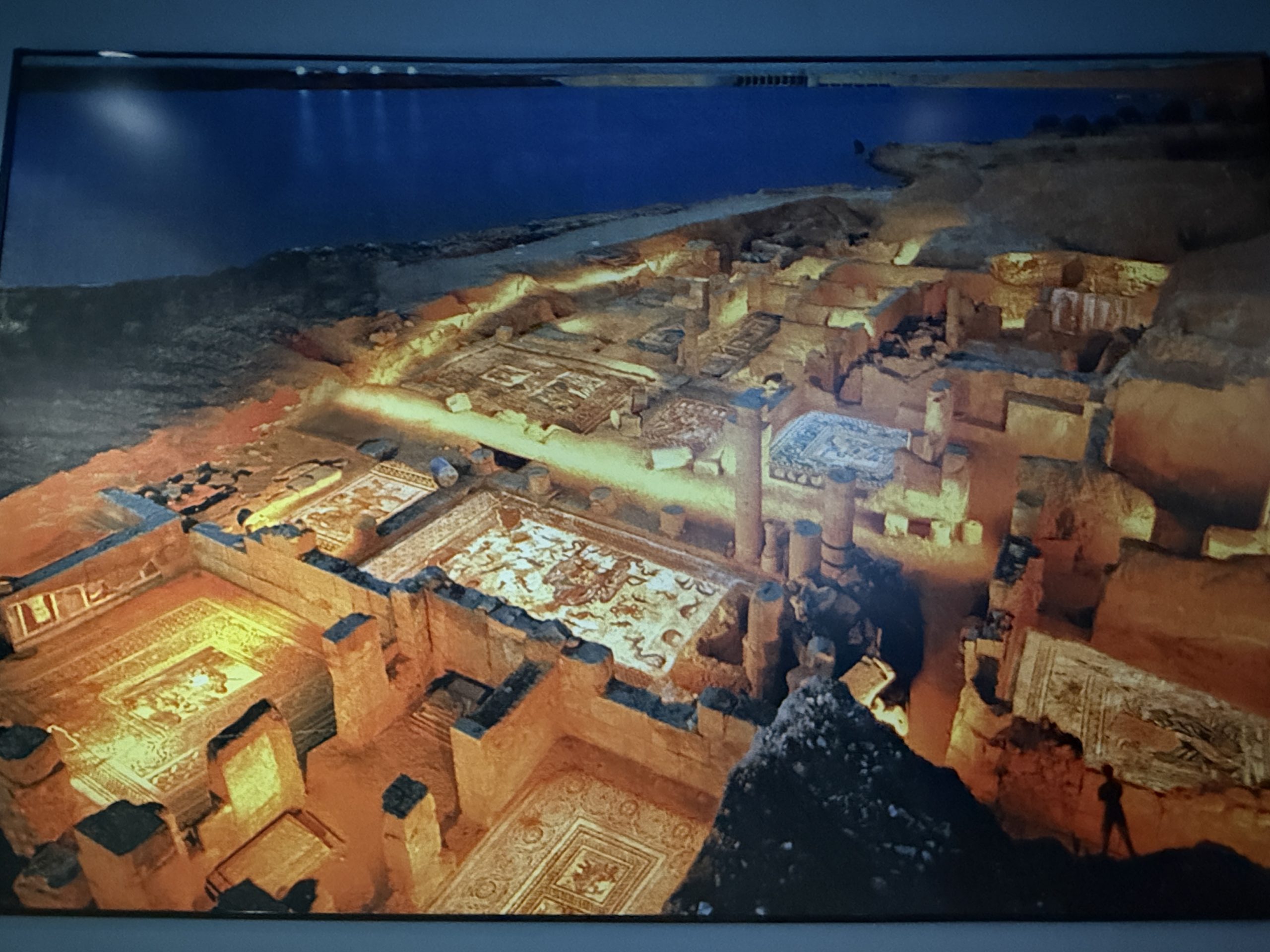
The villa is organised around a large rectangular hall positioned between two courtyards. The rooms extend symmetrically on either side of the central space, while the mosaic floors transform the interiors into something resembling pages of an ancient story.
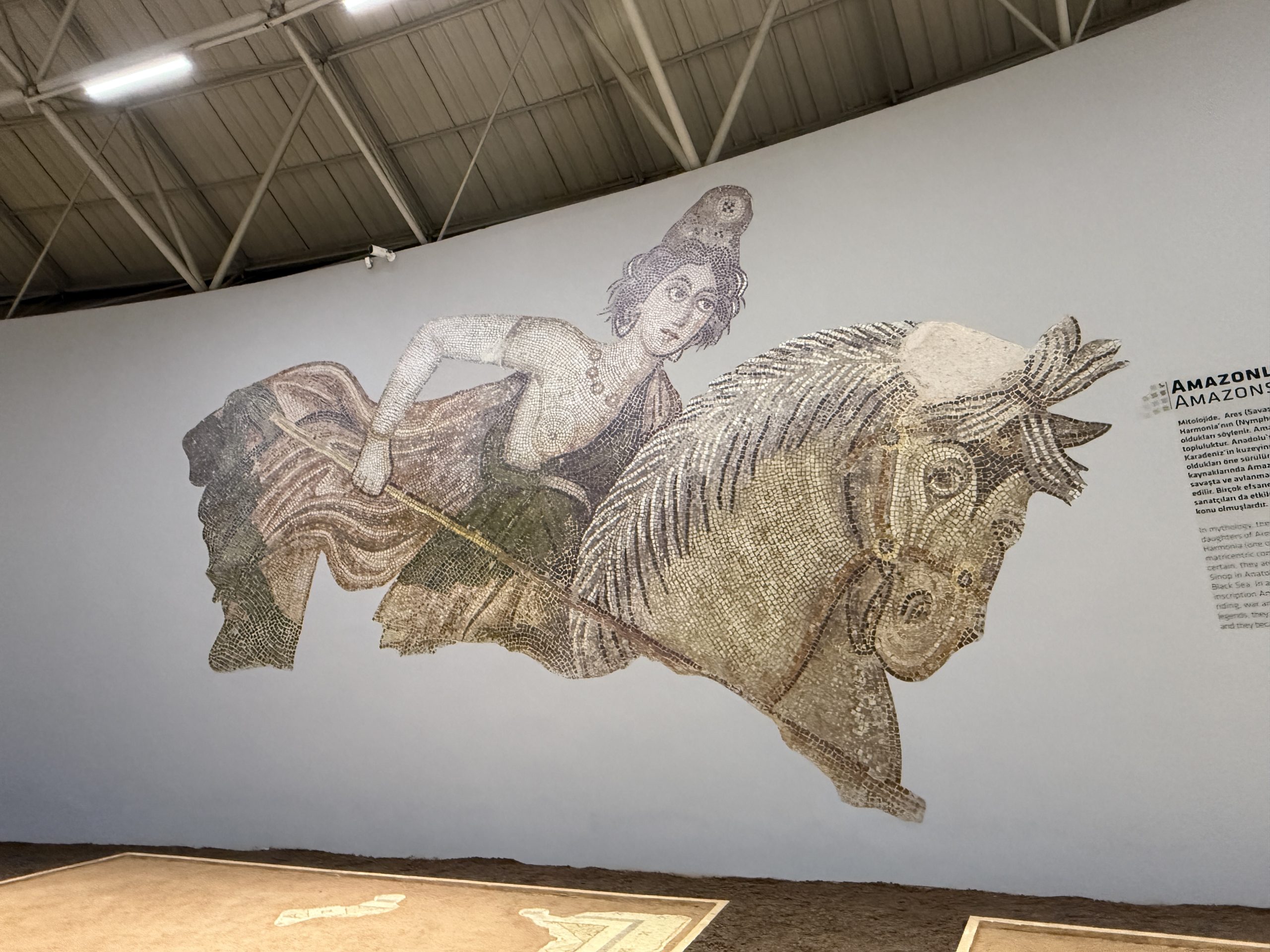
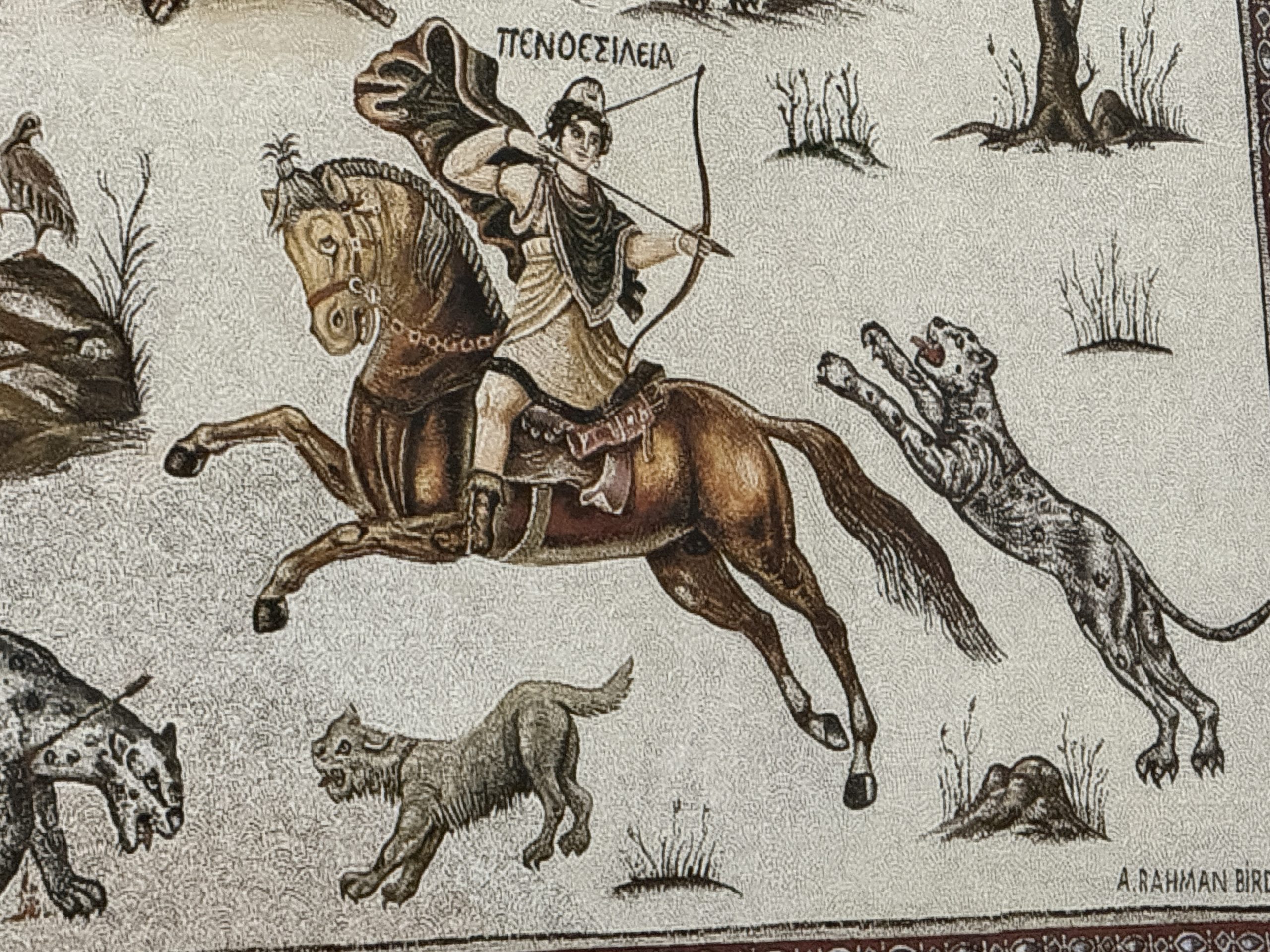
One room depicts Amazons engaged in hunting. Others feature lions and tigers, as well as scenes and figures associated with ancient mythology and everyday life.
Particular attention is drawn to the mosaic known as “Ktisios.”
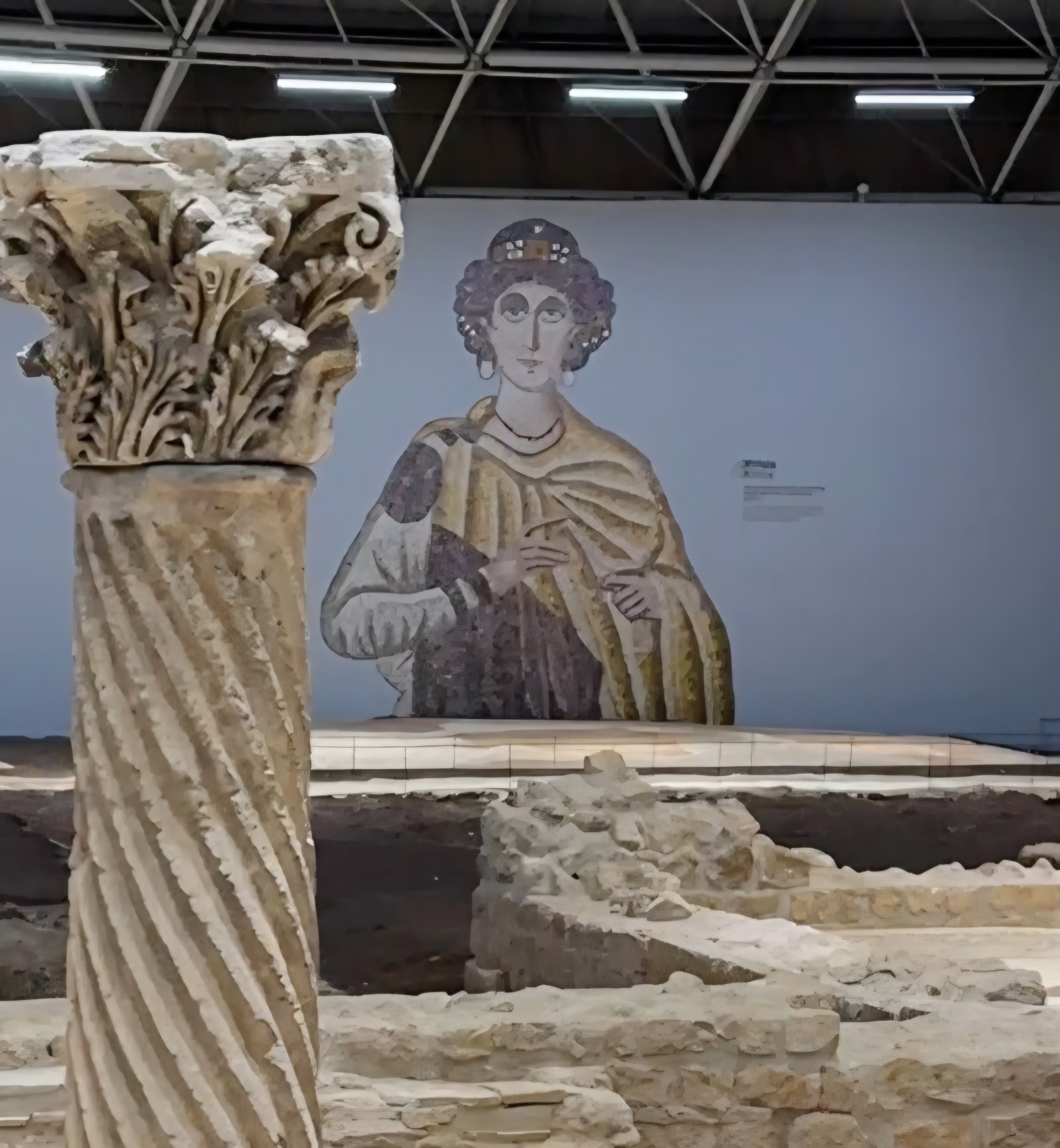
It depicts a woman shown in a bust-length portrait. Her head is adorned with a luxurious crown set with pearls and precious stones; an earring with an oval pearl hangs from her ear, while a necklace rests around her neck.
But it is not only the beauty of the image that makes it remarkable.
In her hands, Ktisios holds a measuring instrument — the ancient Roman foot, measuring approximately 29.7 centimetres. The mosaic is therefore more than a portrait of a mythological figure; it also provides evidence of ancient concepts of construction, dimensions and proportions.
Columns entwined with greenery can be seen around the figure. The colours, the minute details of the jewellery and the folds of the clothing are all rendered with almost jeweller-like precision.
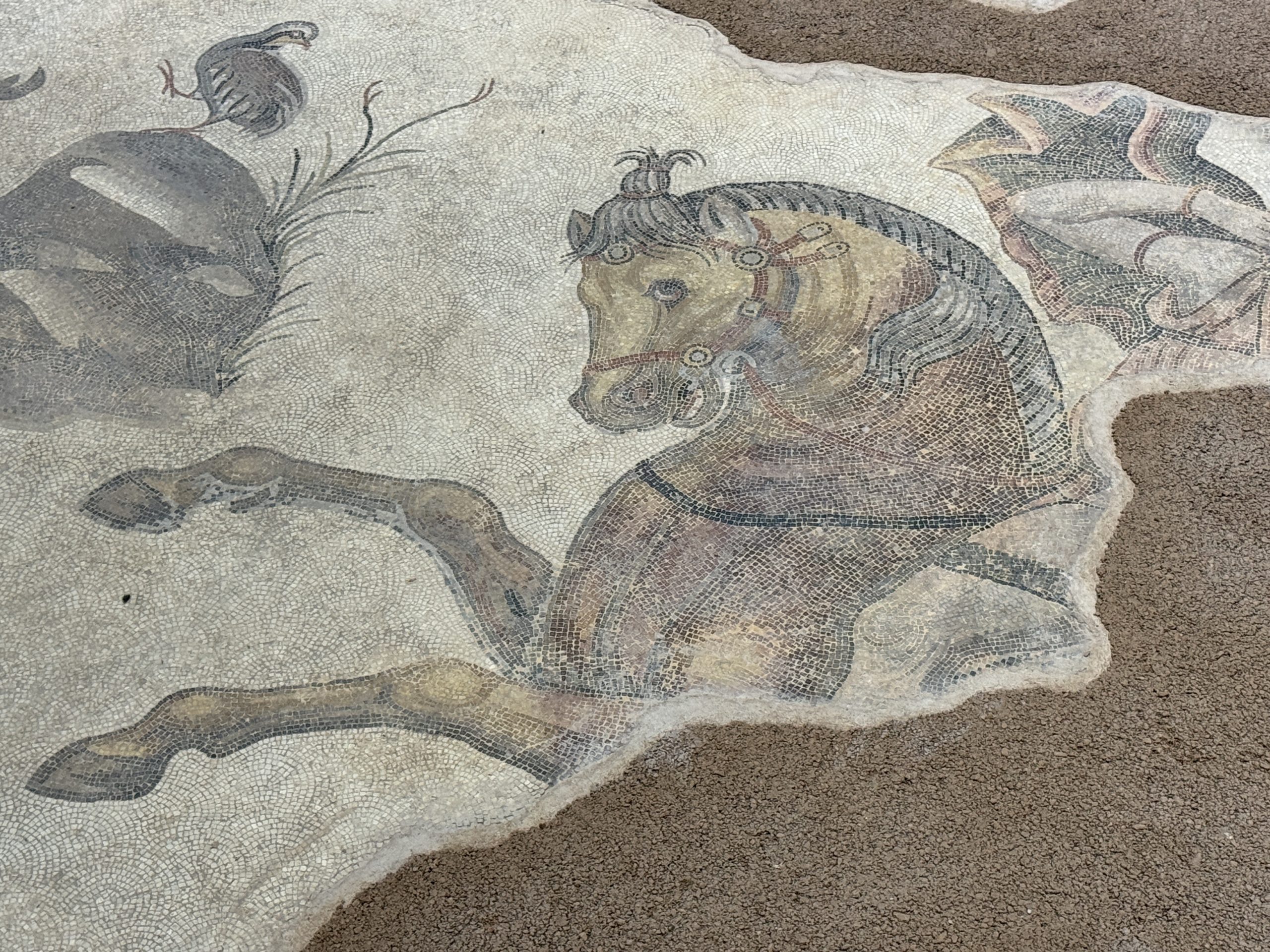
The Story of Achilles
Another hall of the Villa of the Amazons is dedicated to one of the best-known heroes of ancient Greek mythology — Achilles.
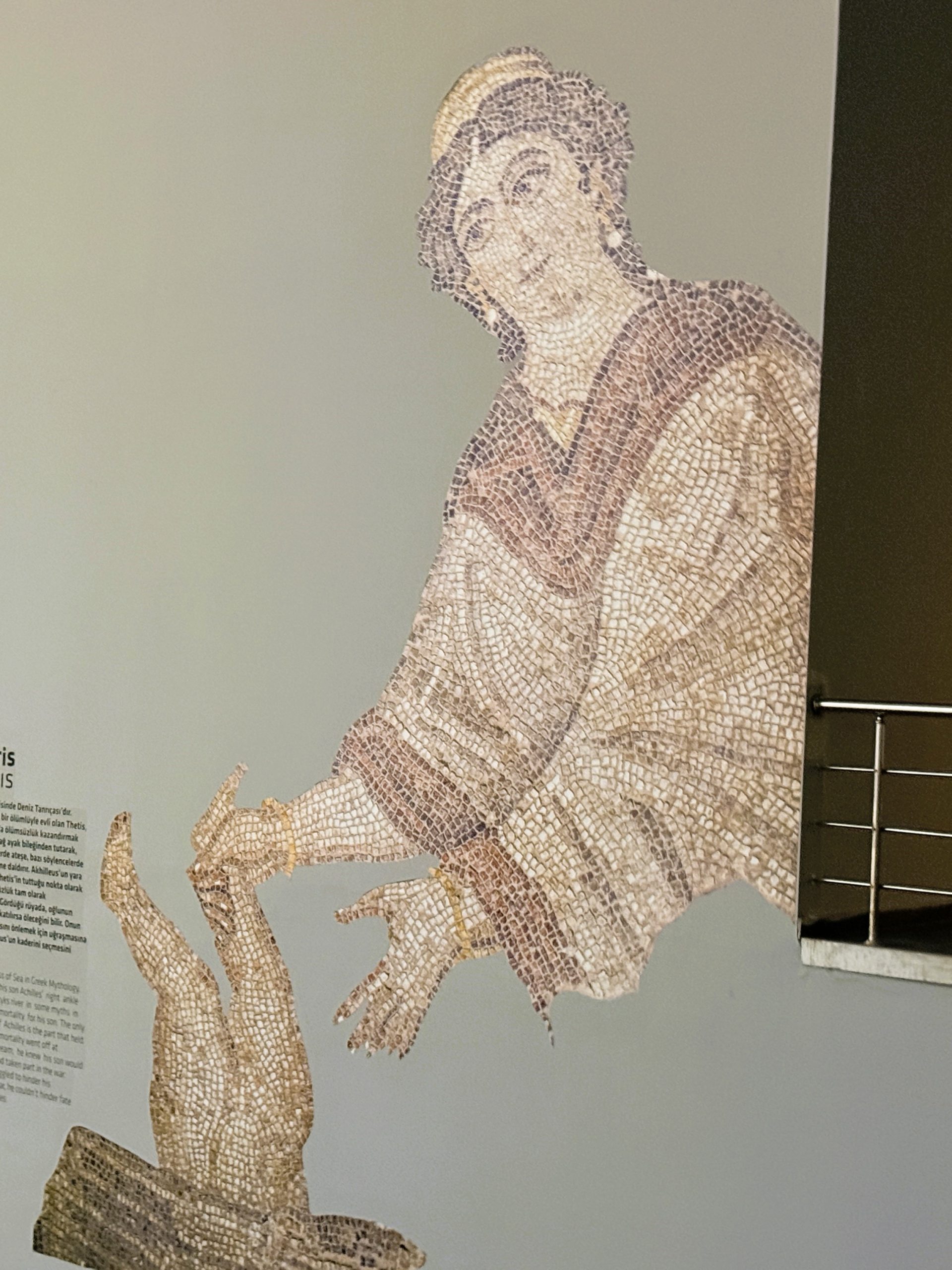
A rectangular mosaic panel unfolds episodes from his life in sequence. It depicts the infant Achilles in the arms of his nurse; his mother, Thetis, immersing her son in the waters of the River Styx; Achilles bidding farewell to his mother; the Fates, the Moirai, spinning the thread of his life; the hero being educated by the centaur Chiron; and, finally, Thetis accompanying her son as he sets off for the Trojan War.
It is, in effect, an ancient story told through images — except that instead of paper and paint, the story unfolds before the viewer through thousands of tiny pieces of stone.
A Technology That Still Amazes Centuries Later
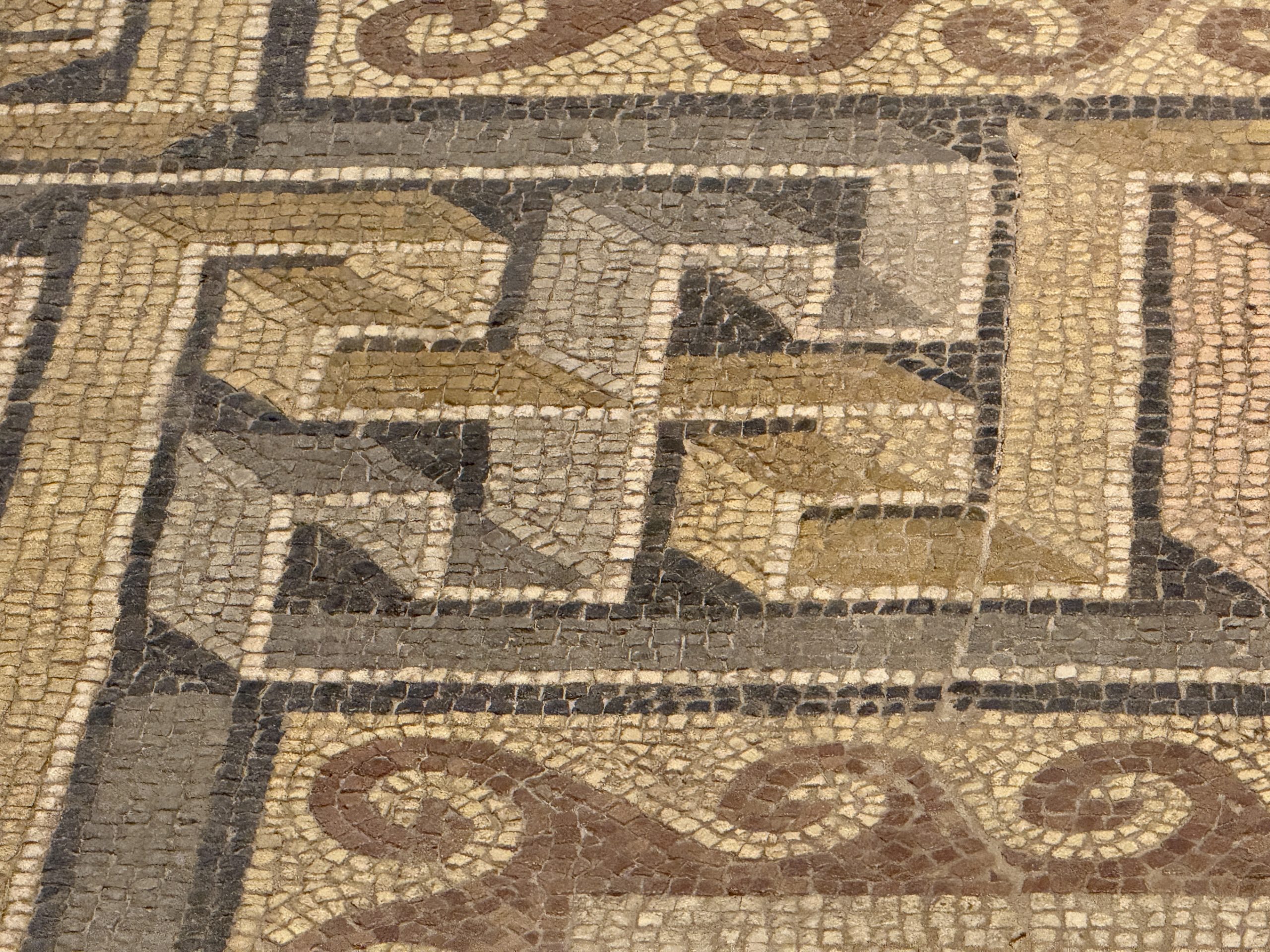
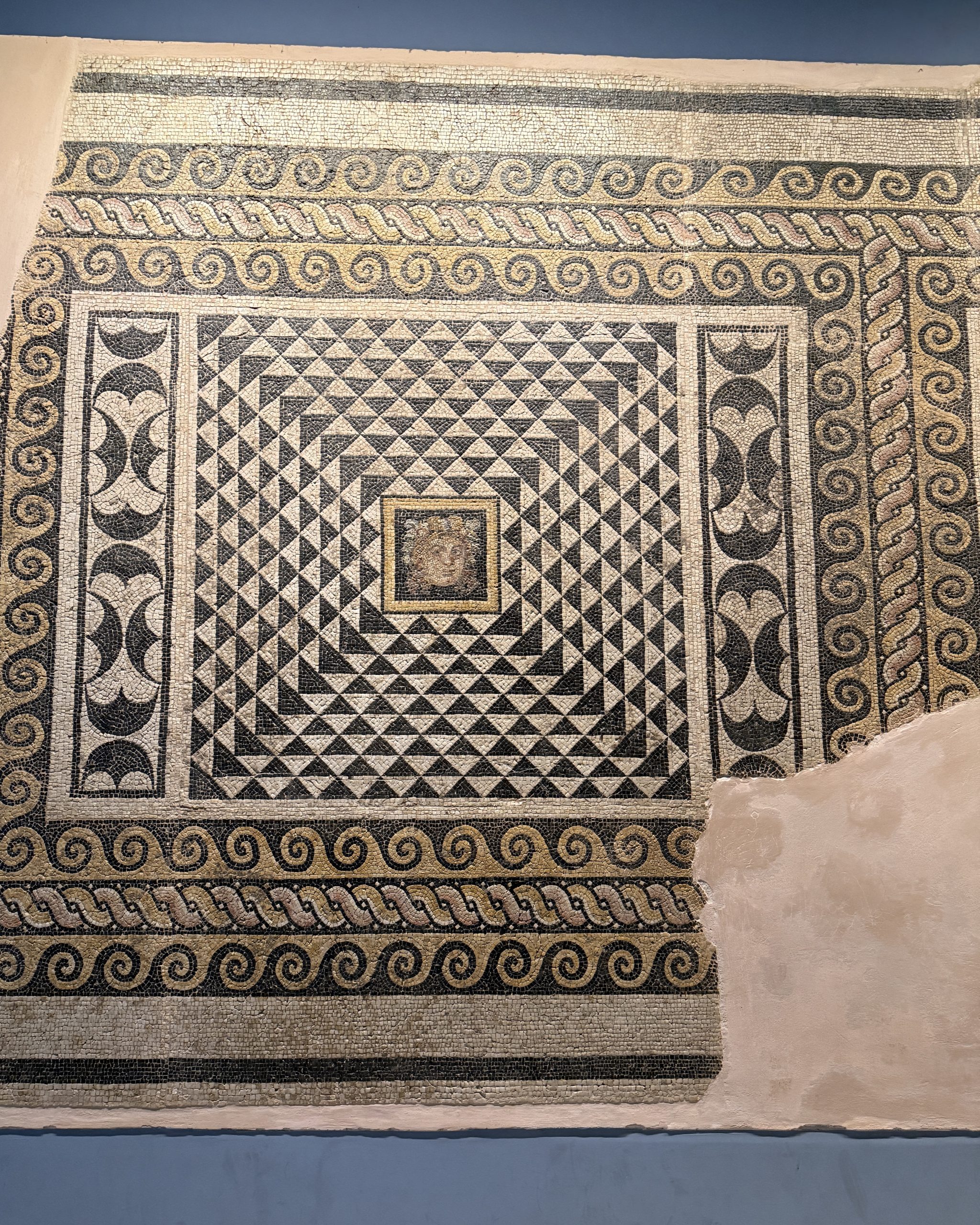
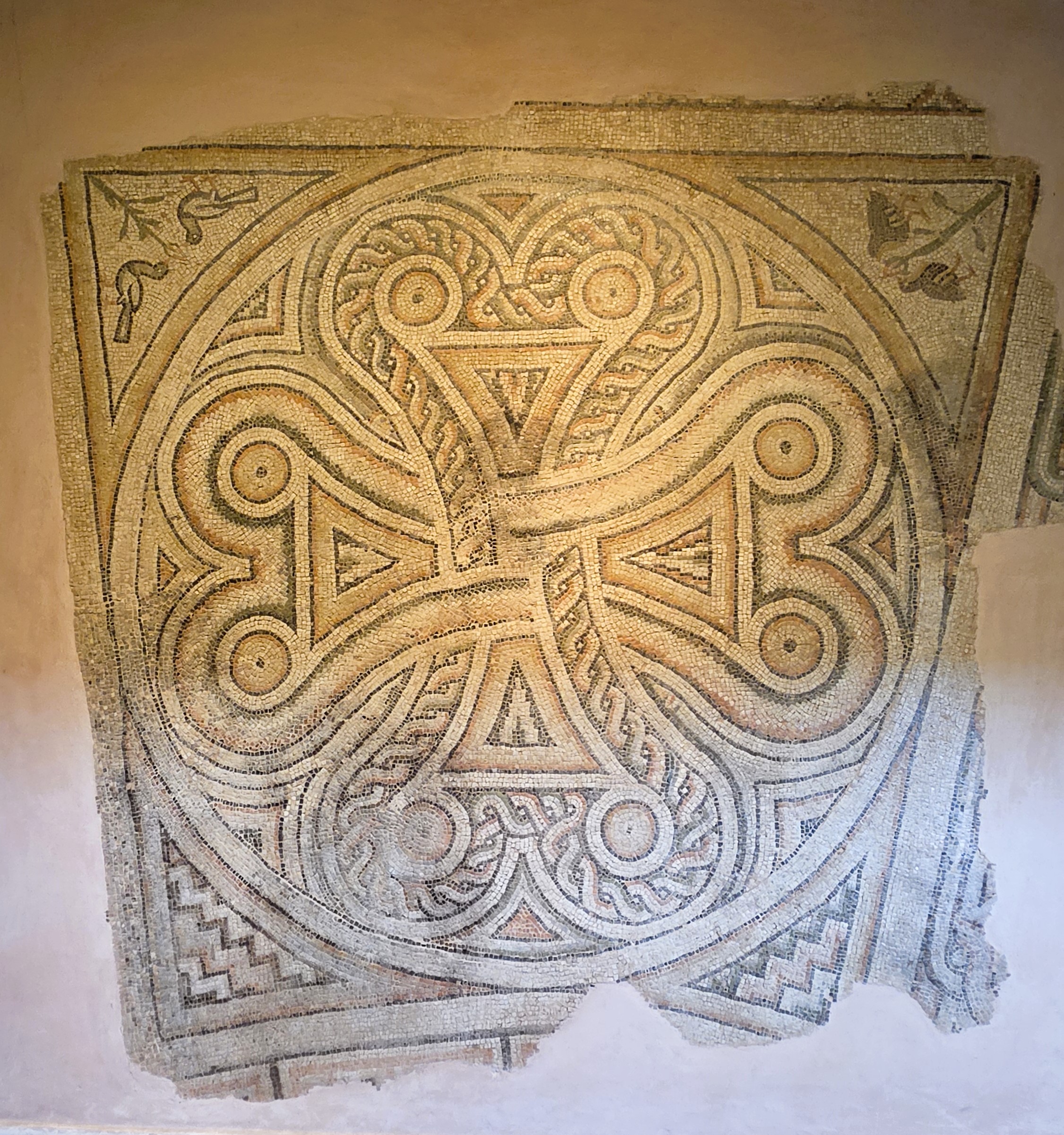
The ancient craftsmen of Edessa used primarily small stone tesserae for their mosaics — pieces of natural stone set into a lime-based mineral mortar. Archaeometric studies of the Haleplibahçe mosaics show that limestone was the principal material used for the tesserae, while other stones, including serpentine, were also used in some cases. The palette included shades of white, black, grey, brown, pink, blue, green, yellow, orange and red.
The tesserae could be extremely small. Particularly dense arrangements were used to create faces and other fine details. Studies of individual panels have identified several hundred tesserae per square decimetre. It was this painstaking precision that allowed the craftsmen to capture facial expressions, details of clothing, hair and the tiniest elements of ornamentation.
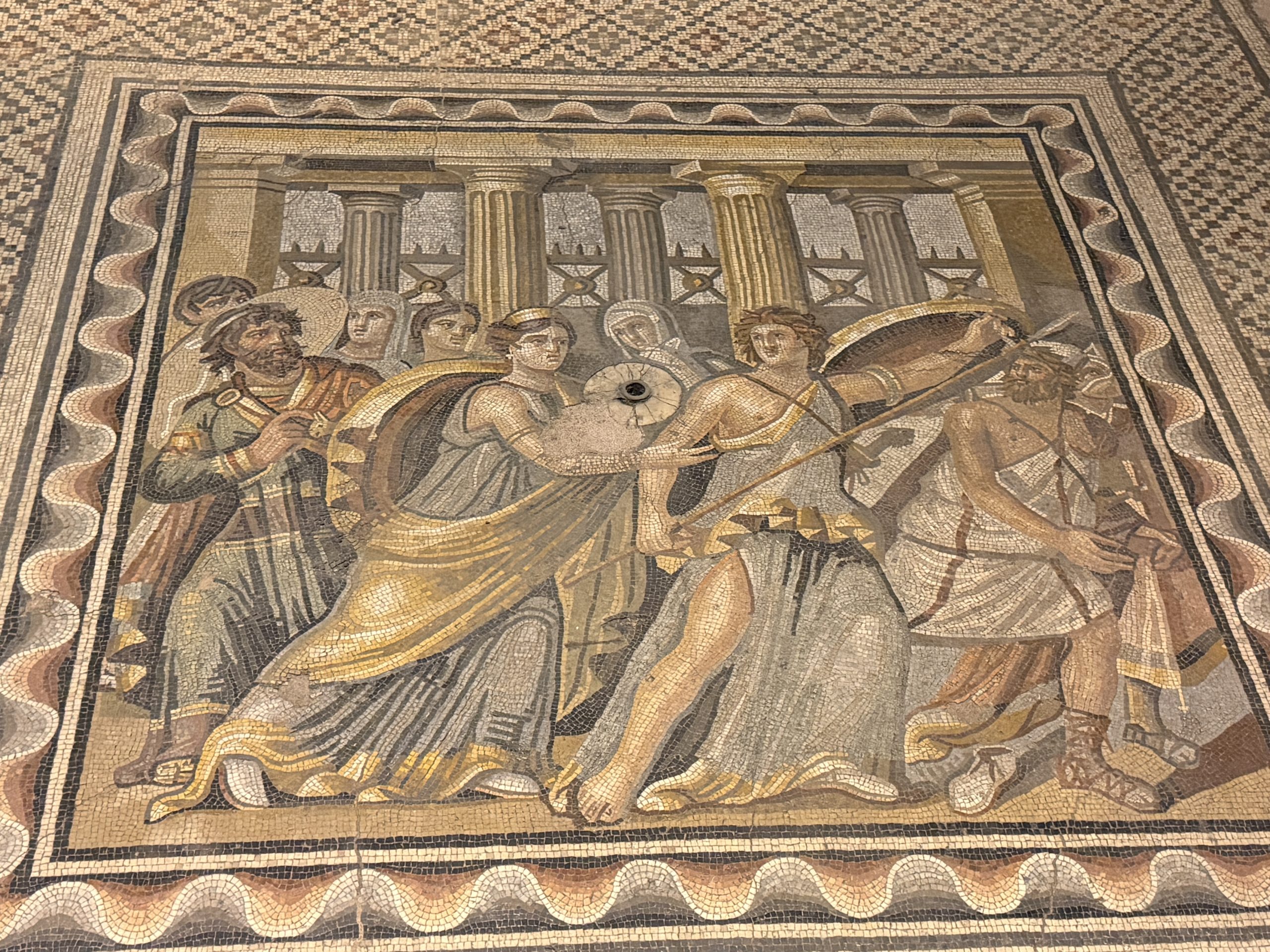
Beneath the mosaic was a carefully prepared, multi-layered foundation. Studies have identified several layers of mortar, including a coarser lower layer and finer upper layers containing lime, clay and brick inclusions. The tesserae were then set into this prepared surface to create complex compositions.
The colour palette of the mosaics is particularly striking. Natural stones made it possible to create dozens of shades and subtle transitions between them. In the Ktisios mosaic, for example, the craftsmen used yellow, green, brown and grey elements to render the jewellery, clothing and details of the portrait. The result is an image that seems almost to come alive through the gradual transitions between colours.
Some mosaics — as we will see even more clearly at the Zeugma Mosaic Museum in Gaziantep — also have a pronounced sense of volume, creating an almost three-dimensional effect. For visitors, this is particularly fascinating: techniques that we tend to associate with modern design were, in some form, already known to craftsmen many centuries ago.
And behind each of these images lies not only craftsmanship, but symbolism.
From Şanlıurfa to Zeugma
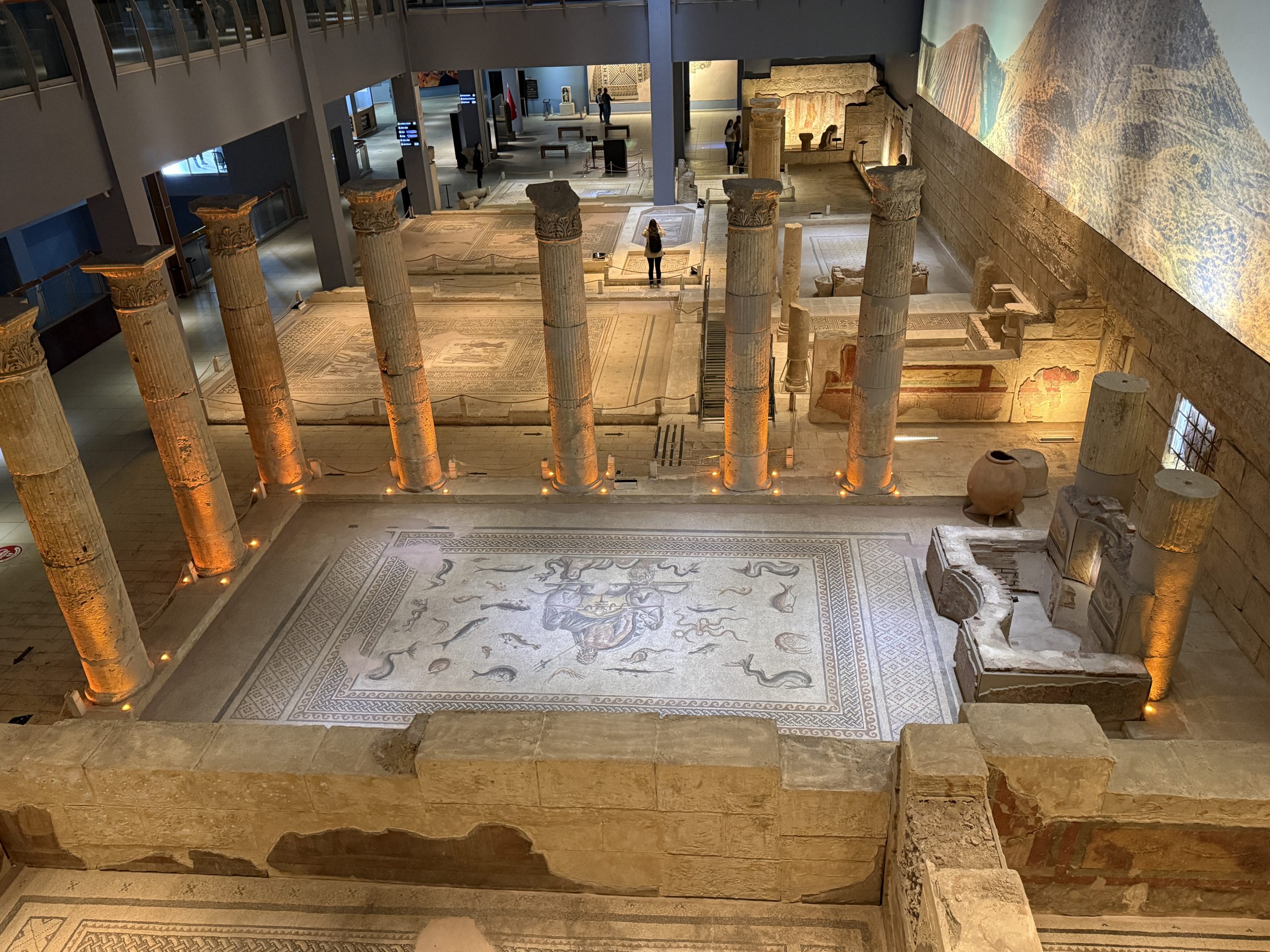
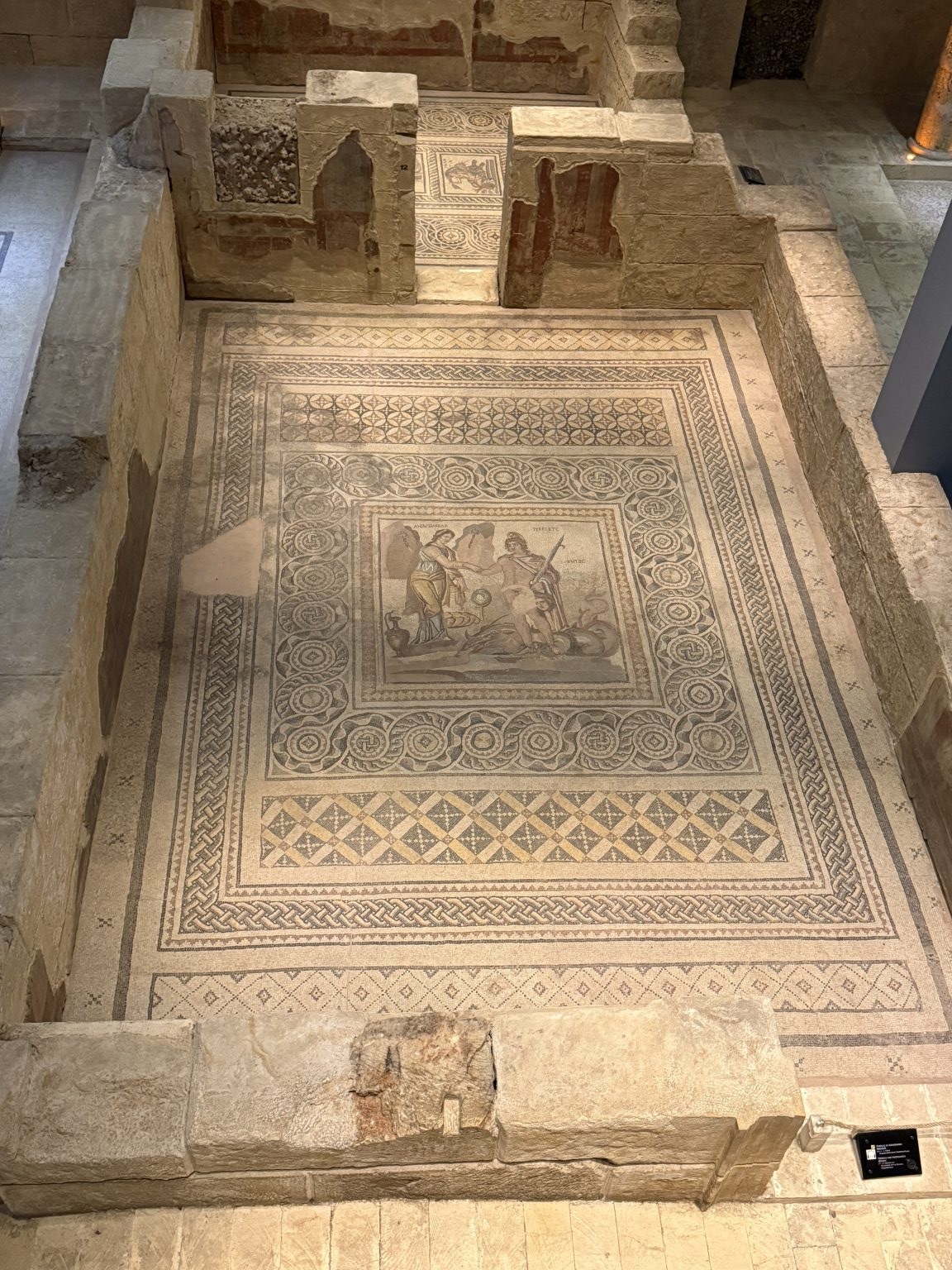
On one of the days of the press tour, we visited the Zeugma Mosaic Museum in Gaziantep, one of the world’s largest museum complexes dedicated to ancient mosaics.
The museum itself covers an area of around 30,000 square metres, with approximately 25,000 square metres of indoor exhibition and other facilities. Its collection includes thousands of square metres of mosaics discovered across the region.
The history of Zeugma itself dates back to the 3rd century BC.
The ancient city was founded on the banks of the Euphrates in the period following the death of Alexander the Great, when his empire was divided among his generals, the Diadochi. The city is traditionally attributed to Seleucus I Nicator, one of Alexander’s generals.
The city was originally known as Apamea. Later, during the Roman period, it became known as Zeugma — a name associated with the meaning “bridge” or “crossing.”
The name was no coincidence. The city stood on the Euphrates, a major natural boundary between the Roman world and the territories to the east.
Today, the architecture of the museum itself recalls this geography. A bridge-like structure connects its buildings, serving as a reference to Zeugma’s historical role as a crossing point on the Euphrates.
Saved from the Waters
But the story of the Zeugma Mosaic Museum is not only about archaeology. It also contains a dramatic chapter in recent history.
Large-scale archaeological excavations in the ancient city area began in 1998. It soon became clear that the construction of the Birecik Dam would significantly raise the water level of the Euphrates, leaving parts of ancient Zeugma submerged.
A major archaeological rescue operation was launched.
Archaeologists from several countries took part in the excavations, working to preserve as much of the ancient heritage as possible before the area was flooded.
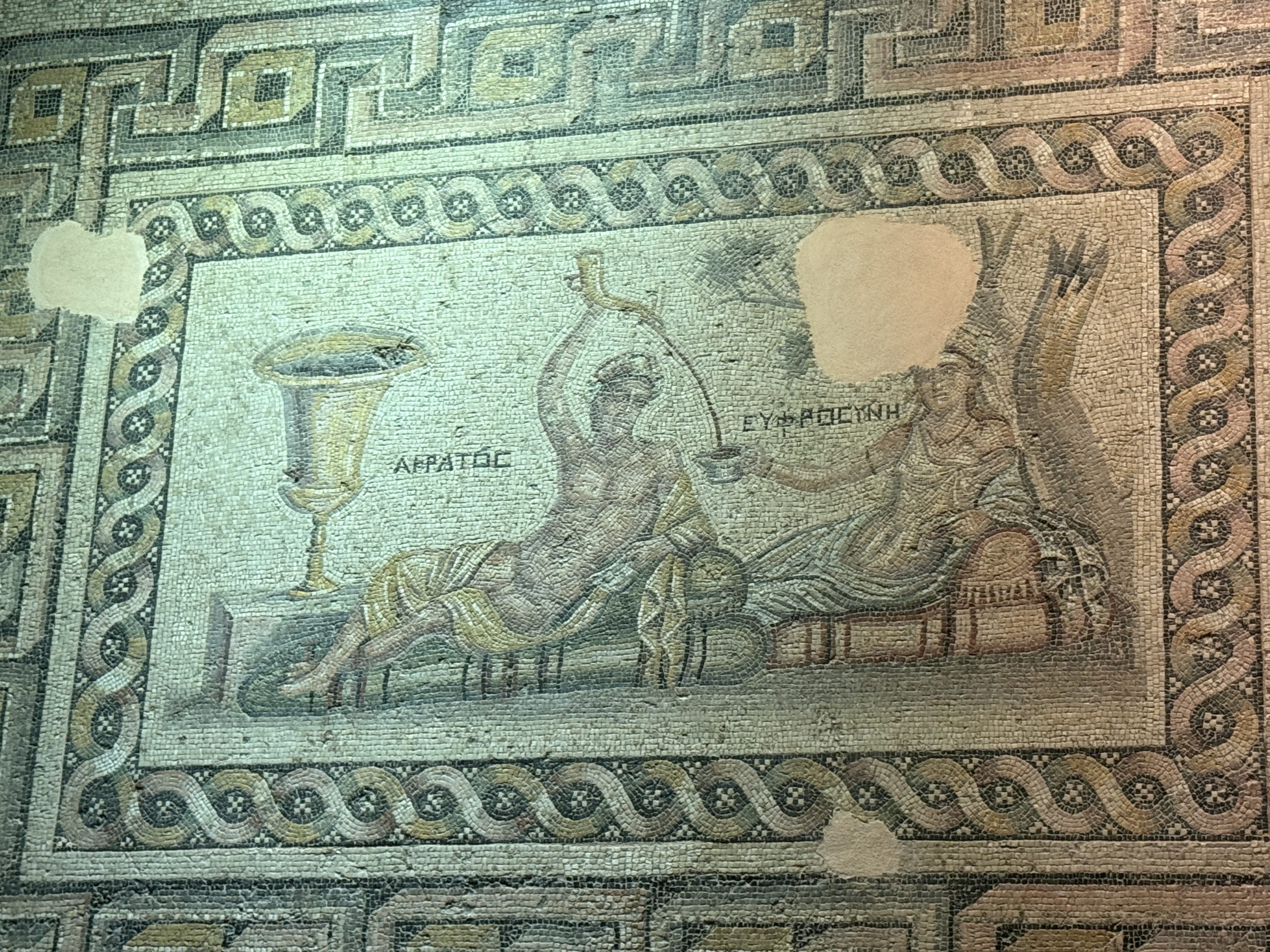
Thanks to these efforts, visitors to the museum today can see a significant part of the heritage recovered from Zeugma — above all, its famous mosaics, as well as sculptures and other artefacts from the Roman period.
Most of the finds from Zeugma itself are displayed in the museum’s Building A. Other buildings house discoveries from Gaziantep and the surrounding area, including artefacts from the early Christian period.
In this way, the museum tells the story not of a single city, but of an entire region where different civilisations and cultural traditions have intersected for centuries.
Thousands of Stones — and an Entire World
Standing before an ancient mosaic, it is difficult at first to imagine the scale of the work and the time required to create it.
The artist had no ready-made canvas. Instead of a brush, there were tiny pieces of stone. Instead of brushstrokes, thousands of individual tesserae. To convey a human face, the movement of an animal, the glint of a piece of jewellery or the fold of a garment, the craftsman had to select the shape, size and colour of each individual element.
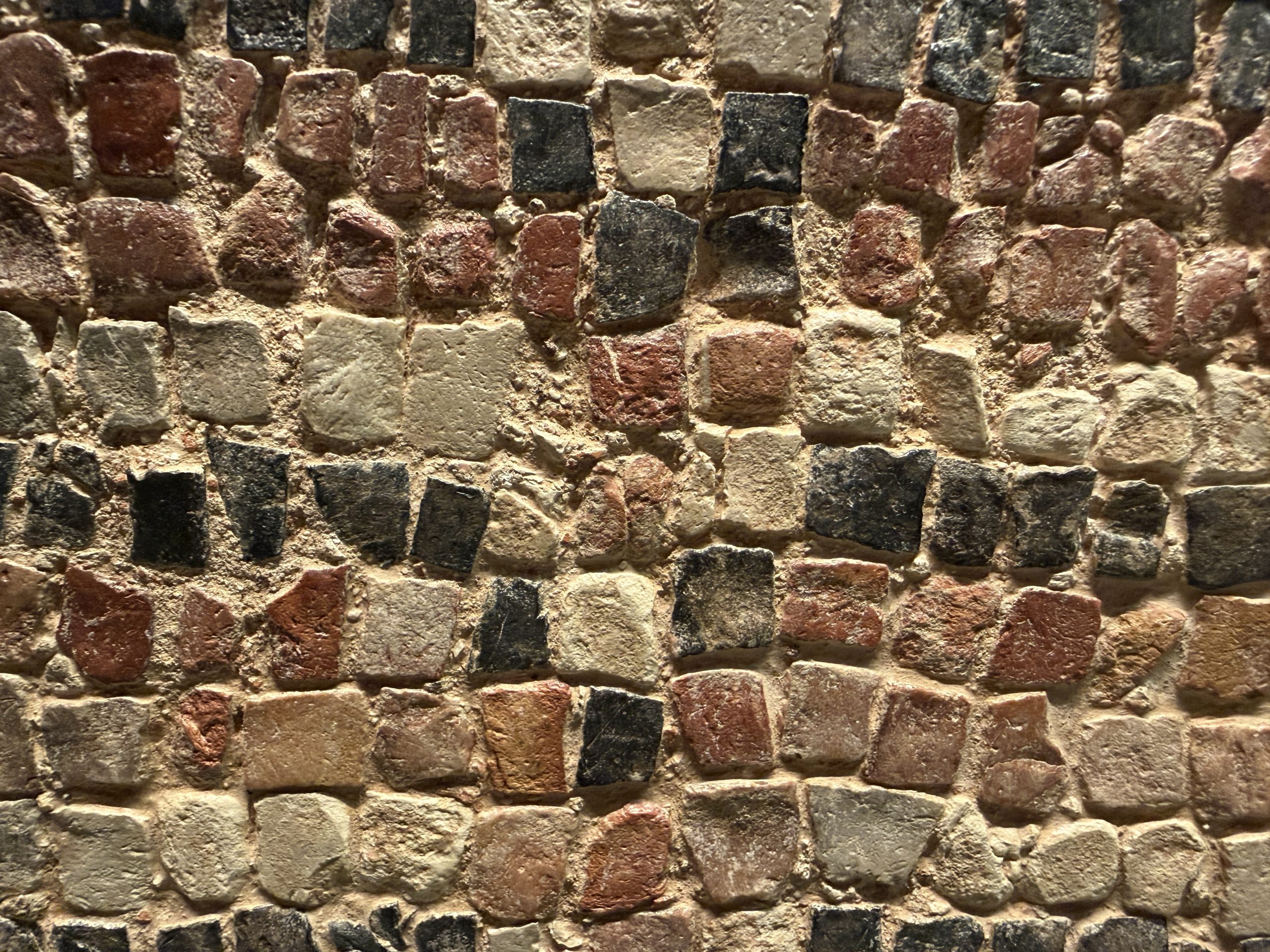
All of this required not only artistic skill, but also an understanding of materials, geometry, composition and colour.
What is particularly striking is that many of the images are filled with symbolism. Gods and heroes, animals, plants, household objects and architectural elements could all carry additional meanings.
A mosaic museum is therefore at once an art gallery, an archaeological site and a kind of encyclopaedia of the ancient world.
A Dialogue Across the Millennia
For journalists from Turkmenistan, Kazakhstan and Azerbaijan, this part of the press tour offered an opportunity to look at the history of the region from a different perspective.
In antiquity, the southeastern part of present-day Türkiye lay at the crossroads of major trade and cultural routes. The Euphrates connected different territories, while cities such as Zeugma became points of contact between civilisations.
Today, these connections can be seen not only in history books. They have survived in stone.
The mosaics of Haleplibahçe and Zeugma have endured through changing eras, the destruction of cities and natural transformations. Some were discovered precisely where they had once been created; others were saved through large-scale archaeological efforts.
And now they once again serve as a bridge — not across the Euphrates this time, but across time: a bridge connecting people who lived here nearly two thousand years ago with people in the modern world.
They are fragments of a long-vanished world, yet at the same time they prompt us to reflect on the very meaning of progress. And this raises a question to which everyone will find their own answer: Is technological progress primarily about increasingly sophisticated machines and computing systems, or is it also about the ability of the human mind to create something complex, beautiful and enduring from the materials at hand?///nCa, 2 October 2026